
The Social Structure of Gorilla Families in Uganda & Rwanda
(Ultimate Guide – Behaviour, Hierarchy, Roles & Trekking Insights)
Mountain gorillas (Gorilla beringei beringei) living in Uganda’s Bwindi Impenetrable National Park and Rwanda’s Volcanoes National Park have one of the most fascinating and emotionally complex social systems in the animal kingdom. Their family structure, built on leadership, loyalty, protection, bonding and cooperation mirrors many aspects of human society.
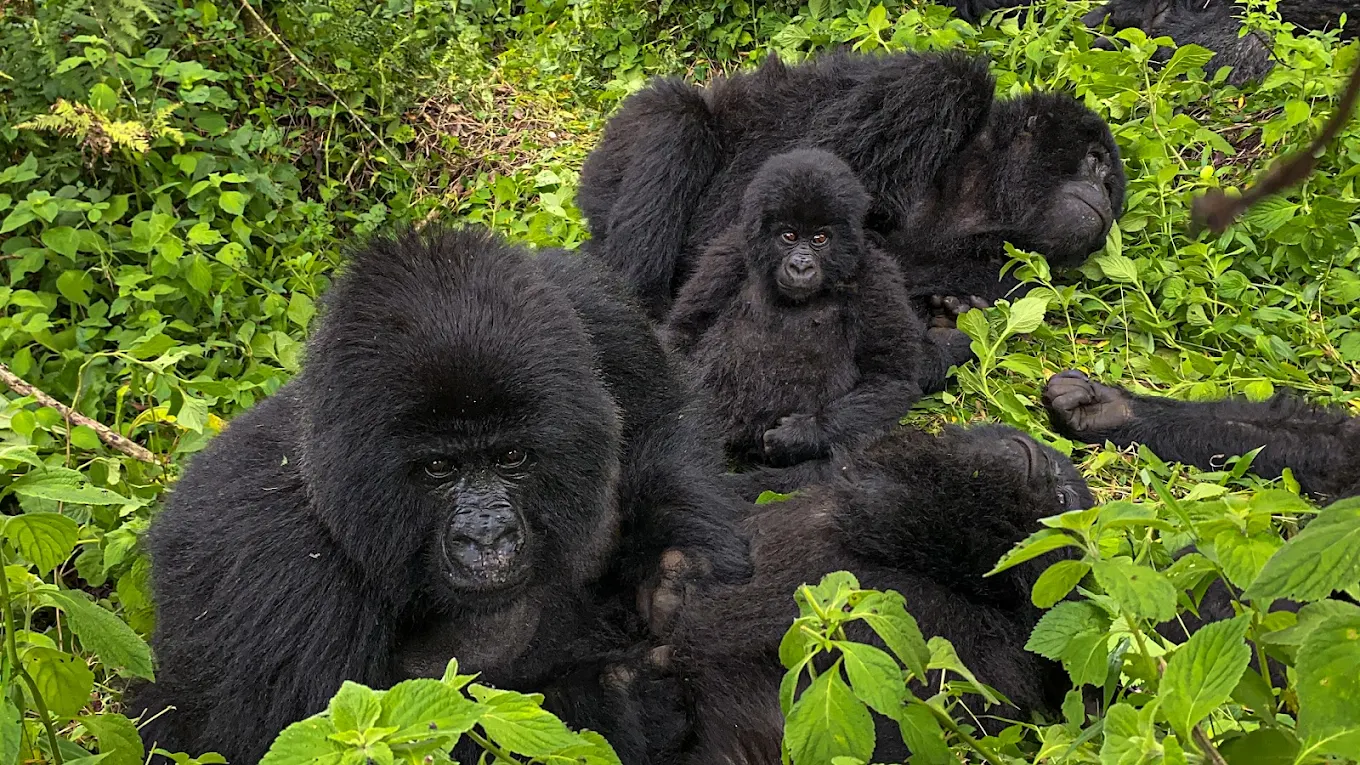
Understanding the Social Structure of Gorilla Families is not only scientifically valuable; it transforms the trekking experience. When you know how gorilla families operate, every moment in the forest becomes more meaningful: the silverback’s authority, the mother’s tenderness, the playful juveniles, the discipline during feeding, the grooming ceremonies, they all begin to make perfect sense.
This comprehensive guide explores everything about the gorilla social system—roles, hierarchy, relationships, behaviours, conflicts, communication, and what trekkers can expect.
Introduction to Gorilla Social Structure
Mountain gorillas live in cohesive, stable family groups that operate almost like small kingdoms. These families are held together by a dominant silverback, supported by adult females and their offspring. Their society is built on:
- Protection
- Cooperation
- Reproduction
- Territorial management
- Social harmony
Unlike chimpanzees (which have fluid, competitive and shifting communities), gorilla groups are stable and peaceful, with leaders who prioritize safety over aggression.
Gorilla Families in Uganda & Rwanda (Names, Personalities & Unique Characteristics)
One of the most defining features of mountain gorilla society is that every family has a name, a leader, a personality, and a story. These families are known intimately by trackers, rangers, researchers and guides in Uganda and Rwanda. Understanding these families gives trekkers a deeper emotional connection to the gorillas they meet.
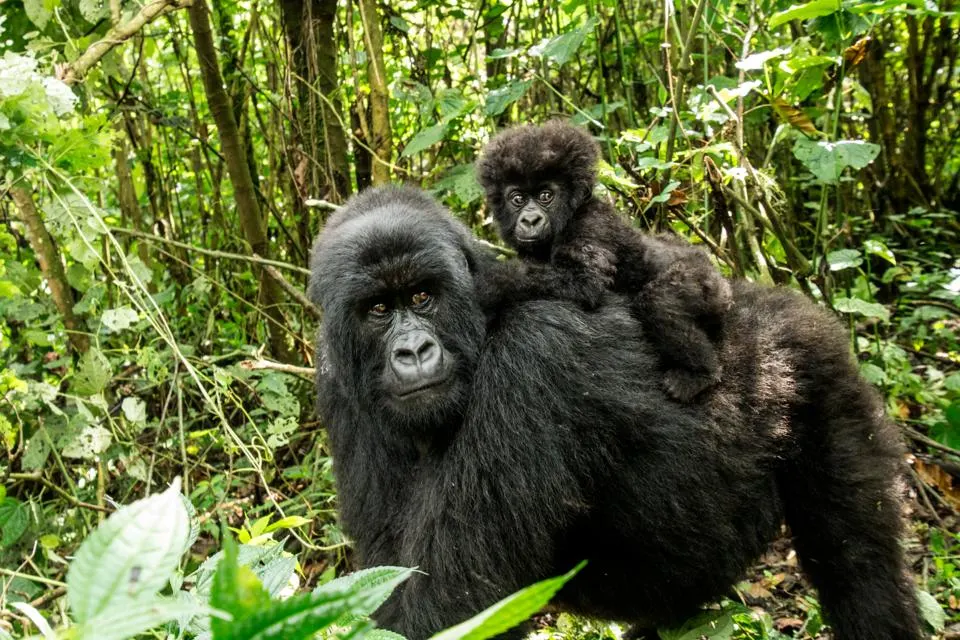
Mountain gorillas are not just statistics.
They are the Mubare family, the Susa family, the Nyakagezi family, each holding decades of history, conflict, births, dominance struggles, migrations and victories.
Below is a detailed and updated narrative of the habituated gorilla groups in Uganda (Bwindi Impenetrable National Park & Mgahinga Gorilla National Park) and Rwanda (Volcanoes National Park).
Gorilla Families of Bwindi Impenetrable National Park (Uganda)
Bwindi Impenetrable National Park is home to more than half of the world’s remaining mountain gorillas and has the largest number of habituated gorilla families anywhere on Earth.
The park is divided into four key trekking sectors—Buhoma, Ruhija, Rushaga, and Nkuringo—and each sector has families with distinct traits, histories, and silverback personalities.
Buhoma Sector Families
Mubare Family
The Mubare family is Uganda’s oldest habituated gorilla group, opened for tourism in 1993. Originally led by the legendary silverback Ruhondeza, famous for his gentle demeanor and long reign, the group has changed significantly over the years. After Ruhondeza’s passing, the family was adopted by a younger silverback who kept its legacy intact. This family represents the beginning of gorilla tourism in Uganda and remains one of the most historically important groups in Bwindi Impenetrable National Park.
Habinyanja Family
Named after the swamplands (“habinyanja”) where they were first identified, this family is known for its dramatic leadership conflicts of the past, where silverbacks Rwansigazi and Makara struggled for dominance. Today, the group is stable and is well-known for long, scenic treks through varied terrain. The family is large, social, and often teaches trekkers the richness of gorilla dynamics.
Rushegura Family
A breakaway group from Habinyanja, the Rushegura family is peaceful, calm and known for welcoming behavior during treks. They often roam close to the park boundaries, meaning their treks can be relatively easy. The silverbacks of this group are typically gentle and tolerant of human presence, making it one of the most popular families in Buhoma.
Ruhija Sector Families
Bitukura Family
The Bitukura family is named after a nearby river and is known for its surprisingly smooth habituation process. Their social structure is stable, and the group is famous for cooperation among multiple silverbacks, a rare phenomenon. This makes observing them a delight, as their interactions are peaceful, disciplined, and almost ceremonial.
Oruzogo Family
One of the most energetic and playful groups in Bwindi Impenetrable National Park, the Oruzogo family is known for its lively juveniles and adventurous infants who often steal the show. Trekkers frequently experience acrobatic displays, playful chases, and cheerful chaos. This family represents the joyful side of gorilla life.
Rushaga Sector Families
Nshongi Family
Once the largest gorilla family ever habituated in Bwindi Impenetrable National Park, at one point over 30 members—the Nshongi group is well-known for its size, complexity, and multiple splits over the years. Despite the divisions, the family remains one of the most iconic in Rushaga. Its original silverback Nshongi was admired for his ability to keep such a large group harmonious.
Mishaya Family
Formed after a dramatic split from the Nshongi family, the Mishaya family is known for its history of territorial fights and the bold personality of its founder silverback, Mishaya. Although Mishaya passed away years ago, his descendants continue his legacy with pride and resilience.
Bweza Family
Another Nshongi breakaway, the Bweza family is now one of the most stable groups in Rushaga. They offer intimate trekking encounters and typically occupy easily accessible terrain. Their silverback—calm, protective, and disciplined—is admired by trackers.
Kahungye Family
A large and powerful family led by a dominant silverback known for his charisma and assertiveness. The group is known for dramatic encounters with neighboring families and offers trekkers a glimpse into strong male leadership.
Busingye Family
Born out of the Kahungye family, the Busingye group was established when the silverback Busingye broke away to form his own dynasty. He is famous for his pride and tendency to demonstrate dominance—particularly in front of rival males. His group is smaller but highly disciplined.
Rwigi Family
One of the newer families, the Rwigi group was formed when Silverback Rwigi split from the Kahungye family. This family offers fresh genetic diversity and showcases the ever-evolving nature of gorilla society.
Mucunguzi Family
Another relatively new family formed after the Kahungye-Nshongi era of splits. The silverback Mucunguzi is young, ambitious, and steadily building his lineage.
Gorilla Habituation Families (Rushaga)
Rushaga is also home to the Habituation Experience (4 hours with gorillas), which includes:
- Bikingi Family
- Bushaho Family
These are semi-habituated groups where trekkers can witness gorillas learning to trust human presence — an experience far deeper and more raw than standard trekking.
Nkuringo Sector Families
Nkuringo Family
One of the most famous gorilla families in Africa, the Nkuringo group is known for challenging treks across steep ridges but rewarding encounters. Its original leader, the great silverback Nkuringo, was a powerful figure whose legacy is still felt. Today, the family is admired for its calm members and photogenic interactions.
Christmas Family
Named after a silverback born on Christmas Day, this is one of Bwindi’s most peaceful and stable families. Because they live closer to the communities on the park edge, they are highly accustomed to humans and often provide relaxed encounters.
Posho Family
A newer addition to the Nkuringo sector, known for its strong maternal structure and playful young members.
Gorilla Families of Mgahinga Gorilla National Park (Uganda)
Mgahinga has one habituated gorilla group:
Nyakagezi Family
The Nyakagezi group is iconic for its history of cross-border roaming between Uganda, Rwanda, and Congo. For years, they were unpredictable, but today they are stable and firmly resident in Uganda. This family is celebrated for multiple silverbacks living together peacefully; Mark, Mafia, and others, an unusual trait that gives it special scientific interest. Trekkers often praise this group for calm, easygoing encounters.
Gorilla Families of Volcanoes National Park (Rwanda)
Rwanda’s Volcanoes National Park is home to some of the world’s most famous gorilla groups, including the descendants of Dian Fossey’s research legacy.
Susa A Family
The legendary Susa family, originally studied by Dian Fossey, is one of the most historically important gorilla families in the world. Known for its size, dramatic power struggles, and the famous twins, Byishimo and Impano (a rare phenomenon in gorillas), this group carries deep scientific and emotional weight. Trekkers often dream of meeting the Susa line.
Karisimbi Family (Susa B)
A breakaway from the original Susa, the Karisimbi family resides high up the slopes of Mount Karisimbi. Treks are long but rewarding, offering views of dominant, assertive silverbacks and large, stable family structures.
Amahoro Family
Their name means “peace,” and this family truly lives up to it. The Amahoro group is gentle, tranquil, and known for peaceful silverback leadership. Their calm demeanor makes them highly popular among trekkers seeking harmony and closeness.
Umubano Family
Formed when Silverback Charles left the Amahoro family with several females, the Umubano group symbolizes independence and strong male leadership. Their interactions are orderly, and the family retains peaceful habits inherited from their Amahoro roots.
Agasha Family
Once led by the bold silverback Agasha, who famously took multiple females from another group, this family is known for its adventurous leadership and dynamic expansion.
Sabyinyo Family
This family was once led by the enormous silverback Guhonda, one of the largest and most powerful gorillas in the region. The Sabyinyo family is often easy to trek and is known for high visibility and confident interactions.
Hirwa Family
Meaning “lucky,” the Hirwa family once welcomed twins, another rare event in gorilla populations. They are known for gentle, cooperative behavior and strong maternal presence.
Bwenge Family
Established by a male who left the Susa family, the Bwenge group is known for its resilience after suffering multiple infant losses in the past. Today, it is stable and admired by trackers for its endurance.
Titus Lineage
Although not always trekked, the Titus family is legendary in research circles. Silverback Titus, once called the “King of the Volcanoes,” lived an extraordinary life full of dominance battles, drama, and leadership lessons still studied today. This family represents the scientific heart of Rwanda’s gorilla research.
Why Mountain Gorillas Live in Families
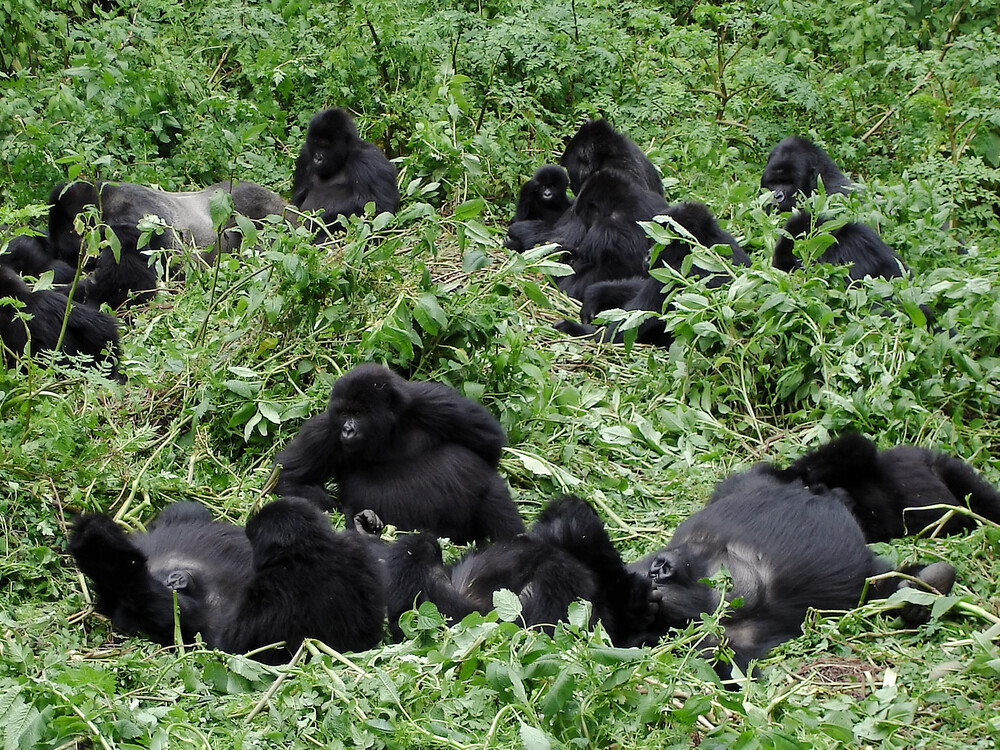
Mountain gorillas live in groups because:
Protection Against Threats
Although adult gorillas have few predators, infants are vulnerable to:
- leopard attacks
- rogue lone silverbacks
- human activity in past decades
Living in groups ensures safety.
Reproduction & Continuity
Females stay in groups to:
- raise infants together
- access food safely
- benefit from the silverback’s protection
Social Learning
Young gorillas learn:
- feeding techniques
- nest-building
- communication
- survival behaviours
A solitary gorilla cannot learn these essential skills.
Size of Gorilla Groups in Uganda & Rwanda
Most gorilla families contain:
- 8–15 members on average
- Some groups reach 20–30 members
- Rare supergroups (40+) occur but are unstable
In Uganda’s Bwindi, groups tend to be slightly larger, while Rwanda’s Volcanoes groups often have:
- more predictable structures
- fewer long-range movements
- more pronounced hierarchy
The Silverback: Power, Protection & Politics
The silverback is the undisputed leader of the gorilla family.
He earns his position through strength, wisdom, and the ability to protect.
Key Responsibilities of a Silverback Gorilla in a Family
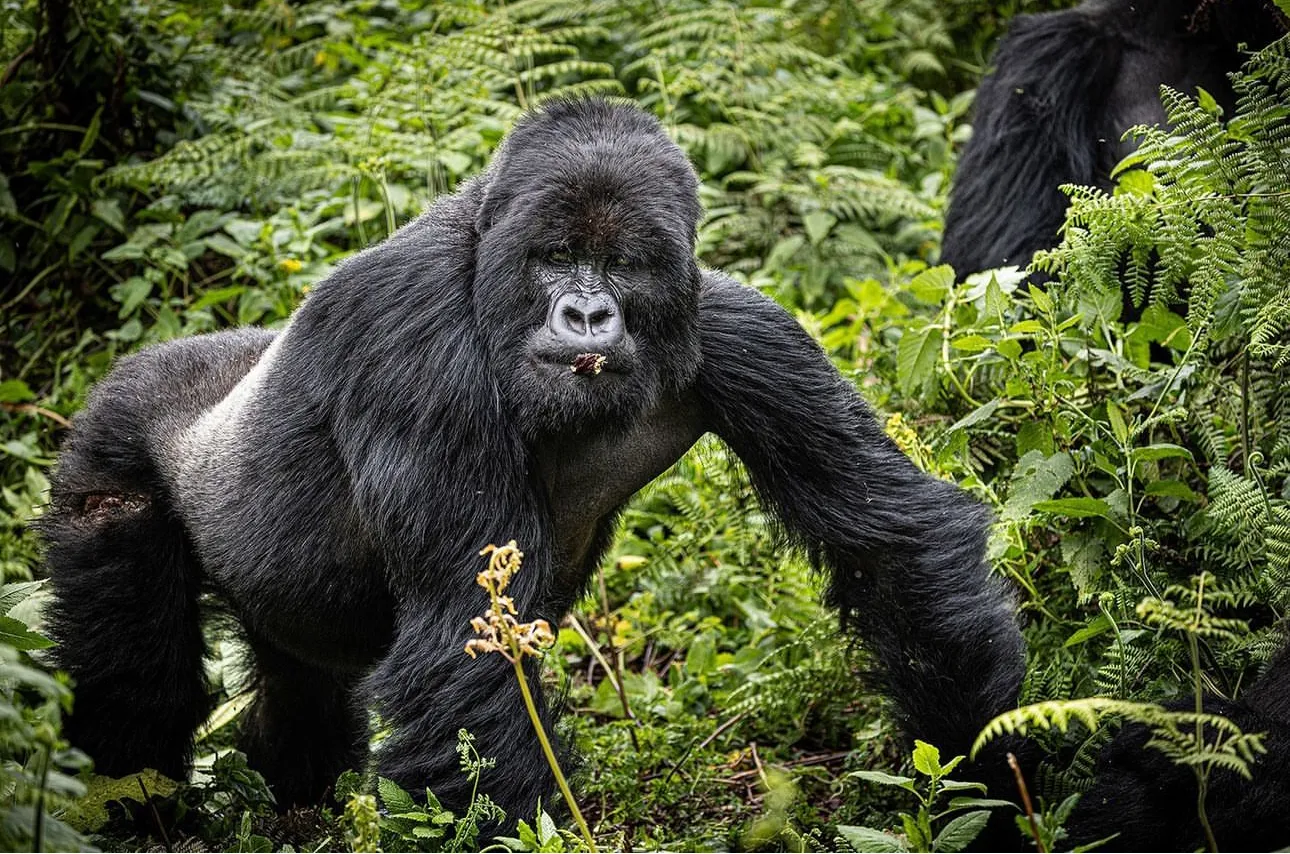
✔ Protects the family from predators or rival males
✔ Decides daily movement patterns (feeding routes)
✔ Maintains peace & discipline
✔ Settles conflicts within the family
✔ Mates with adult females
✔ Defends infants during attacks
✔ Leads nest-building areas each night
Silverback Leadership Style
Each silverback has a distinct personality:
- Calm & gentle
- Assertive & dominant
- Highly protective
- Social & interactive
- Reserved & distant
Trekkers often feel a deep sense of awe when observing a silverback, his presence is powerful, calming, and deeply symbolic.
Adult Females: The Heart of the Family
Females are the emotional core of the family. They play critical roles in:
- raising infants
- grooming
- maintaining social harmony
- supporting the silverback
- choosing where to feed
- teaching young ones how to forage
Though the silverback leads, adult females influence group stability. If multiple females leave a silverback, his family collapses.
Female Migration Between Groups
Females often switch groups to:
- avoid inbreeding
- join stronger males
- find better protection
This makes them key decision-makers in gorilla society.
Blackbacks: Future Silverbacks in Training
Blackbacks are males aged 8–12 years. They:
- are strong but not dominant
- assist in protection
- keep watch during feeding
- help discipline juveniles
Eventually, many blackbacks leave to:
- become solitary
- challenge other silverbacks
- attract migrating females
- start their own groups
Their role is sometimes compared to “young warriors.”
Juveniles: Play, Curiosity & Social Learning
Juveniles (3–6 years) are:
- energetic
- playful
- curious
- mischievous
- constantly climbing
- always learning through imitation
Their play teaches:
- balance
- strength
- social etiquette
- communication
Juveniles provide much of the joy and entertainment during treks.
Infants: The Most Protected Members
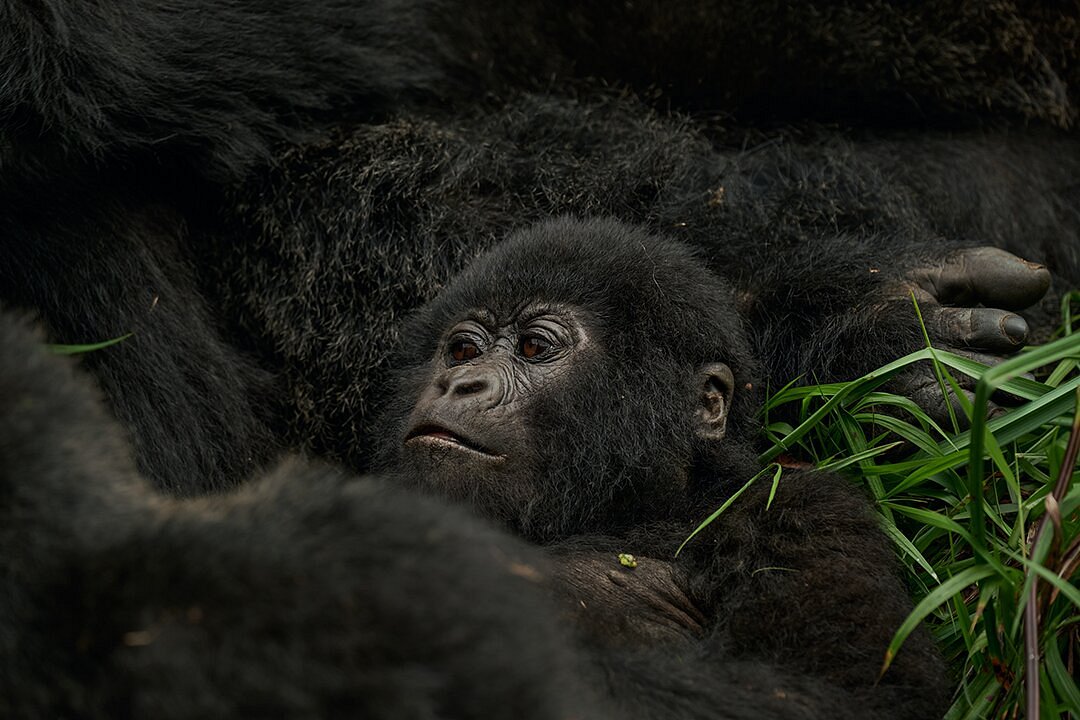
Infants under 3 years old are:
- always close to their mothers
- breastfed for 3 years
- carried on the chest or back
- extremely vulnerable
The entire family rallies around an infant, especially:
- mother
- silverback
- older siblings
A silverback often takes deep emotional interest in newborns, surprising many trekkers.
How Leadership Is Challenged & Changed
Silverbacks face challenges from:
- blackbacks within the group
- rival solitary males
- neighboring silverbacks
Challenges can be:
- non-violent intimidation
- chest-beating duels
- full physical confrontations
When an old silverback weakens, his own sons or incoming males may take over.
If a takeover happens:
- females may switch loyalty
- infants may be at risk if unrelated
- the family structure can entirely shift
This is one of the most dramatic events in gorilla society.
Gorilla Relationships & Bonding Behaviours
Gorillas maintain harmony through:
Grooming
Removes parasites & strengthens trust.
Physical Touch
Hand touches, leaning, hugging.
Vocal reassurance
Soft grunts indicate peace.
Play
Especially between juveniles.
Mother–Infant Bond
One of the strongest bonds in the wild.
Female–Silverback Bond
Central to group stability.
Communication: Vocalizations, Gestures & Eye Contact
Gorillas communicate using:
Vocalizations
- Soft grunts → calm
- Screams → danger
- Barks → warning
- Rumbling → reassurance
Gestures
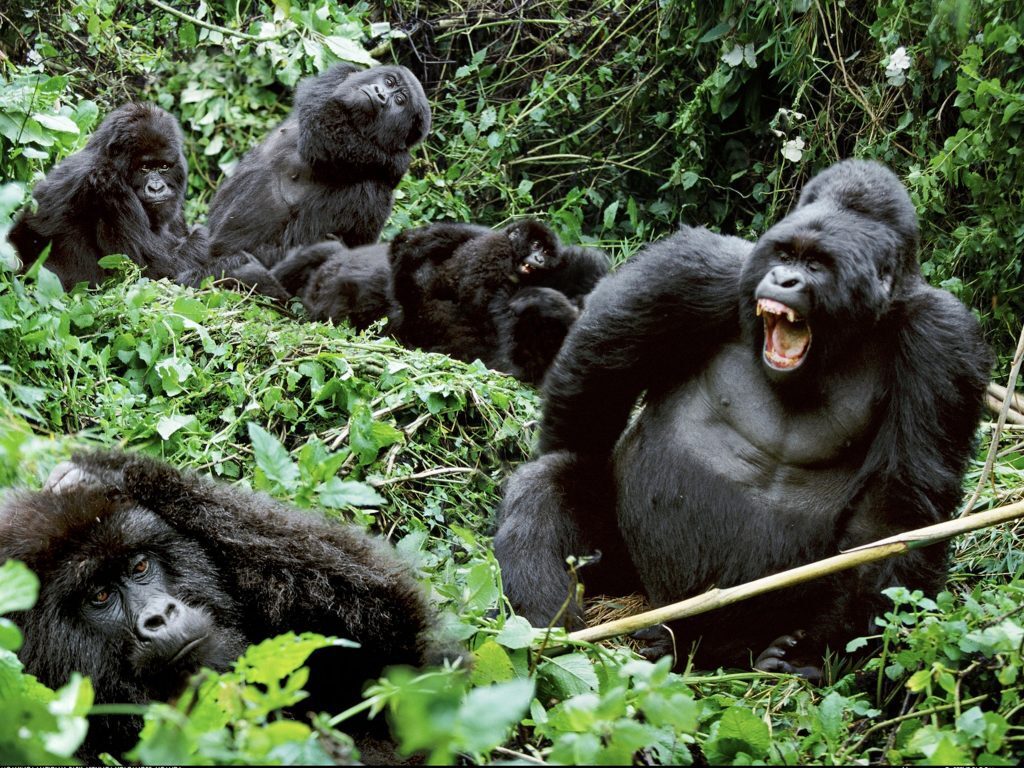
- Chest-beating
- Charging
- Branch shaking
- Arm waving
Eye Contact
- Direct eye contact → dominance or curiosity
- Avoidance → submission
Gorillas have a rich emotional language that trekkers can observe clearly.
Feeding & Movement Patterns of Gorilla Families
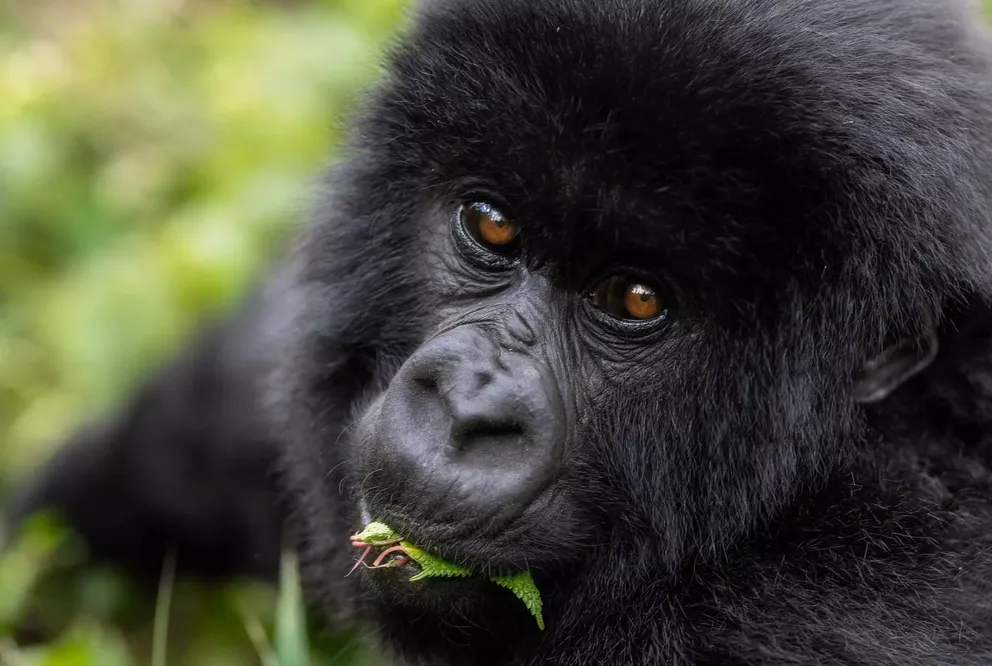
Silverbacks lead daily routes. Families move depending on:
They typically:
- feed in the morning
- rest at midday
- travel in the afternoon
- build nests in the evening
How New Gorilla Groups Form
Gorilla families form through:
Breakaway Groups
Young silverbacks leave with some females.
Female Migration
Females join stronger males.
Takeovers
A silverback defeats another and absorbs the group.
Fusions
Occasionally two small groups merge.
These changes ensure genetic diversity.
Gorilla Social Differences: Bwindi vs Volcanoes
Bwindi Gorilla Behaviour
- More diverse habitats
- More fragmented family ranges
- More genetic diversity
- Larger variation in temperament
Volcanoes Gorilla Behaviour
- More predictable movement
- Larger families at times
- Stronger visual displays (open bamboo forest)
- More stable group structures
Trekkers often feel Bwindi Impenetrable Forest gorillas are more mysterious, while Rwanda’s are easier to observe.
How Trekking Rules Are Based on Gorilla Behaviour
Gorilla social structure determines trekking protocols:
- 7-meter distance rule → Silverback respect
- No flash photography → infant protection
- Stay in a group → reduces perceived threats
- Avoid direct eye contact → not to challenge silverbacks
- Limit visits to 1 hour → minimize disturbance
Knowing the social structure helps trekkers understand why these rules are essential.
Threats to Gorilla Families & Conservation Success
Historically, gorilla families were threatened by:
- poaching
- habitat loss
- civil wars
- disease (especially from humans)
Today, thanks to:
- UWA & RDB conservation
- tourism funds
- community programs
- veterinary interventions
Mountain gorillas have made an astonishing recovery—from 250 individuals decades ago to over 1,060+ today.
Their social structure has been a key part of this survival.
Frequently Asked Questions (FAQ)
How many gorillas live in one family?
Between 8–15 normally, but supergroups can reach 30+.
Who leads a gorilla family?
A dominant silverback.
Do gorillas mate for life?
No, but females form long-term bonds with males.
Can a silverback be gentle?
Yes, many are extraordinarily calm and protective.
Why do females move between groups?
To prevent inbreeding and find better protection.
Do gorillas adopt orphan infants?
Yes, especially dominant silverbacks or adult females.
Are gorillas dangerous?
Only when threatened; they prefer peace.
What is the role of blackbacks?
Young males learning leadership and protection.
Why do gorillas beat their chest?
To show strength, intimidate rivals, or play.
How does the silverback show authority?
Through posture, movement, and calm dominance.
Final Thoughts
The social structure of gorilla families in Uganda & Rwanda reveals a world of compassion, intelligence, discipline, leadership, and emotional depth. Observing these dynamics during a trek is one of the most profound wildlife experiences on Earth.
When trekkers understand gorilla society, their visit becomes far more meaningful. Every sound, gesture, touch, and movement carries a story, a story shaped by millions of years of evolution and the daily choices of these gentle giants.
Gorilla families are not just groups of animals.
They are kingdoms. They are communities. They are stories of survival, protection and love.