
Ultimate Nyungwe Forest Safari Experiences Guide
What is Nyungwe Forest?


Nyungwe Forest is Rwanda’s largest and most biologically important rainforest, representing one of the oldest surviving tropical forests in Africa. Covering more than 1,000 square kilometers in southwestern Rwanda, this remarkable ecosystem forms the heart of Nyungwe National Park and is recognized internationally as one of Africa’s most significant biodiversity hotspots.
Scientists believe that parts of Nyungwe Forest have remained intact for millions of years, surviving major climatic changes that altered ecosystems throughout Africa. This ancient history has allowed the forest to develop extraordinary biological diversity, making it a sanctuary for countless plant and animal species, many of which are found nowhere else on Earth.
Situated within the Albertine Rift, one of the world’s most important ecological regions, Nyungwe Forest contains a complex mosaic of habitats. Visitors exploring the forest encounter dense montane rainforest, bamboo zones, high-altitude ridges, swamps, grasslands, and river valleys. This habitat diversity creates ideal conditions for a wide range of wildlife and contributes to the forest’s exceptional conservation value.
Beyond its wildlife importance, Nyungwe Forest serves as a critical environmental resource for Rwanda and the wider region. The forest functions as one of East Africa’s most important water catchment areas, supplying water to both the Congo Basin and Nile River systems. Numerous rivers, streams, and wetlands originate within the forest, supporting agriculture, communities, and ecosystems far beyond the park boundaries.
The forest also plays an important role in climate regulation, carbon storage, soil protection, and biodiversity conservation. Its preservation has become a national priority, and Rwanda’s commitment to protecting Nyungwe Forest has transformed it into one of Africa’s leading examples of successful rainforest conservation.
Today, Nyungwe Forest is much more than a protected area. It is a destination where travelers can experience ancient wilderness, encounter rare wildlife, explore spectacular landscapes, and contribute directly to conservation efforts that help secure the future of one of Africa’s most valuable ecosystems.
Why Visit Nyungwe Forest?
There are few destinations in Africa that offer the diversity, authenticity, and immersive nature experiences found within Nyungwe Forest. While many African safaris focus primarily on large mammals roaming open savannahs, Nyungwe offers a completely different type of adventure that allows visitors to actively engage with the rainforest environment.
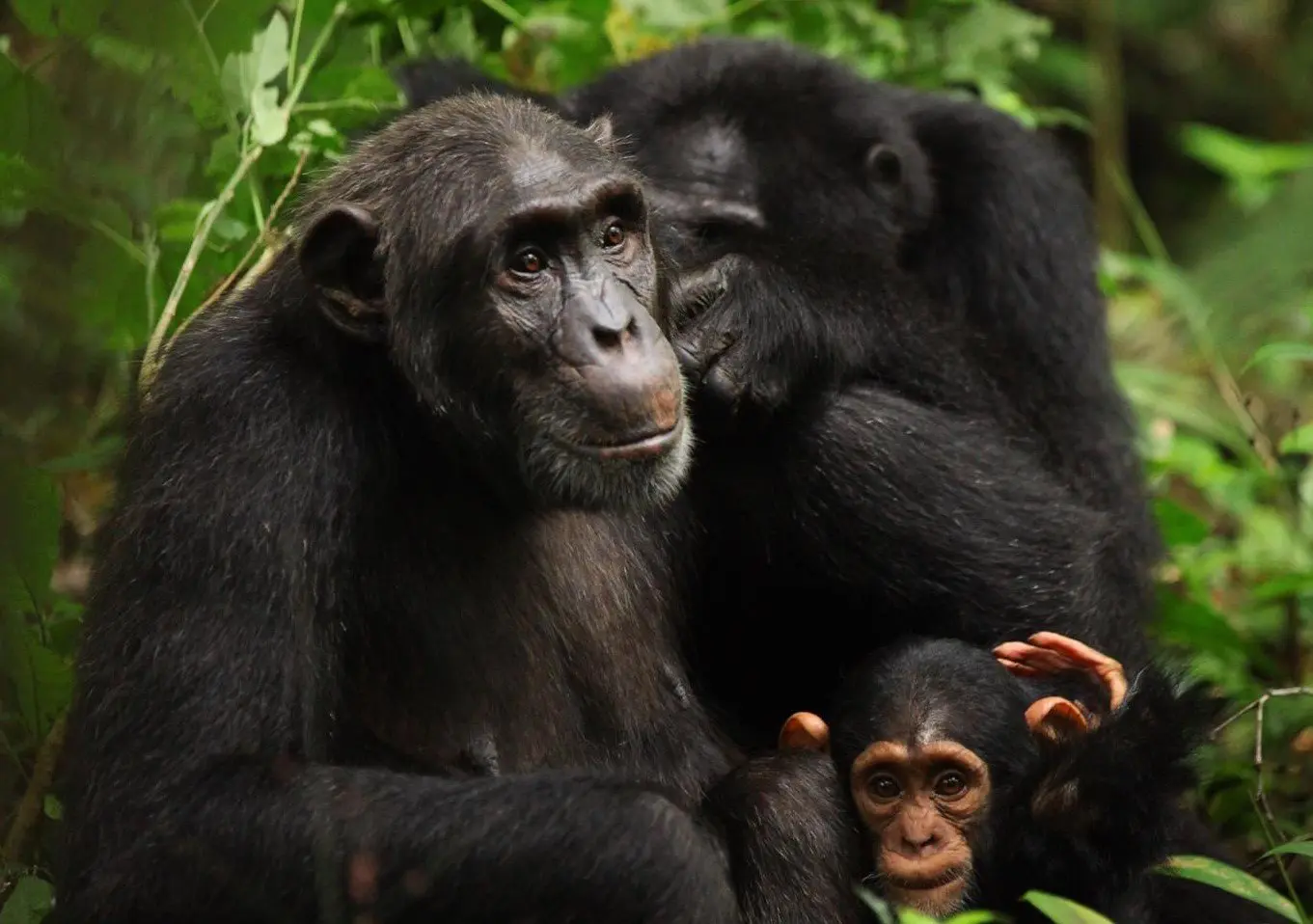
One of the strongest reasons to visit Nyungwe Forest is its incredible biodiversity. The forest supports hundreds of chimpanzees, thirteen species of primates, more than 320 bird species, thousands of plant species, and countless insects, reptiles, and amphibians. Every trail, viewpoint, and forest walk offers opportunities to discover something new.
Unlike traditional game drives where visitors remain inside vehicles, experiences in Nyungwe Forest involve walking through the rainforest alongside expert guides. This creates a much deeper connection with nature. Travelers hear birds calling overhead, observe monkeys moving through the canopy, feel the cool mountain air, and experience the sights, sounds, and scents of one of Africa’s oldest forests.
Adventure seekers are drawn to Nyungwe Forest because of its wide range of activities. Chimpanzee trekking, canopy walks, waterfall hikes, birdwatching excursions, nature trails, and primate tracking adventures provide endless opportunities for exploration. Every day in the forest offers new discoveries and memorable experiences.
Photographers find Nyungwe Forest particularly rewarding because of its dramatic landscapes. Mist-covered mountains, ancient trees, colorful birds, flowing waterfalls, and vibrant rainforest vegetation create spectacular photographic opportunities throughout the year.
The forest is also an excellent destination for travelers seeking tranquility. Compared to many popular safari destinations, visitor numbers remain relatively low, allowing guests to enjoy a more peaceful and exclusive wilderness experience. Many travelers describe Nyungwe Forest as one of the most serene and authentic natural destinations they have ever visited.
Luxury travelers appreciate the forest’s high-end eco-lodges and personalized experiences, while conservation-minded visitors value the opportunity to support sustainable tourism initiatives that directly contribute to protecting the rainforest and supporting local communities.
Whether your interests lie in wildlife, photography, birdwatching, hiking, conservation, adventure, or relaxation, Nyungwe Forest offers experiences that few destinations in Africa can match.
Chimpanzee Trekking in Nyungwe Forest
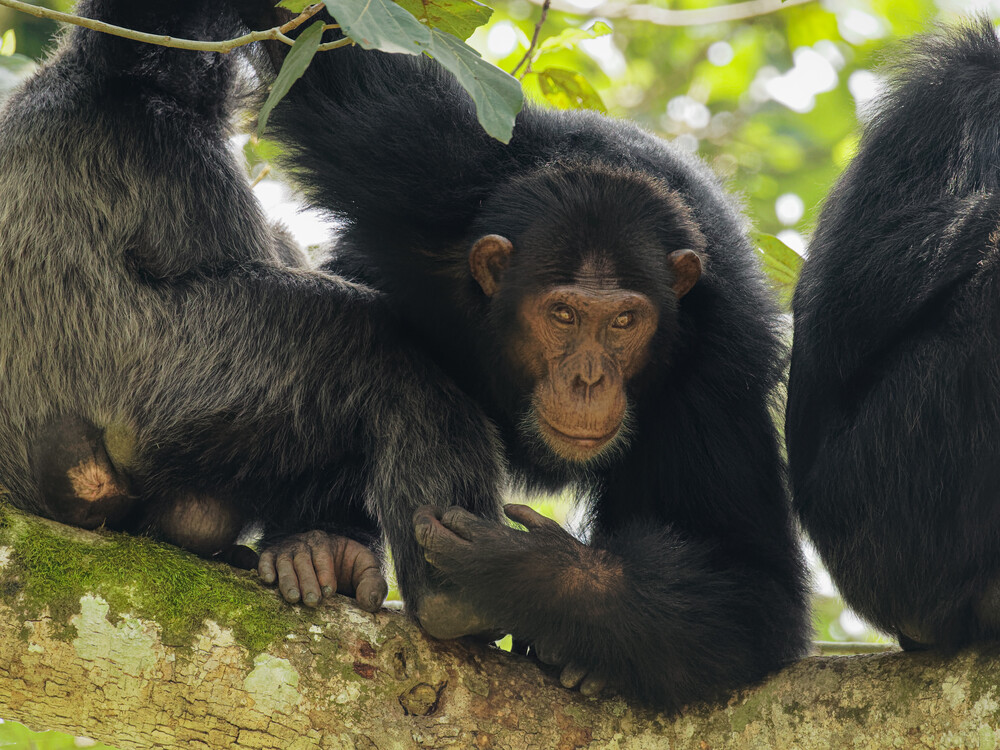

Chimpanzee trekking is undoubtedly the most famous safari activity in Nyungwe Forest and one of Rwanda’s most extraordinary wildlife experiences. For many visitors, the opportunity to encounter wild chimpanzees in their natural habitat is the primary reason for visiting the park.
The forest supports more than 500 chimpanzees, making it one of the most important chimpanzee habitats in East Africa. Several chimpanzee communities have undergone habituation, allowing visitors to observe them safely while ensuring their natural behaviors remain undisturbed.
Chimpanzees are fascinating animals because of their close evolutionary relationship with humans. Sharing approximately 98 percent of our DNA, they display remarkable intelligence, emotional complexity, social organization, and problem-solving abilities. Observing them in the wild often creates powerful emotional connections and provides valuable insights into human evolution.
A typical chimpanzee trekking experience begins very early in the morning, often before sunrise. Visitors gather at designated briefing points where experienced park rangers explain safety procedures, conservation regulations, and trekking expectations. The early start is important because chimpanzees are most active during the morning hours.
Specialized tracking teams usually enter the forest ahead of visitors to locate chimpanzee groups using vocal calls, nesting sites, feeding signs, and knowledge of previous movements. Once the location of a chimpanzee community is confirmed, visitors begin trekking through the rainforest under the guidance of experienced trackers.
The trek itself is often an adventure. Visitors walk through dense vegetation, cross streams, climb forested slopes, and explore remote sections of Nyungwe Forest while listening for the distinctive calls of chimpanzees echoing through the canopy.
The moment chimpanzees are located is often unforgettable. Visitors may observe individuals feeding on fruit, grooming one another, caring for infants, playing, communicating through vocalizations, or moving rapidly through the trees. Unlike gorillas, chimpanzees are highly active and rarely remain in one place for long, creating a dynamic and exciting wildlife experience.
The one-hour observation period allows guests to appreciate the complexity of chimpanzee society while witnessing behaviors that closely resemble those of humans. For many travelers, chimpanzee trekking in Nyungwe Forest becomes one of the most memorable wildlife experiences of their lives.
Primate Tracking Adventures in Nyungwe Forest
Beyond chimpanzees, Nyungwe Forest is one of Africa’s greatest destinations for primate tracking. The park supports thirteen species of primates, making it one of the most primate-rich forests on the continent.
This remarkable diversity means that visitors frequently encounter multiple primate species during a single forest excursion. Each species contributes to the ecological complexity and wildlife appeal of the forest, creating endless opportunities for observation and photography.
Among the most commonly observed species are black-and-white colobus monkeys. These striking primates are known for their dramatic appearance, long flowing white tails, and highly social behavior. One of the most spectacular wildlife experiences in Nyungwe Forest involves encountering enormous troops of colobus monkeys that can contain several hundred individuals moving together through the canopy.
Grey-cheeked mangabeys are another highlight. These intelligent and energetic monkeys often travel in noisy groups and are frequently encountered during forest walks. Their social interactions and active behavior make them particularly enjoyable to observe.
Visitors may also encounter L’Hoest’s monkeys, blue monkeys, red-tailed monkeys, vervet monkeys, and the elusive owl-faced monkey. Each species occupies a slightly different ecological niche within the forest, contributing to the incredible diversity that characterizes Nyungwe Forest.
Primate tracking excursions provide far more than simple wildlife viewing. Guides help visitors understand the behavior, ecology, conservation challenges, and evolutionary significance of the species encountered. These educational elements enhance appreciation for the forest and its inhabitants.
For wildlife enthusiasts, primate tracking in Nyungwe Forest offers one of the richest and most rewarding rainforest experiences available anywhere in Africa.
The Famous Nyungwe Forest Canopy Walk
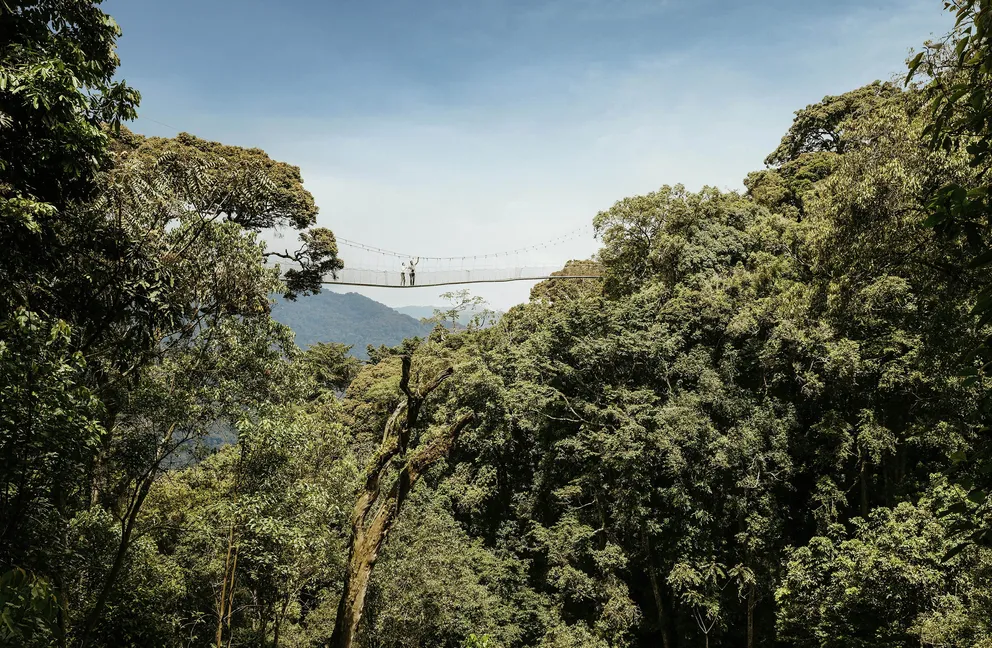

The canopy walkway is on of the most iconic attractions in Nyungwe Forest and has become one of Rwanda’s most celebrated tourism experiences. Few activities provide such a dramatic perspective of the rainforest ecosystem.
The canopy walk consists of a suspended bridge system positioned approximately 70 meters above the forest floor and extending roughly 160 meters across a deep forest valley. Accessing the walkway requires a scenic hike through the rainforest, adding to the sense of adventure and anticipation.
Stepping onto the suspended bridge offers an entirely different perspective of Nyungwe Forest. Instead of viewing the rainforest from below, visitors find themselves at canopy level, surrounded by treetops and panoramic views stretching across valleys, mountains, and seemingly endless forest landscapes.
From this elevated position, guests gain a greater appreciation for the scale and complexity of the rainforest ecosystem. Many animals and birds that remain hidden from ground level become visible from the canopy. Monkeys frequently move through nearby trees, colorful birds fly past at eye level, and butterflies drift through patches of sunlight.
The canopy walkway is particularly popular with photographers because it provides exceptional opportunities to capture panoramic forest landscapes. Early morning visits often reveal mist rising through the valleys, creating breathtaking scenes that rank among the most beautiful in Rwanda.
For birdwatchers, the canopy walk offers access to species that spend most of their time in the upper layers of the forest. Turacos, hornbills, sunbirds, and many other species can often be observed from the bridge.
The experience combines adventure, wildlife observation, photography, and environmental education into a single activity. For many visitors, the canopy walk becomes the highlight of their Nyungwe Forest safari because it provides a unique perspective unavailable elsewhere in Rwanda.
Standing high above one of Africa’s oldest rainforests while surrounded by spectacular scenery creates memories that remain long after the safari has ended, making the canopy walk one of the defining experiences of Nyungwe Forest.
Hiking Trails in Nyungwe Forest
One of the most rewarding ways to experience Nyungwe Forest is by exploring its extensive network of hiking trails. The park contains more than 130 kilometers of well-maintained trails that wind through some of the most beautiful rainforest landscapes in Africa.

These trails allow visitors to immerse themselves in the forest while discovering its incredible biodiversity, scenic viewpoints, waterfalls, wildlife, and unique ecosystems. Unlike many safari destinations where wildlife viewing occurs primarily from vehicles, hiking in Nyungwe Forest offers a deeply personal connection with nature.
The forest’s trail system caters to a wide range of fitness levels and interests. Some walks are short and relatively easy, while others involve more challenging climbs through mountainous terrain. Each trail offers its own unique attractions and ecological highlights.
Igishigishigi Trail
The Igishigishigi Trail is one of the most popular routes in Nyungwe Forest and serves as the gateway to the famous canopy walkway. The trail passes through beautiful sections of rainforest while providing excellent opportunities for birdwatching and wildlife observation.
Its relatively moderate difficulty level makes it suitable for many visitors, and the spectacular canopy walk at the end of the hike provides one of Rwanda’s most iconic tourism experiences.
Kamiranzovu Trail
The Kamiranzovu Trail explores one of the most fascinating ecosystems within Nyungwe Forest. This route leads visitors through wetlands, forest clearings, and areas rich in unique plant life.
The trail provides opportunities to observe rare bird species, unusual vegetation, and beautiful landscapes while learning about the ecological importance of the forest’s wetland systems.
Bigugu Trail
For travelers seeking a more challenging adventure, the Bigugu Trail offers one of the most rewarding hiking experiences in Nyungwe Forest. The trail climbs to one of the park’s highest peaks, providing breathtaking panoramic views across the forest and surrounding mountains.
On clear days, visitors can see vast expanses of rainforest stretching toward the horizon, making the climb well worth the effort.
Isumo Waterfall Trail
The Isumo Waterfall Trail is widely regarded as one of the most scenic hikes in Nyungwe Forest. The route passes through dense rainforest, crosses streams, and traverses beautiful valleys before reaching the spectacular Isumo Waterfall.
The journey itself is filled with wildlife sightings, birdwatching opportunities, and stunning scenery, making it one of the most memorable hiking experiences in Rwanda.
Together, these trails showcase the extraordinary diversity, beauty, and ecological richness that make Nyungwe Forest one of Africa’s greatest rainforest destinations.
Wildlife Beyond Primates
Although primates are the most famous inhabitants of Nyungwe Forest, the park supports an extraordinary variety of additional wildlife species that contribute to its ecological richness and safari appeal.
The forest’s biodiversity extends far beyond chimpanzees and monkeys. Every walk through the rainforest presents opportunities to encounter fascinating creatures that play important roles within the ecosystem.
Forest duikers, small antelope adapted to life within dense vegetation, are occasionally spotted moving quietly through the undergrowth. These shy animals are often difficult to observe, making sightings particularly rewarding.
Chameleons are another highlight of Nyungwe Forest. Several species inhabit the park, and guides frequently help visitors locate these remarkable reptiles camouflaged among branches and foliage. Their unique appearance and slow movements make them fascinating subjects for photography.
Tree hyraxes, distant relatives of elephants despite their small size, inhabit the forest canopy and are sometimes heard calling during the evening. Their unusual vocalizations often surprise visitors unfamiliar with these secretive animals.
The forest is also home to countless butterfly species that add color and movement to the landscape. During sunny periods, visitors may encounter large numbers of butterflies fluttering along trails and forest clearings.
Numerous amphibians and reptiles thrive within the moist rainforest environment. Frogs, lizards, and other small creatures contribute to the ecological complexity of Nyungwe Forest and provide additional opportunities for wildlife enthusiasts.
Because of this extraordinary biodiversity, every visit to Nyungwe Forest reveals new discoveries and reinforces the importance of preserving one of Africa’s richest ecosystems.
Conservation Success of Nyungwe Forest
The preservation of Nyungwe Forest is widely regarded as one of Rwanda’s greatest conservation achievements. The survival of this ancient rainforest is the result of decades of dedication, collaboration, and sustainable management involving government agencies, conservation organizations, researchers, local communities, and tourism stakeholders.

Historically, the forest faced numerous threats including illegal logging, poaching, agricultural expansion, and human settlement pressures. Without intervention, these activities could have caused significant environmental degradation and biodiversity loss.
Recognizing the forest’s immense ecological importance, Rwanda implemented strong conservation measures to protect Nyungwe Forest and its wildlife. Enhanced law enforcement, community engagement programs, scientific research initiatives, and sustainable tourism development have all contributed to the forest’s successful preservation.
Today, Nyungwe Forest serves as a model for rainforest conservation in Africa. Tourism plays a particularly important role in supporting these efforts. Revenue generated from permits, accommodations, guiding services, and other tourism activities contributes directly to habitat protection, ranger patrols, scientific research, conservation education, and community development projects.
Many local communities benefit from tourism-related employment and conservation partnerships, creating incentives to support the protection of the forest and its wildlife.
Visitors to Nyungwe Forest become active participants in conservation simply by choosing to visit. Every safari contributes to the long-term protection of one of Africa’s most valuable ecosystems and helps ensure that future generations can continue to experience its extraordinary biodiversity.
Luxury Safari Experiences in Nyungwe Forest
Luxury travelers visiting Nyungwe Forest can enjoy some of Rwanda’s finest accommodations while experiencing one of Africa’s most beautiful rainforest environments. Luxury safari experiences combine wildlife encounters, personalized service, exceptional comfort, and exclusive activities to create unforgettable journeys.
The most prestigious luxury property associated with Nyungwe Forest is One&Only Nyungwe House. Located on the edge of the rainforest amid rolling tea plantations, the lodge offers an extraordinary blend of sophistication and natural beauty.
Guests enjoy luxurious suites, gourmet cuisine, wellness treatments, private experiences, and direct access to chimpanzee trekking and other forest activities. Personalized service and exceptional attention to detail make it one of Africa’s premier rainforest lodges.
Another excellent option is Nyungwe Top View Hill Hotel, which offers panoramic views of the surrounding landscape, comfortable accommodations, and convenient access to the park.
Luxury safaris in Nyungwe Forest often include private guides, customized itineraries, premium transportation, birdwatching excursions, canopy walk experiences, and exclusive cultural encounters. These personalized experiences allow guests to explore the rainforest at their own pace while enjoying exceptional comfort throughout their stay.
Combining Nyungwe Forest with Other Rwanda Safari Destinations


One of the greatest advantages of visiting Nyungwe Forest is its ability to complement other premier destinations throughout Rwanda. Many travelers combine the rainforest experience with additional safari highlights to create comprehensive itineraries that showcase the country’s remarkable diversity.
A popular combination includes visiting Volcanoes National Park for mountain gorilla trekking. Together, chimpanzee trekking in Nyungwe and gorilla trekking in Volcanoes create one of Africa’s ultimate primate safari experiences.
Visitors frequently continue to Akagera National Park, where traditional game drives offer opportunities to see lions, elephants, rhinos, buffaloes, leopards, giraffes, zebras, and numerous antelope species.
For relaxation, many travelers visit Lake Kivu. The lake’s beautiful beaches, scenic shorelines, and water-based activities provide the perfect contrast to rainforest adventures.
Cultural experiences are often incorporated through visits to Kigali, where travelers can explore museums, historical sites, local markets, and Rwanda’s vibrant contemporary culture.
These multi-destination safaris allow visitors to experience the full spectrum of Rwanda’s natural beauty, wildlife diversity, and cultural heritage.
Best Time to Visit Nyungwe Forest
Nyungwe Forest can be visited throughout the year, and each season offers unique advantages.
The dry seasons from June to September and December to February generally provide the most comfortable hiking conditions. Trails are less muddy, wildlife viewing is excellent, and these months are often considered the best periods for chimpanzee trekking, hiking, and canopy walks.
The rainy seasons from March to May and October to November transform the forest into a spectacular green paradise. During these months, waterfalls are at their most impressive, vegetation becomes exceptionally lush, and bird activity increases significantly.

Photographers often prefer the wetter seasons because mist-covered mountains and vibrant rainforest scenery create extraordinary visual opportunities. Travelers seeking lower costs and fewer crowds may also find excellent value during these quieter periods.
Regardless of when you visit, Nyungwe Forest remains one of Africa’s most rewarding rainforest destinations and offers unforgettable experiences throughout the year.
Book Your Nyungwe Forest Safari Experience
Whether you dream of tracking chimpanzees through ancient rainforest, walking high above the canopy, photographing rare birds, hiking scenic trails, or relaxing in a luxury rainforest lodge, Nyungwe Forest offers extraordinary experiences for every traveler.
Our Rwanda safari specialists can design personalized itineraries that showcase the very best of Nyungwe Forest, including permits, accommodations, transportation, professional guides, birdwatching excursions, chimpanzee trekking, and multi-destination safari extensions.
Contact us today to begin planning your unforgettable Nyungwe Forest safari and discover why this ancient rainforest remains one of Africa’s most remarkable natural treasures.