Why Mountain Gorillas Rarely Drink Water (Complete Guide — Uganda & Rwanda)
For many trekkers visiting Bwindi Impenetrable National Park, Mgahinga Gorilla National Park, and Volcanoes National Park in Rwanda, one of the most surprising facts about mountain gorillas is that they almost never drink water directly from streams, rivers, or ponds.
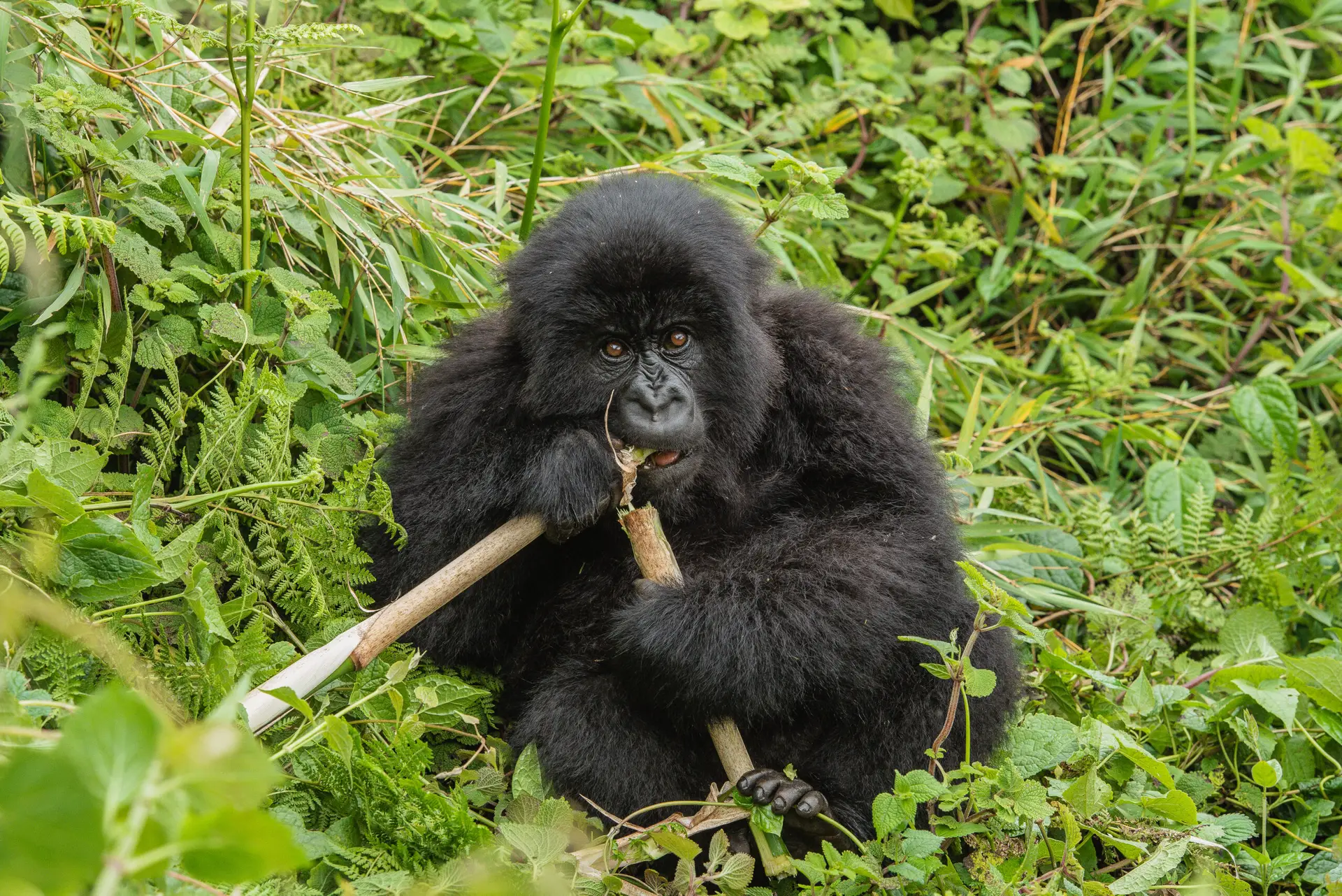
This behaviour fascinates scientists and visitors alike because, unlike humans and many other animals, mountain gorillas obtain nearly all the water they need from their diet. In a rainforest environment surrounded by water sources, this raises an important question;
Why do mountain gorillas rarely drink water?
The answer is rooted in physiology, ecology, evolutionary adaptation, feeding behaviour, and even parasite avoidance. This detailed guide explains the science, the behavioural reasons, and the ecological facts behind this unique aspect of gorilla survival.
The Core Reason: Mountain Gorillas Get Water From Vegetation
Mountain gorillas live on a diet that is overwhelmingly rich in moisture. Up to 85% of their daily food intake consists of green vegetation; leaves, stems, pith, roots, wild celery, bamboo shoots, fruits (especially in Bwindi Impenetrable National Park), and herbaceous plants.
These foods contain extremely high water content.
Gorillas consume 18–34 kilograms of this vegetation per day, depending on age and sex. This amount of plant matter provides more water than their bodies require.
This alone explains why gorillas rarely need to drink from standing water. But this behaviour is not simply a matter of convenience, it is deeply connected to survival strategy, evolution, and forest ecology.
Evolutionary Adaptation in a Moist Habitat
Mountain gorillas evolved in cold, wet, high-altitude forests where:
- rainfall is frequent
- humidity levels are high
- vegetation contains high water content
- ground foliage retains moisture
- dew forms on leaves each morning
In these habitats, water is everywhere; in the plants, on the leaves, in the roots, and in the stems. Gorillas adapted over millennia to rely on vegetation for hydration rather than open water.
Unlike savannah species that travel to watering holes, gorillas evolved to feed their thirst while feeding their hunger. This strategy is efficient and safe.
Avoiding Waterborne Parasites and Disease
One of the most important scientific explanations is related to health and parasite avoidance.
Open water sources in the forest; ponds, stagnant water, puddles, slow-moving streams often contain:
- parasites
- bacteria
- viruses
- intestinal worms
- disease-causing microbes
- faecal contamination from other animals
By not drinking directly from these sources, gorillas avoid ingesting harmful parasites.
This behaviour greatly improves survival rates, especially for infants and juveniles with developing immune systems.
Scientists believe that gorillas instinctively understand the risks of open water and rely on cleaner water found naturally inside plants.
This behavioural adaptation reflects remarkable evolutionary intelligence.
High-Altitude Hydration: The Forest Provides Everything
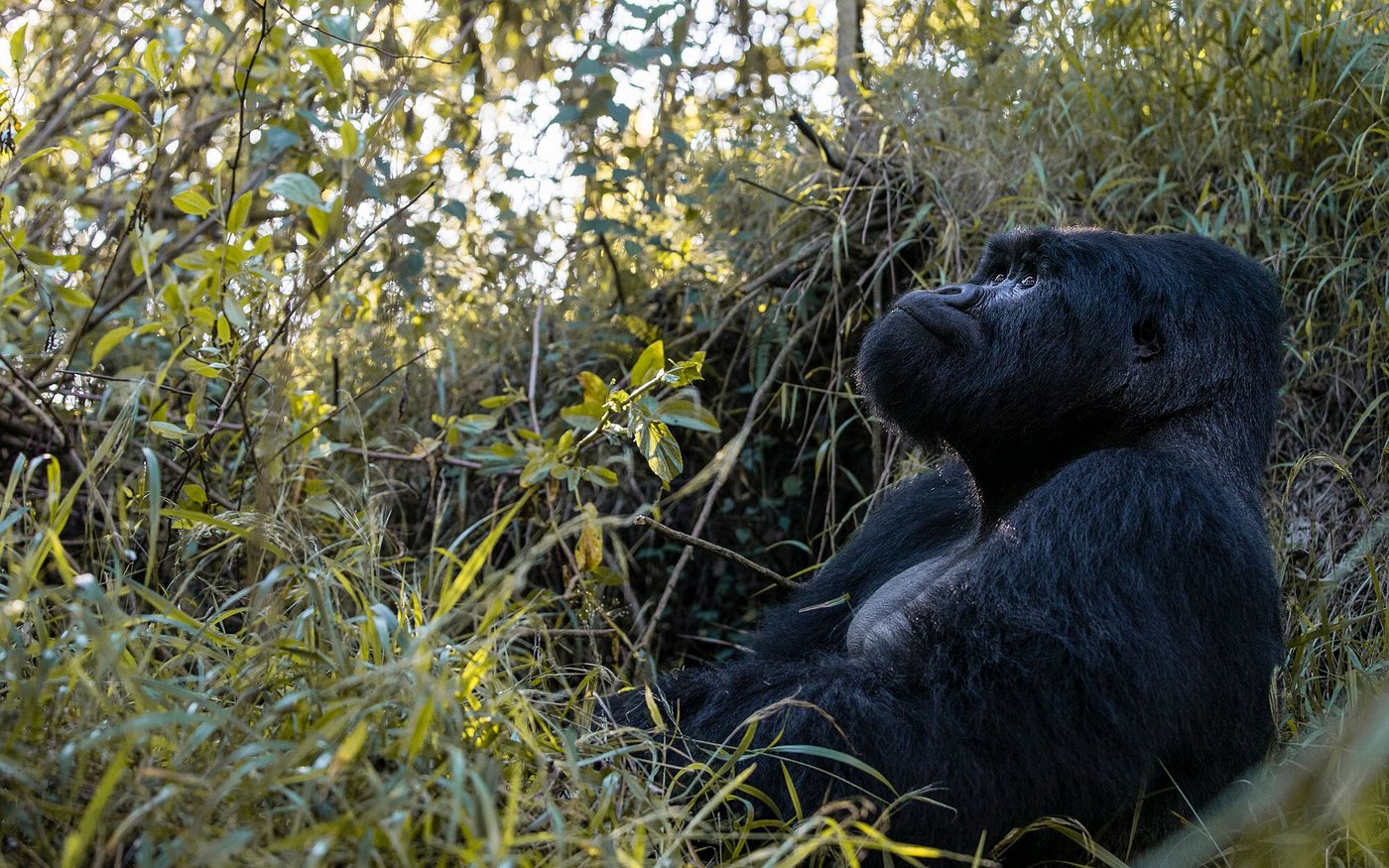
Mountain gorillas inhabit altitudes ranging from 2,200 to 4,000 meters in Rwanda and 1,200 to 2,600 meters in Uganda. These elevations experience:
- frequent rainfall
- morning fog
- heavy dew
- constant moisture on foliage
- mist that clings to vegetation
Every leaf and stem is essentially a natural water reservoir. Gorillas hydrate by:
- chewing water-rich pith
- eating tender herbaceous vegetation
- consuming wild celery (extremely hydrating)
- eating roots that hold water
- licking dew off leaves while feeding
- ingesting bamboo shoots (Rwanda) with high moisture content
The forest ecosystem eliminates the need to drink from water pools.
The Diet of Mountain Gorillas Is 60–90% Water
If you break down water content in the foods gorillas eat, the picture becomes clear:
- young leaves: 75–95% water
- pith and stems: 60–85% water
- bamboo shoots: 80–90% water
- wild celery: 95% water
- fruits (Bwindi Impenetrable National Park): 80–90% water
- roots: 70–80% water
With this incredible water intake, drinking becomes unnecessary.
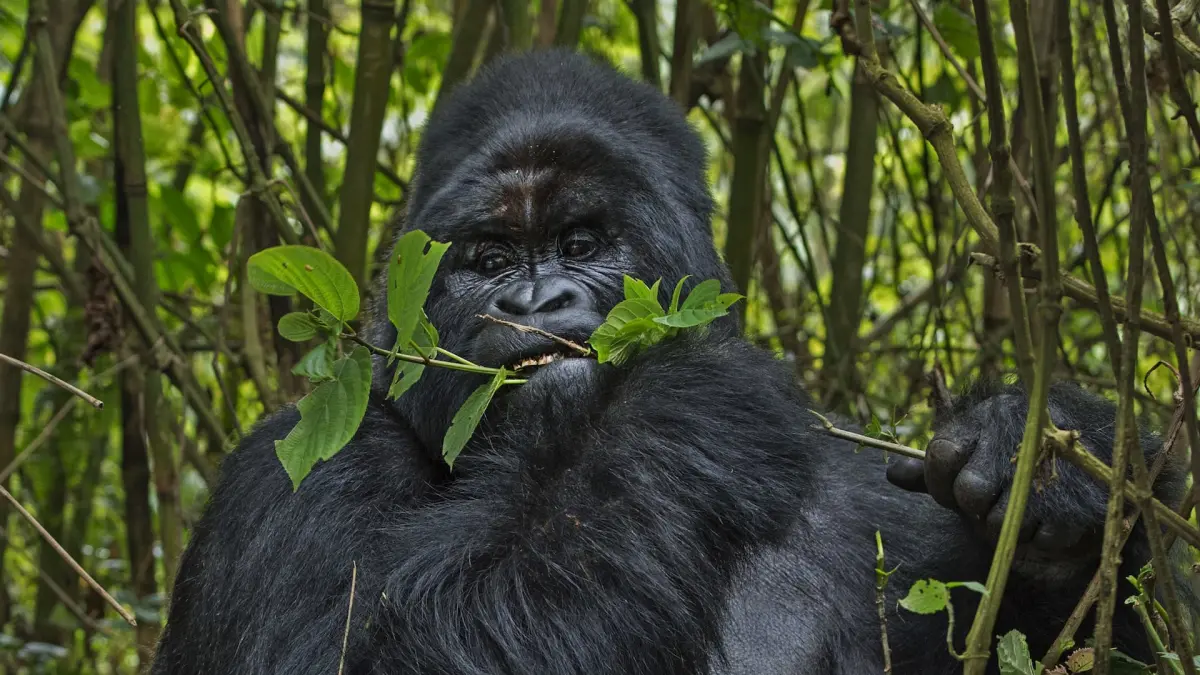
Even during drier months, the vegetation retains enough moisture for gorillas to stay hydrated without relying on water sources.
Physiological Adaptations for Moisture Extraction
Gorillas have specialized digestive systems designed to maximize hydration from vegetation. Their powerful jaws break down fibrous plants. Their long intestines and enlarged colon enable fermentation and moisture extraction.
Their gut microbiome is adapted for:
- breaking down cellulose
- fermenting tough plant materials
- releasing water trapped within fibrous structures
This biological system makes direct water drinking inefficient and unnecessary.
Their bodies are designed to hydrate through digestion, not through drinking.
Behavioural Avoidance of Dangerous Terrain
Many water sources in forests are located in areas that are:
- slippery
- swampy
- unstable
- exposure-prone
- home to predators (especially historically)
Approaching water sources increases risk. Mountain gorillas, despite their strength, are cautious animals that prefer stability and safety.
Avoiding risky terrain reduces injury and keeps infants safe from drowning hazards.
Water-rich plants allow gorillas to maintain hydration without risk.
Gorillas DO drink water – but rarely and only in specific ways
It is important to clarify that gorillas are not physically incapable of drinking water. They simply choose not to unless necessary.
When they do drink water, it usually happens in two scenarios:
1. Drinking water trapped in plants
They may lick dew or water droplets from leaves in the early morning.
2. Drinking from natural hollows
A silverback or adult female may drink from a natural depression in the ground filled with clean rainwater, especially during dry months.
This behaviour is uncommon but not unheard of. Even then, gorillas use their hands as scoops, not their mouths directly, further minimizing parasite contact.
Seasonal Variation in Water Consumption
Rainy seasons provide abundant water in vegetation, dew and soaked foliage. Dry seasons reduce water availability, but gorillas compensate by:
- eating more roots
- chewing thicker stems
- increasing consumption of leaf pith
- relying on bamboo shoots (in Rwanda)
- selecting plants that retain moisture longer
Their flexibility ensures hydration throughout the year.
Bwindi gorillas, with their diverse diet containing fruits, obtain more natural water than gorillas in Rwanda, particularly during fruiting seasons.
Hydration and Infant Gorilla Development
Infant gorillas receive nearly all their water from mothers’ milk, which is hydrating, nutrient-rich, and temperature stable. They do not seek external water sources and only transition to plant-based hydration when they begin eating solid food around four to six months.
Even then, their high dependence on moisture-rich vegetation ensures they rarely face dehydration risks.
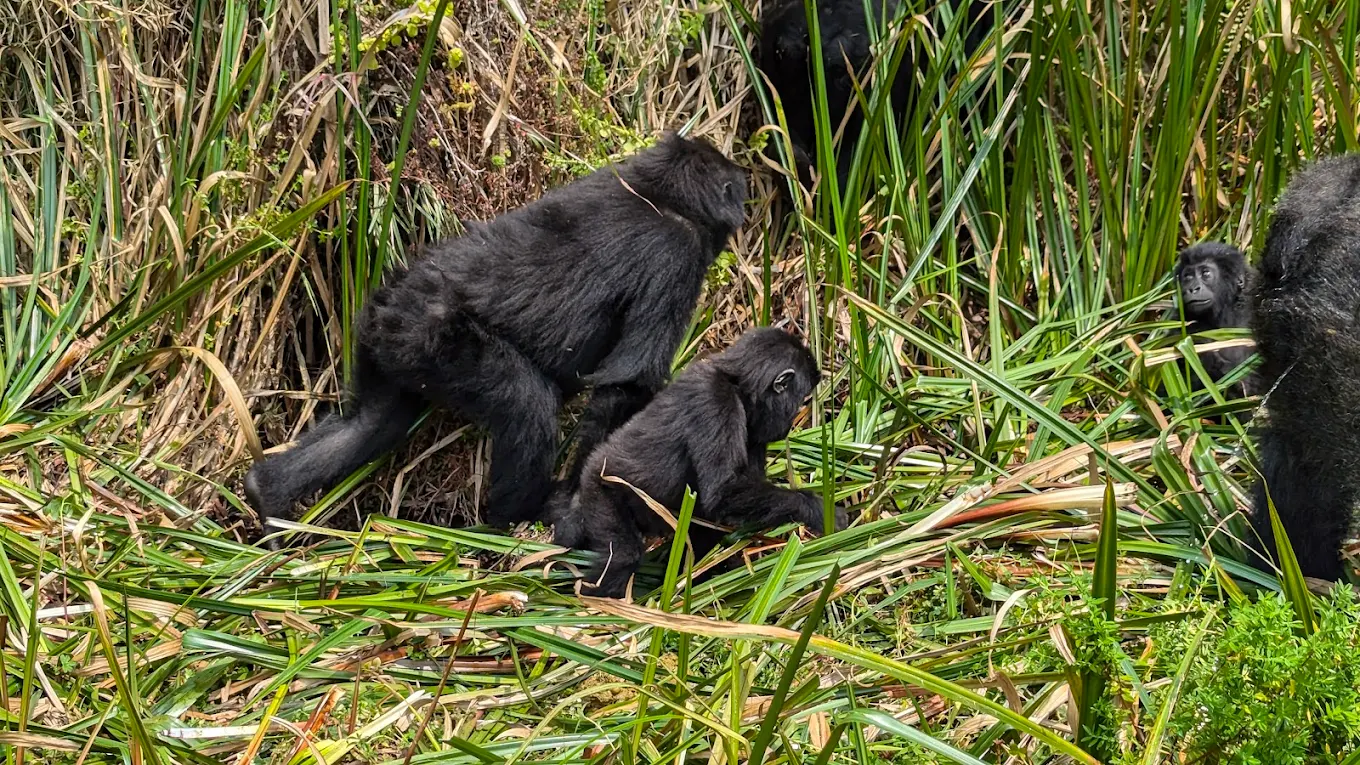
Mothers instinctively choose feeding zones with high-moisture plants when infants are young, enhancing hydration naturally.
Implications for Trekking and Conservation
Understanding gorilla hydration has important implications for conservation and trekking:
Reduced Disease Transmission
By avoiding water sources contaminated by domestic livestock or human activity, gorillas reduce exposure to viruses and parasites.
Habitat Protection
Maintaining diverse vegetation ensures gorillas have access to water-rich plants. Conservation of bamboo, hagenia forests, swamp edges, and herbaceous zones directly supports gorilla hydration.
Ranger Tracking
Fresh feeding signs help trackers locate gorilla groups more reliably than searching near water sources (unlike with elephants or buffalo).
Gorilla Trekking Experience
Trekkers often notice gorillas chewing stems and leaves that drip water, a visible demonstration of hydration through vegetation.
Understanding this behaviour deepens appreciation for gorilla adaptation and ecological sensitivity.
Comparison: Mountain Gorillas vs Lowland Gorillas & Chimpanzees
Not all great apes share this behaviour.
Lowland Gorillas
Lowland gorillas live in hot, low-altitude forests with less moisture-rich vegetation. They drink water more frequently and often dip their hands into streams.
Chimpanzees
Chimps frequently drink from streams, use leaf sponges to absorb water, and depend more on fruit hydration.
Mountain Gorillas
The combination of altitude, humidity, diet, and parasite avoidance makes water drinking unnecessary.
This difference highlights how each species adapts uniquely to its environment.
How Water-Rich Plants Influence Daily Gorilla Movement
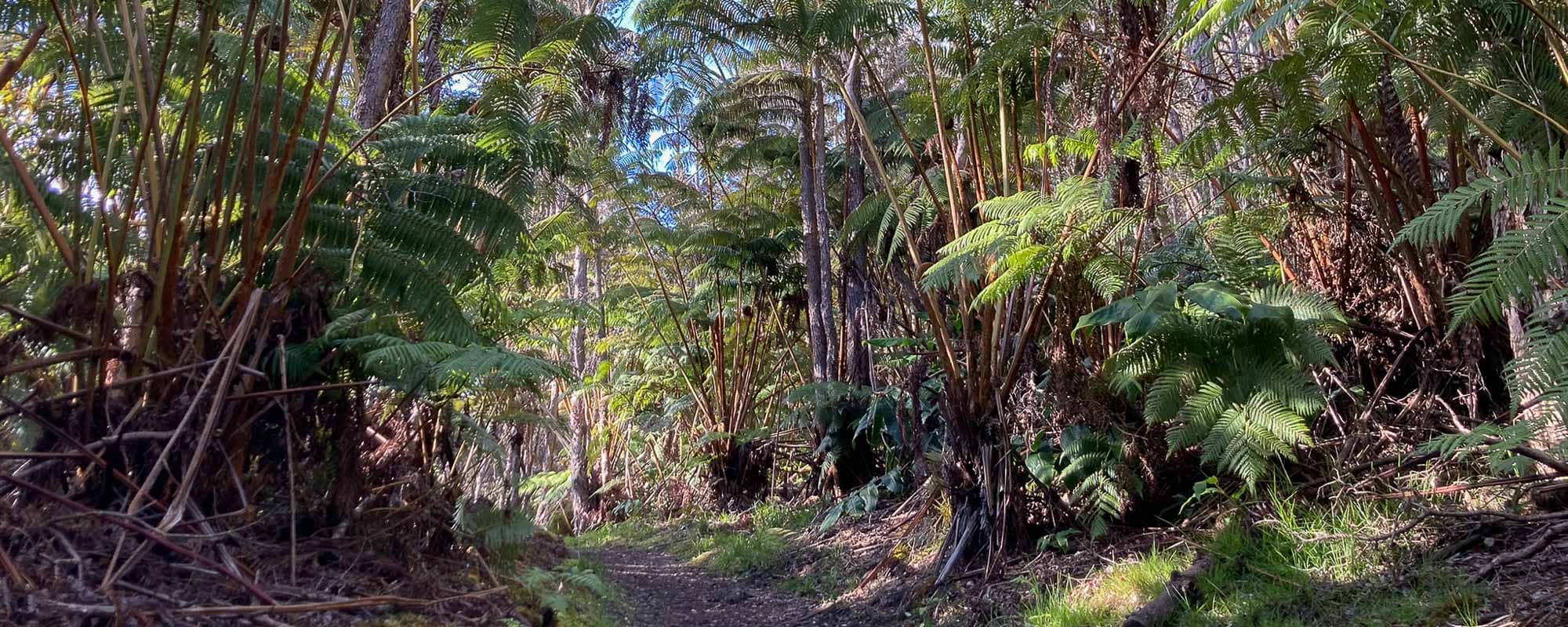
Gorilla travel routes often follow areas rich in hydrating vegetation:
- valleys with deep-rooted plants
- bamboo zones during shoot season
- herbaceous glades
- hagenia and afro-montane forest edges
- swamp fringes rich in wild celery
Gorillas know their forest intimately, following seasonal availability of water-rich foods.
This behaviour ensures hydration without relying on open water.
Why Gorillas Eat So Much | Hydration Included
The enormous quantities of vegetation gorillas consume serve two purposes:
- Energy replenishment — especially for silverbacks
- Fluid intake — replacing water lost through movement, heat, and feeding
Their digestive system is designed for continuous processing of fibrous material, and hydration is an integral part of this process.
Eating is drinking for gorillas.
Frequently Asked Questions About Why Gorillas Rarely Drink Water
Do gorillas ever drink water?
Yes, occasionally, but rarely, mostly from rain pools or by licking dew.
Is it dangerous for gorillas to drink from streams?
Yes. Open water often contains parasites and diseases.
Do gorillas get dehydrated?
Almost never. Their diet ensures stable hydration.
Do gorillas store water?
No. They continuously hydrate through food.
Why don’t gorillas drink like other animals?
Because their habitat, physiology, and diet evolved to make drinking unnecessary.
Final Thoughts – Hydration Through Evolutionary Genius
The fact that mountain gorillas rarely drink water is not a mystery — it is a masterpiece of evolutionary adaptation. Everything about their environment, from the mist-covered foliage of Bwindi Forest to the bamboo forests of Rwanda, provides water in the most efficient and safest form possible: within the plants they eat.
Their dietary habits, digestive physiology, parasite avoidance strategies, and daily movement patterns all reflect a survival system perfectly suited to the mountains.
Watching a gorilla chew a water-soaked stem or gently lick dew off a leaf is to witness millions of years of adaptation in action, a silent testimony to the brilliance of nature.