
Infant Gorilla Development Stages (Complete Guide – Uganda & Rwanda Mountain Gorillas)
Infant gorillas are among the most captivating sights in the forests of Bwindi Impenetrable National Park, Mgahinga Gorilla National Park, and Volcanoes National Park in Rwanda. Their soft faces, tiny hands, clumsy movements, and deep dependence on their mothers reveal the tender, emotional heart of gorilla society. But behind their adorable presence lies a complex developmental journey, one shaped by biology, family structure, forest ecology and the guidance of their mothers and the silverback.
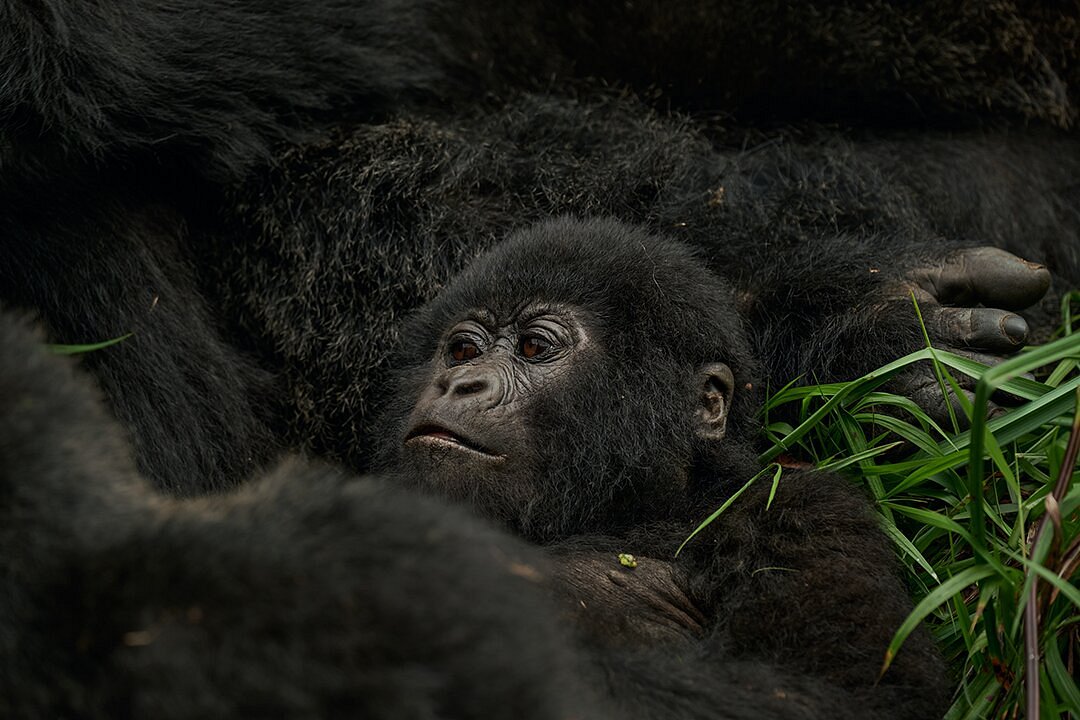
Understanding the development stages of infant gorillas offers a unique window into gorilla life. It shows how they learn to walk, climb, forage, communicate and eventually become independent members of their family. These stages reflect the intelligence, emotional depth, and intricate social structure of one of the world’s most remarkable primates.
This comprehensive article explores each stage of infant gorilla development from birth to adolescence, showing how gorillas grow physically, emotionally, socially, and behaviourally in Uganda and Rwanda’s mountain ecosystems.
Birth: The Beginning of Gorilla Life
Gorilla infants are born after an average gestation period of 8.5 months, similar to humans but with significant differences in development. At birth, an infant gorilla weighs just 1.5–2 kilograms, much smaller proportionally than a human baby. Their heads are large compared to their bodies, their hair is short and silky, and their grip reflex is powerful.
Infants are born fully dependent. They cannot walk, cannot control temperature effectively, and cannot survive without constant body contact with their mothers. The first hours after birth involve intense bonding. The mother inspects her infant, cleans it, cradles it against her chest, and begins nursing immediately. The family around her, particularly females shows gentle curiosity, while the silverback remains close and protective.
This birth environment reflects the emotional and social security of gorilla families.
Weeks 1–4: Total Dependence on the Mother
The first month of life is characterized by complete dependence. The infant remains pressed to the mother’s chest day and night, clinging with tiny hands. The mother supports the baby constantly, adjusting her movement to avoid disturbing it.
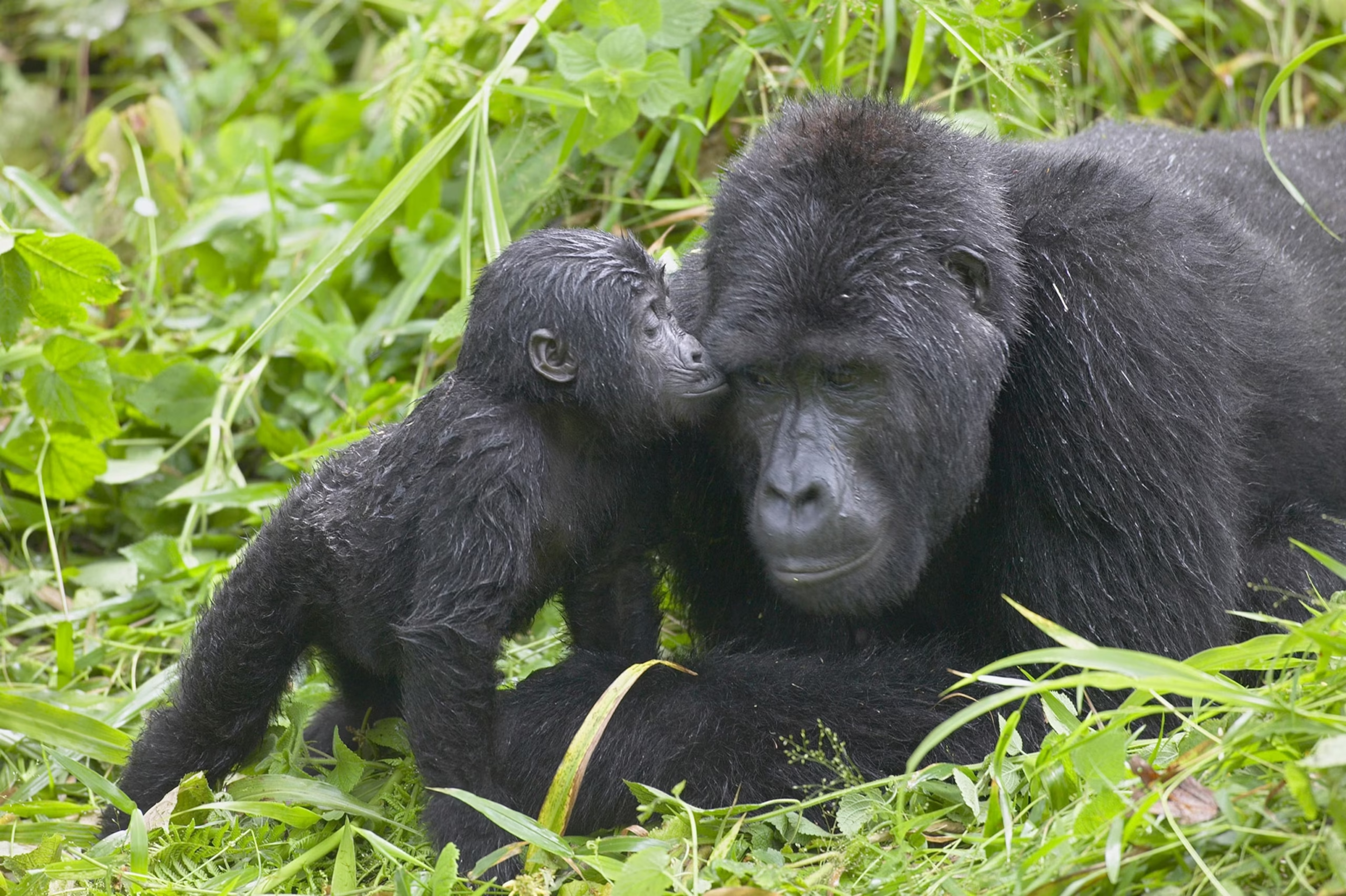
During this period, infants:
- nurse frequently
- learn the mother’s scent
- listen to her heartbeat
- respond to soft grunts of comfort
- sleep most of the day
- begin practicing very small finger movements
They also start developing facial recognition, an essential cognitive skill that will shape future social interactions.
The first four weeks establish the foundation of emotional security that infant gorillas rely on for the rest of their development.
Months 2–3: Stronger Grip and Curiosity Begins
By the second month, infant gorillas gain significant neck and upper-body strength. Their grip becomes more secure, and they can cling more independently without constant maternal support. While they still spend their entire day attached to their mothers, they begin lifting their heads, observing their surroundings, and showing interest in the world around them.
Mothers sometimes adjust positions so that infants can look outward. Infants begin tracking movement, recognizing family members, and responding to the calls of the silverback. Their curiosity is evident as they reach out to touch leaves, their mother’s hair, or passing family members.
Though still fragile, these months mark the awakening of sensory awareness.
Months 4–6: First Attempts at Sitting & Crawling
Between four and six months, infant gorillas undergo major physical changes. Their muscle strength increases dramatically, allowing them to sit unsupported for short periods. Mothers often place them gently beside their nests or on soft vegetation while feeding nearby.
Crawling begins during this stage, slow at first, with unstable movements and short distances. Infants also begin imitating behaviour they observe around them. They shake leaves, pat the ground, or explore nearby branches.
This period marks their very first steps toward independence, even though they remain deeply attached to their mothers.
Months 6–8: Riding on the Mother’s Back
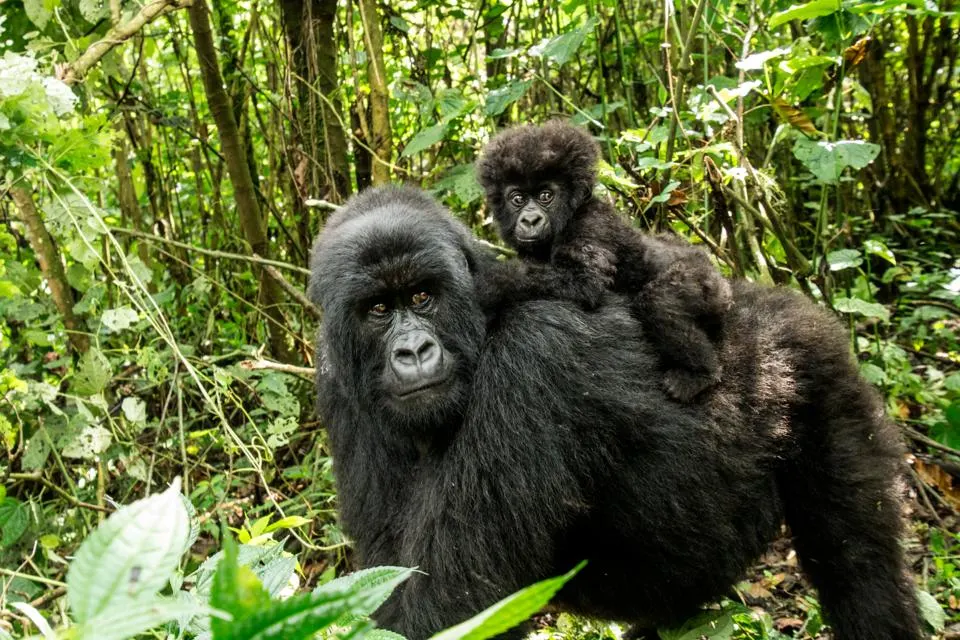
Around six months, infant gorillas transition from chest-clinging to riding on the mother’s back. This is one of the most important developmental milestones. Back-riding allows the mother to move more freely, climb efficiently, and forage longer distances.
While riding, infants practice balancing, gripping, and shifting their weight. They become more aware of the family’s daily movements and begin paying attention to silverback signals, feeding activity and sibling interactions.
This new viewpoint expands their cognitive and social understanding of family life.
Months 8–12: Exploration and Early Play
As the first year progresses, infants become increasingly active and adventurous. They begin leaving their mothers briefly to explore nearby vegetation, practice small climbing attempts and interact with siblings.
Play behaviour emerges strongly at this stage. Infants engage in:
- gentle wrestling
- rolling in leaves
- climbing low branches
- pulling vegetation
- following juveniles
Play is essential for strengthening muscles, building coordination and learning social etiquette. Infants also begin tasting vegetation, although they continue nursing frequently.
By 12 months, they have transitioned from passive observers to active explorers.
Year 1–2: Increased Mobility and Social Interaction
Between the first and second year, gorilla infants undergo a major transformation. Their legs become stronger, enabling them to move more confidently on their own. They begin walking small distances independently, sometimes climbing trees under the watchful eyes of their mothers.
This stage is marked by intense curiosity. Infants interact with juveniles more frequently and observe adult grooming sessions, rest periods, feeding behaviour and group dynamics. They learn communication signals, mimic chest-beating playfully, and respond to the silverback’s vocal instructions.
Although nursing continues, solid food gradually becomes part of their diet. Their digestive system adapts to vegetation, allowing them to process fibrous plants.
This stage is crucial for developing confidence, mobility, and early social roles within the family.
Year 2–3: The Toddler Stage – Independence with Supervision
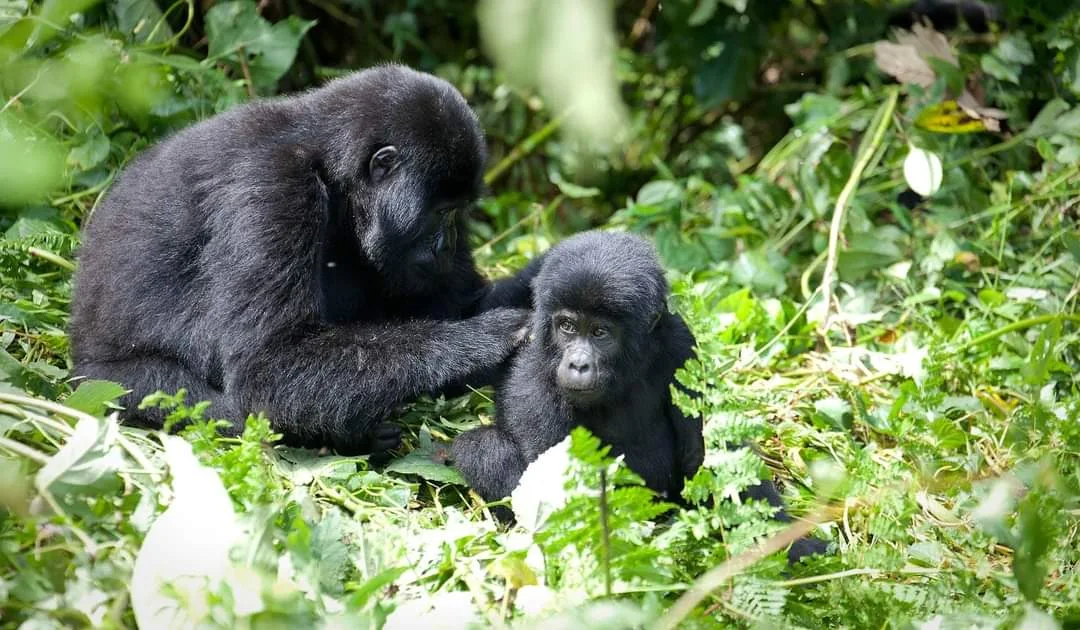
During this stage, infants evolve into confident toddlers. They spend much more time away from their mothers, exploring independently but always staying within the safe radius of family members. Their climbing skills improve significantly, and they can navigate moderate slopes and branches.
This is the period when their personalities emerge clearly. Some are bold and adventurous, others cautious and gentle. Their play becomes more sophisticated, involving chasing games, mock charges and rough-and-tumble wrestling with siblings.
Their emotional intelligence also deepens. They comfort distressed siblings, respond sensitively to vocal cues from mothers, and understand dominance signals from silverbacks and adult females. Nursing declines sharply as plant foods take over their diet.
By the end of the third year, young gorillas become more integrated into family routines and less dependent on constant maternal contact.
Year 3–4: Learning Forest Skills and Family Rules
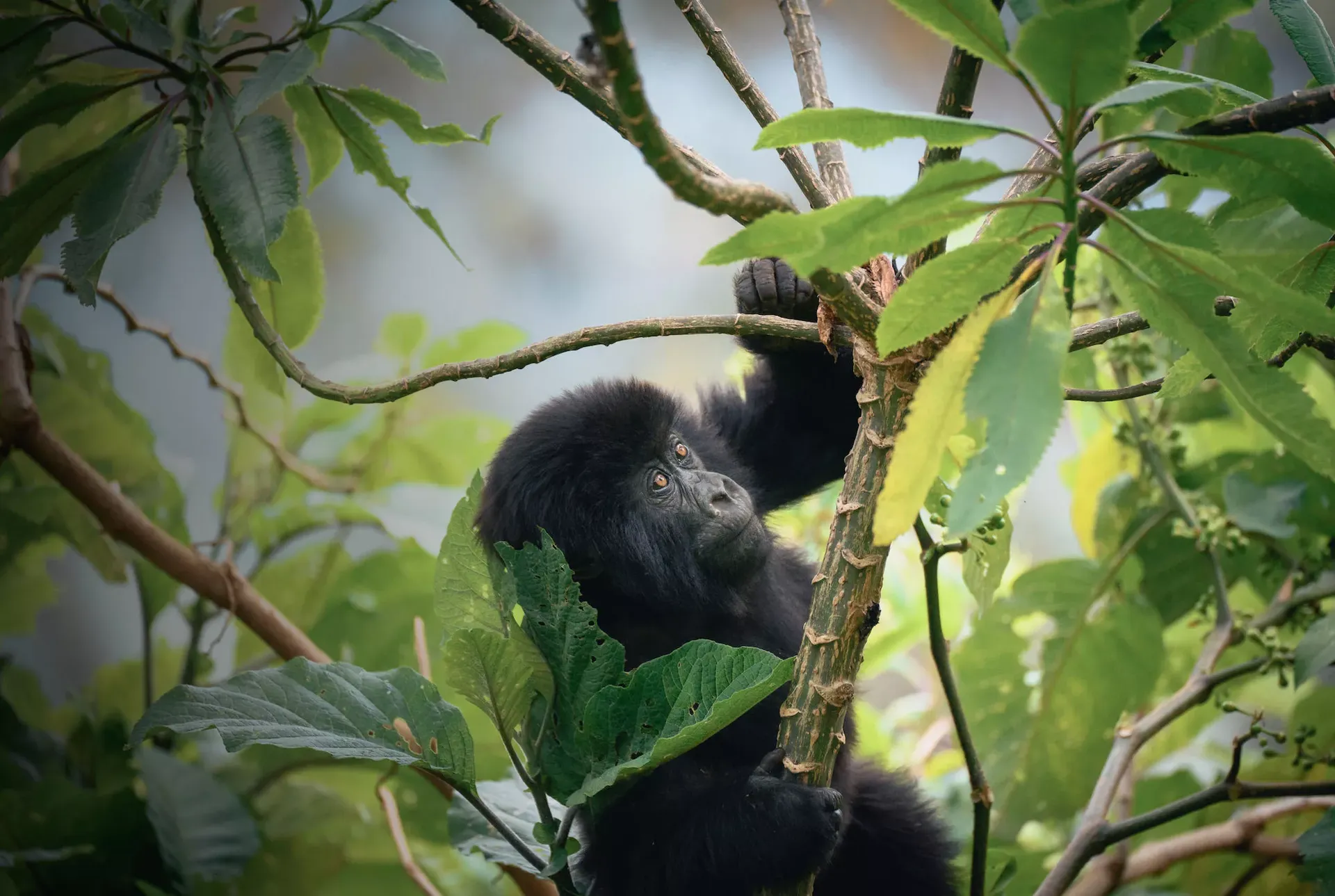
This stage focuses on survival skills. Young gorillas begin practicing:
- nest-building
- advanced climbing
- foraging
- recognizing food plants
- avoiding dangerous vegetation
- interpreting forest landmarks
They observe adults carefully, imitating their techniques in stripping bark, folding leaves or selecting specific plants. Their cognitive development accelerates as they start understanding the structure of the family, including hierarchy and relationships.
Interaction with the silverback becomes more meaningful. Silverbacks often tolerate toddlers climbing on them, pulling their fur, or playing at their feet. These interactions help young gorillas develop trust, confidence and a sense of security.
Discipline also increases. Adult females correct misbehaviour through soft slaps, vocal warnings or physical redirection. These lessons teach social etiquette and cooperation, essential for adulthood.
Year 4–5: Transition Toward Juvenile Life
Around age four or five, infant gorillas transition into the juvenile category. This stage marks the end of infancy and the beginning of a more independent life stage. They start building simple sleeping nests separate from their mothers, though still nearby. This is one of the most important signs of growing independence.
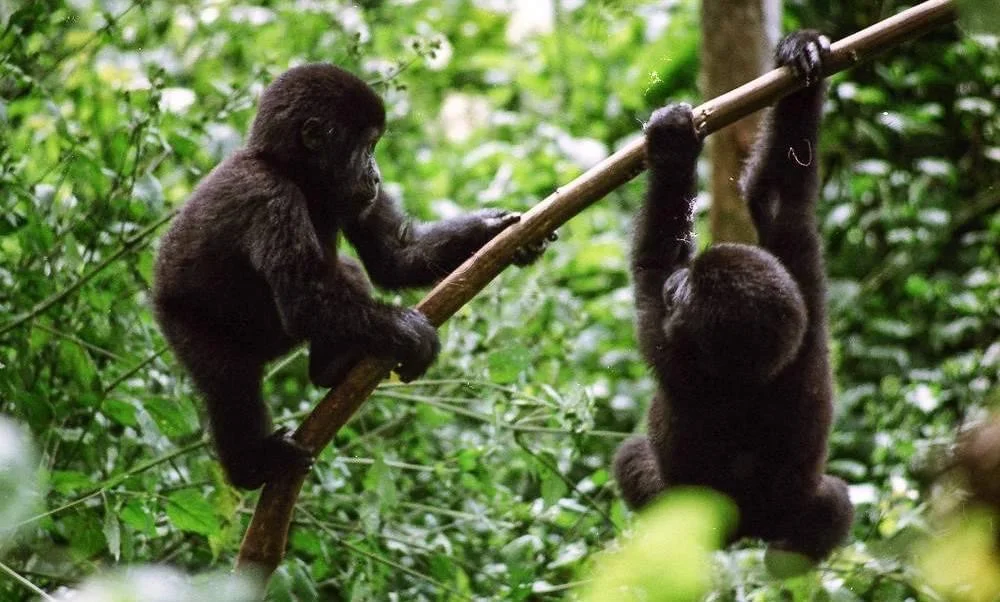
Their diet becomes fully herbivorous, matching adult preferences. Their bodies gain muscle, coordination sharpens, and daily activity increases. Young gorillas are energetic, playful and socially engaged, participating in group behaviours more confidently.
This is also a period of emotional strength. They begin understanding family alliances, forming deep bonds with siblings, and respecting the authority of the silverback. Social learning becomes their primary developmental focus.
By age five, the once fragile infants have grown into resilient, active young gorillas ready for the complex journey toward adulthood.
Social Development Throughout Infancy
The emotional and social development of infant gorillas is as important as their physical growth. From birth, infants are surrounded by constant social cues, soft maternal grunts, protective silverback rumbles, playful gestures from siblings and gentle grooming from older females.
Infants learn:
- empathy
- conflict avoidance
- comfort-seeking
- group movement coordination
- respect for dominance
- emotional bonding
- communication signals
Social learning sets the foundation for harmonious family life. Gorillas are peaceful animals, and much of their emotional intelligence begins forming in infancy.
Cognitive Development: Learning Through Observation
Infant gorillas learn primarily by watching adults. Every daily activity provides a lesson:
- how to forage
- how to climb
- how to communicate
- how to build nests
- how to respond to danger
- how to groom
- how to interpret silverback signals
Their brain development is rapid. Cognitive milestones are closely tied to motor skills, social interactions and emotional bonding.
The forest becomes their classroom and the family becomes their teachers.
Emotional Development: Attachment, Trust & Comfort
Emotionally, infant gorillas develop secure attachments to their mothers, which form the foundation of their well-being. The silverback also plays a significant emotional role, offering stability and reassurance through his presence.
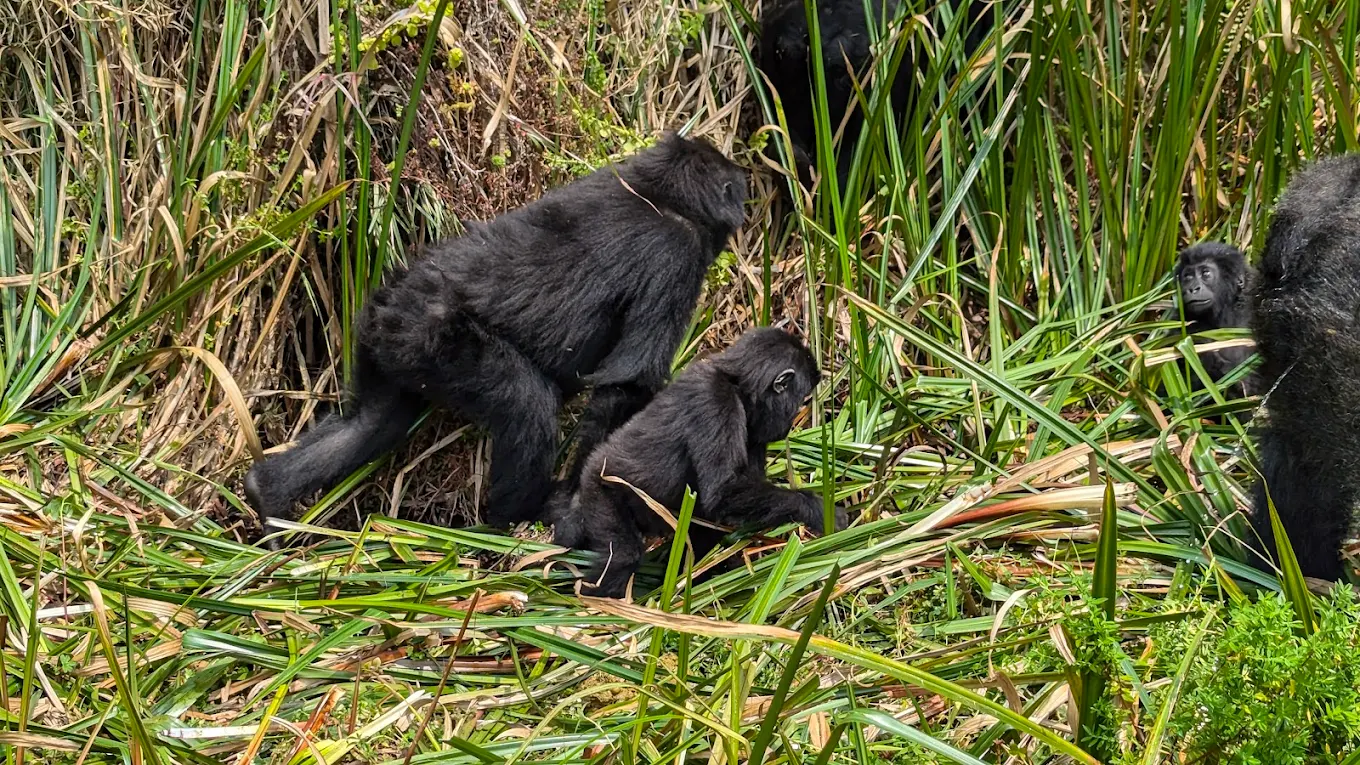
Gorillas display affection through touch, grooming, soft vocalizations, and proximity. Infants rely on these emotional cues for security. Emotional development includes understanding fear, joy, comfort, and social boundaries.
This emotional grounding makes gorilla society stable and cooperative.
Communication Development: Learning How to “Talk”
Infant gorillas begin vocalizing early. They produce soft squeaks, grunts, and distress calls to communicate with their mothers. As they grow, they learn more complex vocalizations, including playful panting, contented humming during feeding, and attention-seeking sounds.
They also learn non-vocal communication:
- gestures
- facial expressions
- eye contact
- posture
- chest-beating (play version)
Communication is essential for collaboration, emotional bonding, and social harmony.
Diet Development: From Milk to Plants
Infant gorillas rely solely on mother’s milk for the first months. As their digestive system matures, they begin tasting plant foods, learning which plants are safe, palatable, or nutritious.
Nursing gradually declines until about three to four years. Plant consumption becomes dominant, influenced by seasonal availability. By juvenile age, their diet matches that of adults.
Learning to eat properly is essential for survival, especially during seasonal shifts.
Nest Development: A Sign of Growing Independence
Infants begin practicing nest building during the day around age two or three, creating small, playful structures. By age four, they may start sleeping in their own simple nests while still close to their mothers. Nest building requires cognitive skills, manual dexterity and observational learning.
Creating nests is a major developmental milestone symbolizing independence.
Danger Awareness & Survival Skills
Infant gorillas learn danger cues from mothers and the silverback. They imitate avoidance behaviours, respond to alarm calls and stay close to adults during conflict. Over time, they learn how to navigate the forest safely, avoid risky terrain and interpret silverback signals during tense moments.
Survival skills continue into juvenile years, preparing them for adulthood.
Role of the Silverback in Infant Development
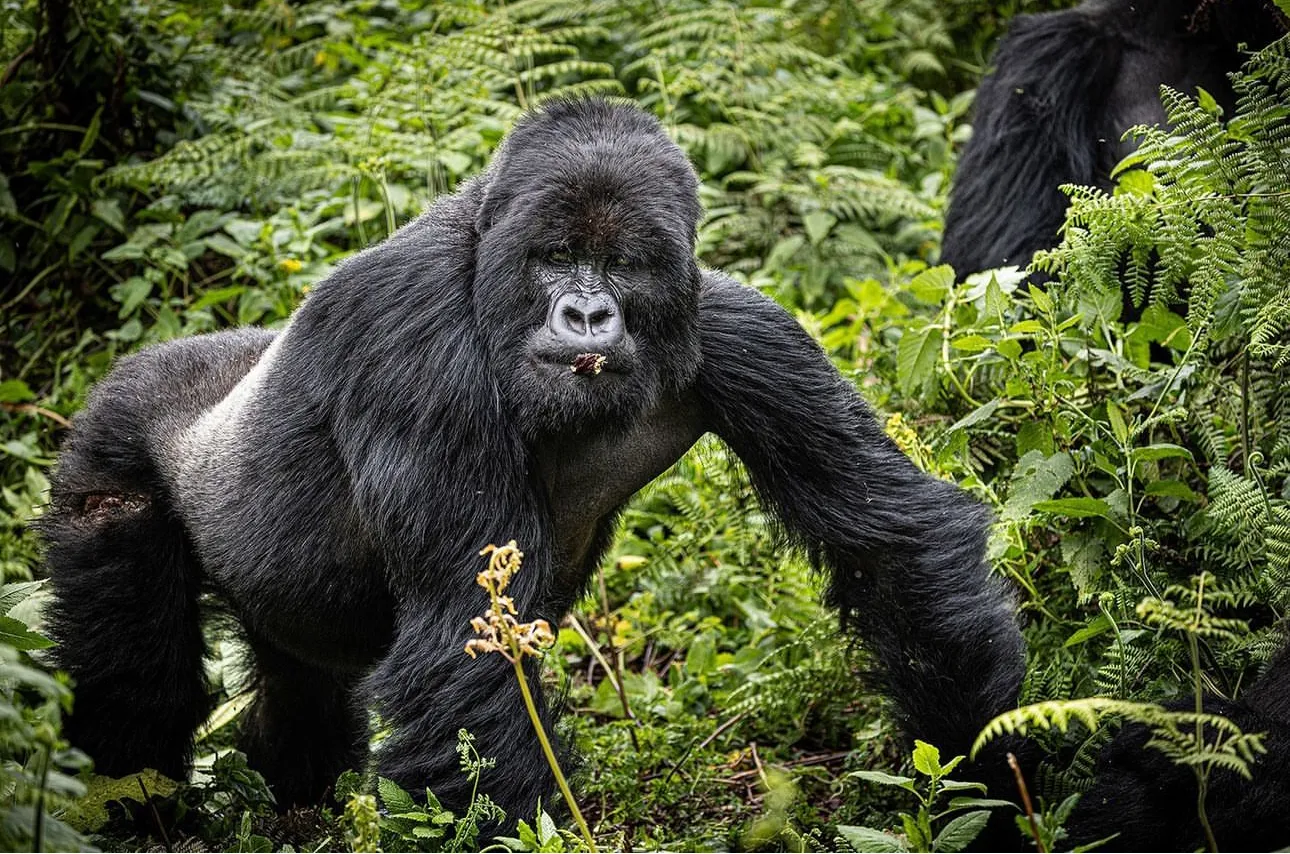
The silverback is more than a protector; he is a central figure in infant development. Infants feel safe around him, often climbing onto him or playing near his nest. His calm presence provides emotional security and his deep rumbles guide family movement and behaviour.
Silverbacks discipline juveniles gently, resolve conflicts and foster group harmony. Their role is essential in shaping confident, emotionally stable young gorillas.
Differences Between Uganda & Rwanda in Infant Development
Both populations follow identical biological stages, but environment influences certain behaviours.
Bwindi Impenetrable National Park gorillas develop in a dense, mixed forest environment where climbing is more frequent and movement is more varied due to terrain complexity.
Rwanda gorillas develop in more open bamboo and hagenia forests, where social interactions are easier to observe and young gorillas have more visible space to play.
The developmental milestones are the same, but environmental context shapes experience and behaviour.
Infant Gorilla Mortality & Survival Challenges

Infant mortality in gorillas can occur due to illness, injury, or rare predation. Seasonal food shortages can affect maternal nutrition and milk quality. Silverback takeovers pose risks, although this is less common among stable groups.
Conservation efforts, veterinary intervention, tourism regulation and habitat protection dramatically increase infant survival rates.
Mountain gorilla infants today have some of the highest survival rates among great apes, a conservation success story.
Frequently Asked Questions
How long do infants stay with their mothers?
Up to 3–4 years, transitioning slowly toward independence.
At what age can gorilla infants walk?
Small walking attempts begin around 4–6 months, but confidence builds in the second year.
Do infants bond with the silverback?
Yes. Silverbacks often form strong protective attachments.
How long do gorillas nurse?
Typically 3 years, sometimes longer.
When do gorillas build their own nests?
Around 4–5 years of age.
Final Thoughts – The Journey from Fragile Infant to Confident Juvenile
The development of infant gorillas is a story of growth, learning, emotion, and family. From tiny newborns clinging to their mothers to confident juveniles exploring the forest, every stage reflects the complexity and beauty of gorilla life.
These stages show how gorillas learn to walk, climb, communicate and bond. They reveal the vital roles of mothers, silverbacks, siblings and the forest itself.
To witness an infant gorilla learning to climb, copying its mother’s gestures or playing with older siblings is to witness the unfolding of the future, the next generation of one of Earth’s most extraordinary species.