
How Silverbacks Protect Their Families (Ultimate Guide | Uganda & Rwanda Mountain Gorillas)
Mountain gorillas are among the most powerful and majestic animals on Earth, but beneath their strength lies an intricate, intelligent, and deeply emotional leadership system. At the heart of every gorilla family in Bwindi Impenetrable National Park (Uganda), Mgahinga Gorilla National Park, and Volcanoes National Park (Rwanda) stands a single, dominant male, the silverback.
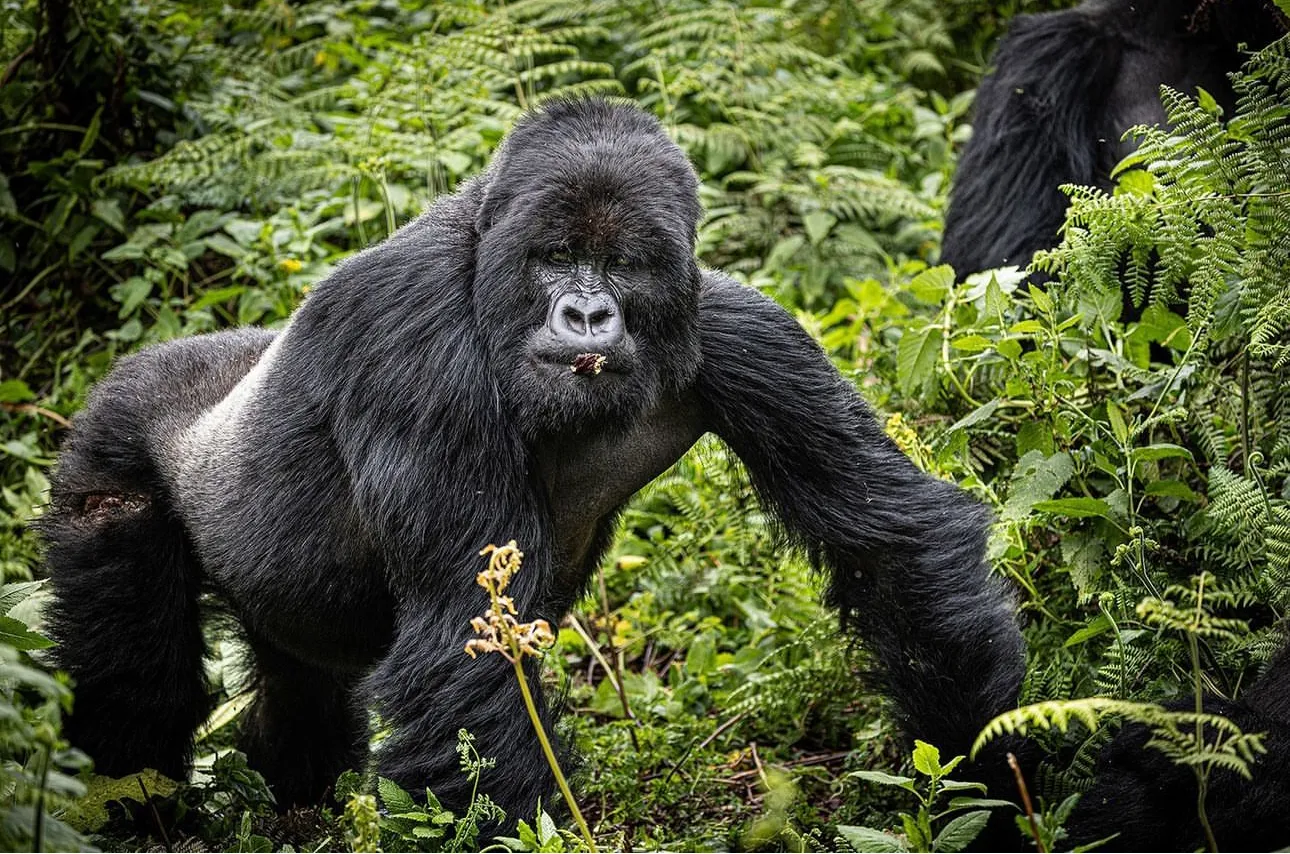
His role is not simply to breed or dominate. It is to protect, guide, stabilize and sacrifice for his family with a level of devotion rarely found in the wild. Understanding how silverbacks protect their families is key to understanding the entire fabric of gorilla society.
Silverbacks do not lead through cruelty or constant aggression. They lead through presence, intelligence, confidence, discipline, and emotional awareness. Their protection methods are strategic, layered, and rooted in millions of years of evolution.
This “How Silverbacks Protect Their Families” detailed guide explores the complete system of how silverback gorillas protect their families, offering deep scientific insight and real field observations from Uganda and Rwanda.
The Silverback’s Primary Responsibility: Family Security
The reason gorillas live in families is safety. Without the silverback, a gorilla family is vulnerable. His survival instincts dictate nearly everything the group does, where it feeds, when it moves, where it sleeps, and how it reacts to threats.
Protection is not an occasional act. It is a constant state of awareness.
A silverback is always:
- scanning the forest
- listening for distant sounds
- interpreting vocalizations
- watching body language
- controlling the group’s formation
- positioning himself between danger and infants
In many ways, the silverback acts as:
- the general during conflict
- the shield during danger
- the judge during family disputes
- the guardian of infants
- the decision-maker during migrations
Every decision he makes is rooted in his instinct to keep the family alive.
Understanding Gorilla Threats: What Silverbacks Protect Against
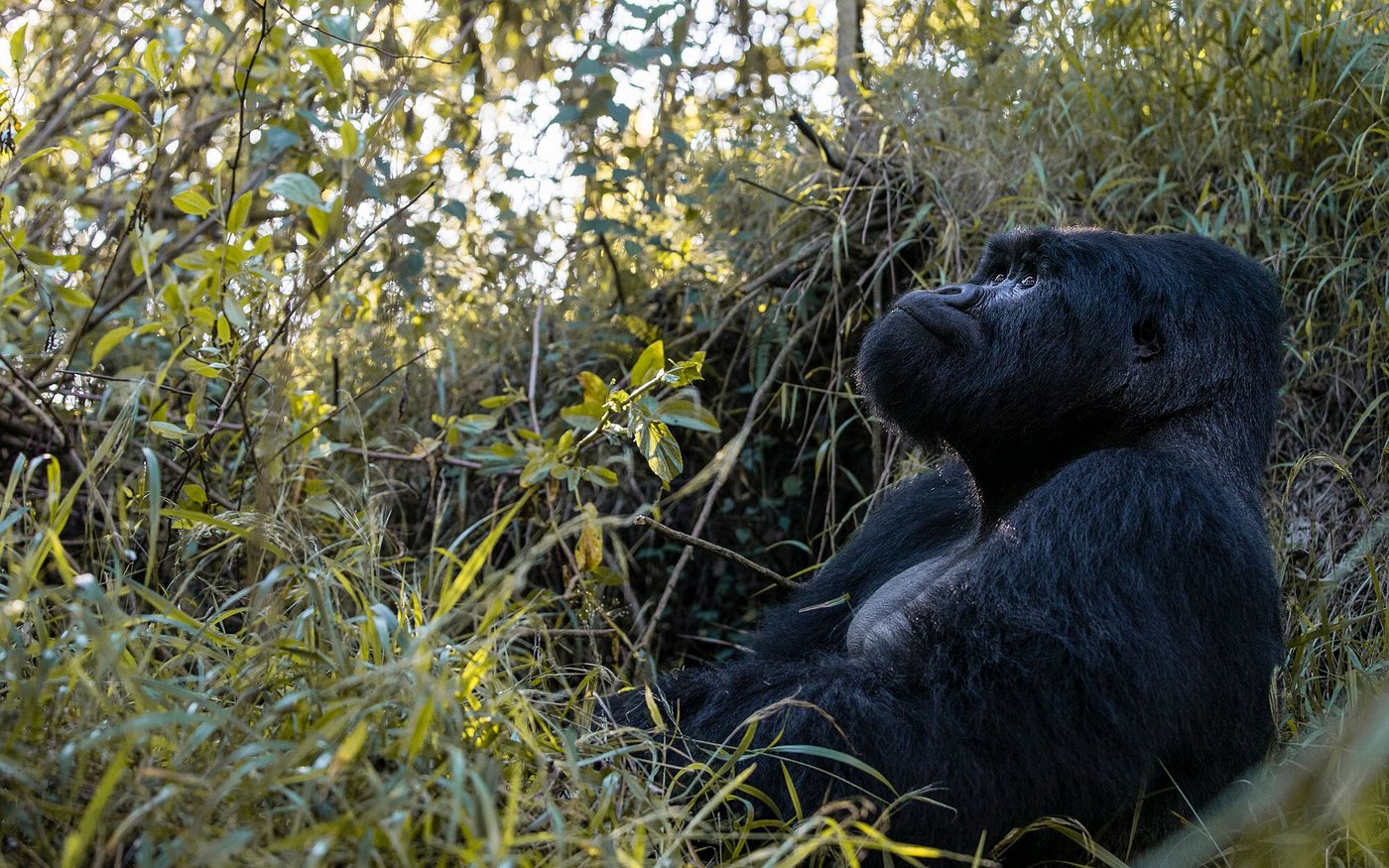
Although gorillas are large and powerful, they are not free from threats. Silverbacks protect their families from:
Rival Silverbacks
The biggest threat comes from unrelated males who may attempt to take over a family. A takeover can result in the death of infants (infanticide), which is why silverbacks defend vigorously.
Leopards
Rare but possible, especially in the Bwindi Impenetrable National Park region where leopards still roam.
Human Threat
Historically:
- poaching
- snares
- habitat loss
- armed conflict
Today, the greatest risks are often disease transmission from humans and forest encroachment, yet silverbacks remain instinctively cautious.
Aggressive Blackbacks
Young males within the same group may occasionally challenge the leader.
Environmental Danger
Silverbacks guide their families away from dangerous terrain such as steep gullies, unstable slopes or areas with limited food.
A silverback’s ability to detect and respond to dangers is part of what makes gorilla families stable.
The Silverback’s Physical Presence: An Aura of Protection
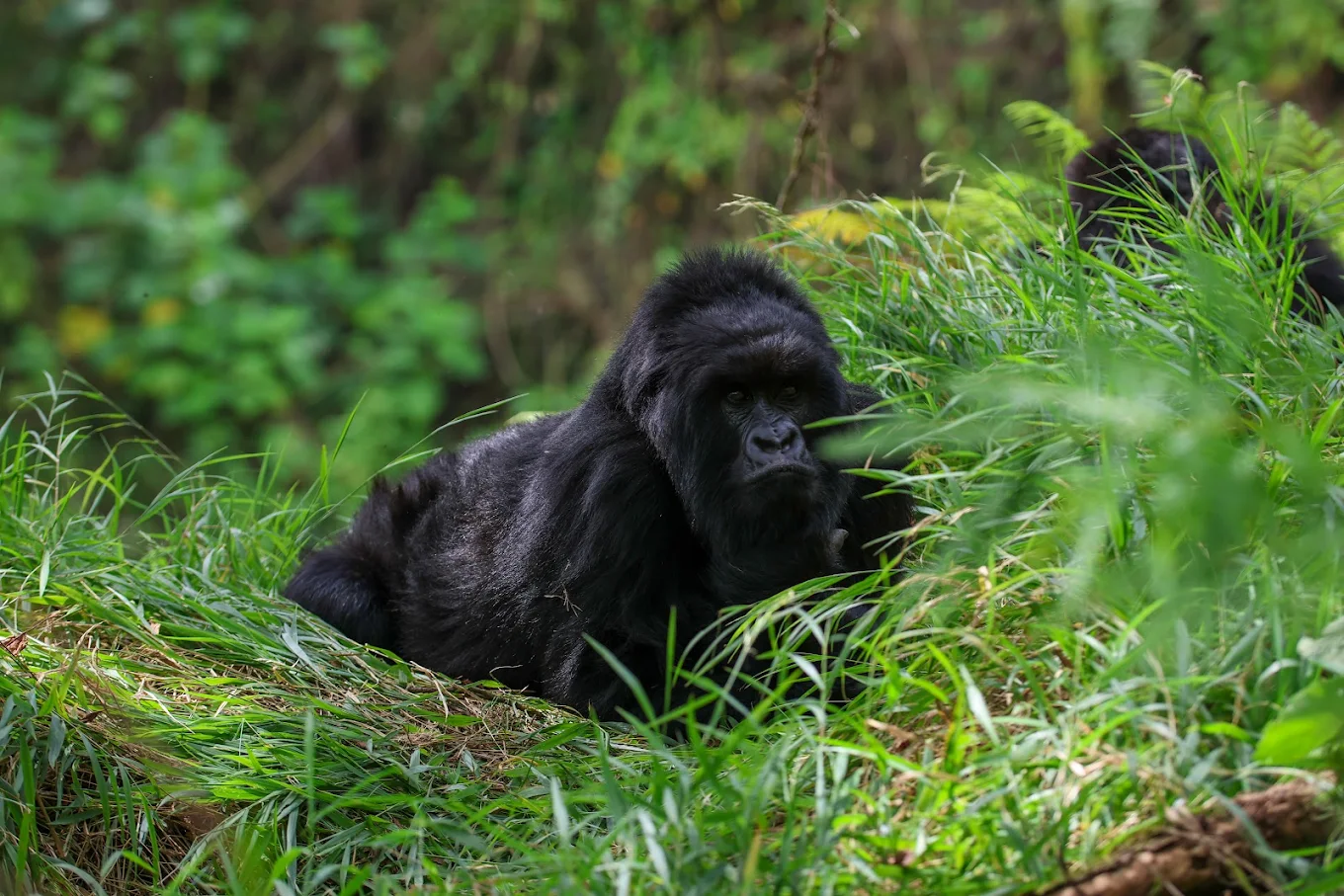
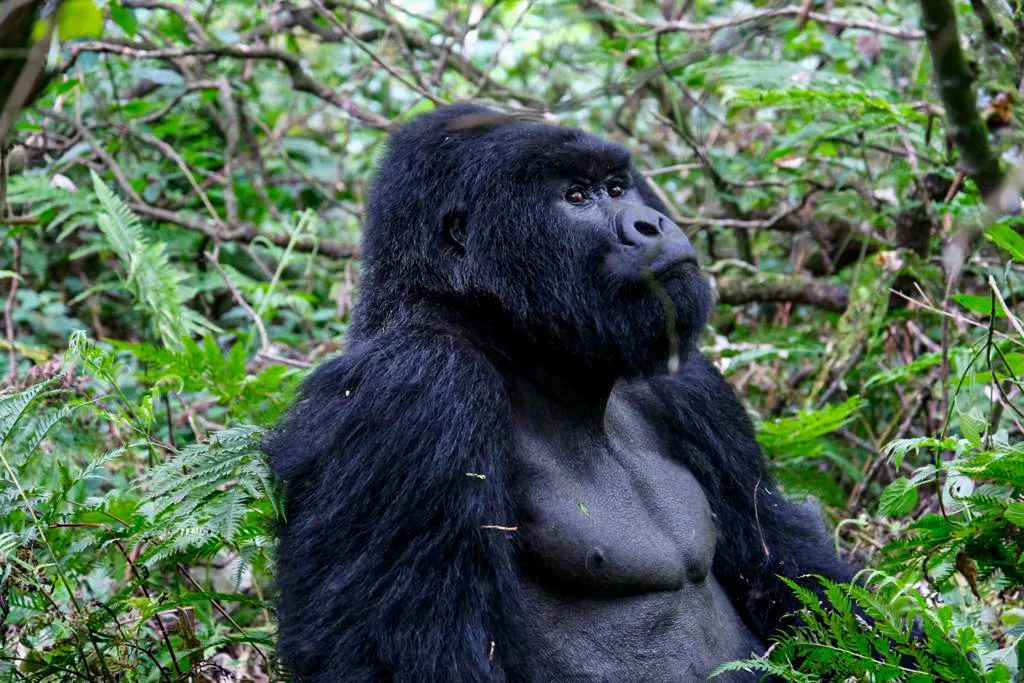
One of the most fascinating aspects of silverback leadership is that actual fighting is rare. Silverbacks deter danger through presence alone.
A fully grown silverback typically:
- weighs 160–220 kg
- stands over 1.7 meters tall when upright
- possesses extreme muscle density
- has canine teeth up to 5 cm long
- generates unmatched chest-beating resonance
His sheer physical form communicates one message:
“This family is protected.”
Even rival males can interpret the posture, stance, and confidence of a silverback without the need for violence.
The Psychology of Silverback Protection: Intelligence Over Aggression
Silverbacks think before they act. Their protection strategy is defined by:
- strategic positioning
- anticipating threats
- managing panic
- using vocal commands
- planning safe feeding routes
- controlling the family’s movement
They are less like warriors and more like wise generals who understand that unnecessary conflicts put the whole group at risk.
When faced with potential danger, a silverback’s first approach is calm assessment, not immediate aggression. Emotional intelligence is a major part of their leadership.
How Silverbacks Protect Infants | The Most Sacred Duty
Infant protection is the highest priority in any gorilla family. Silverbacks display extraordinary care toward the youngest members, often forming strong emotional bonds.
A silverback protects infants by:
- staying physically close to them
- intervening when juveniles play too rough
- punishing outsiders who threaten them
- choosing safe nesting locations
- guarding the group overnight
- redirecting mothers during risky encounters
In several documented cases in Uganda and Rwanda, silverbacks have adopted orphaned infants, caring for them even when not biologically related. This compassion is one of the most powerful examples of animal caregiving in the wild.

Defensive Tactics: How Silverbacks Confront Real Danger
When the situation demands it, silverbacks use a combination of intimidation, physical power, and controlled aggression to deter threats. Their defensive tactics include:
Chest Beating
A deep, resonant sound produced by drumming their chest with cupped hands. It can be heard up to 1 km away and signals strength and dominance.
Vocal Threat Displays
Low-pitched grunts, hoots, and roars that escalate depending on the level of danger.
Charging Displays
A silverback may rush toward a threat, break branches, or throw vegetation to demonstrate physical capability.
Direct Confrontation
Only used when unavoidable. A silverback will physically fight rival males to protect infants and adult females.
These tactics have evolved to maximize survival while minimizing unnecessary injury.
Leadership During Feeding | A Subtle Form of Protection
Feeding is one of the most vulnerable moments for gorillas. While the family eats, the silverback rarely focuses on food. Instead, he:
- stays upright
- scans the environment
- listens for movement
- keeps the family within sight
- positions himself on higher ground
This behavior demonstrates a clear principle:
Gorilla protection is not reactive, it is proactive.
Night Protection: Nesting Strategy & Guarding
Mountain gorillas build fresh nests every evening, and the silverback chooses the general nesting site.
He selects locations based on:
- shelter
- visibility
- distance from rival males
- food availability
- terrain safety
At night, the silverback nests near the center of the family or close to vulnerable members. Some silverbacks remain half-awake, responding instantly to suspicious sounds.
This makes the silverback not only the leader by day but also the eternal night guardian.
Protecting the Group During Migrations
When food sources decline or families must avoid other males, silverbacks lead migrations across ridges, valleys and dense vegetation. Their decisions determine:
- which paths are safest
- how fast the family moves
- when to rest
- whether to avoid conflict zones
In Bwindi Impenetrable National Park, where terrain is rugged and visibility is limited, silverback navigation is crucial.
In Rwanda’s bamboo forests, silverbacks lead more predictable, linear migrations.
Regardless of the environment, the silverback always walks with purpose and strategy.
The Silverback as Mediator: Internal Conflict Management
Within the family, disputes occasionally arise, especially among juveniles, blackbacks or competing females. A silverback prevents escalation by:
- stepping between fighting individuals
- giving warning vocalizations
- separating aggressive members
- restoring calm through presence
This internal protection ensures social harmony, which is essential for infant safety and family survival.
Silverbacks vs Predators: Fact vs Myth
Leopards historically posed a threat, mainly to infants. Today, encounters are extremely rare due to low predator density in gorilla habitats.
In the rare case of confrontation, historical accounts show that silverbacks:
- place themselves between the leopard and the group
- intimidate the predator with vocalizing
- fight only when necessary
Their courage is remarkable, and their success rate in protecting the family is extremely high.
Protection Strategy Variations: Uganda vs Rwanda
Bwindi Silverbacks
These silverbacks protect families in complex terrain with thick vegetation. Their defence involves more auditory monitoring, sudden posture changes and strategic use of forest cover.
Volcanoes NP Silverbacks (Rwanda)
Rwanda’s silverbacks live in more open bamboo forest, allowing:
- visible displays
- larger charging demonstrations
- easier long-distance communication
Despite regional differences, their protective instincts remain identical.
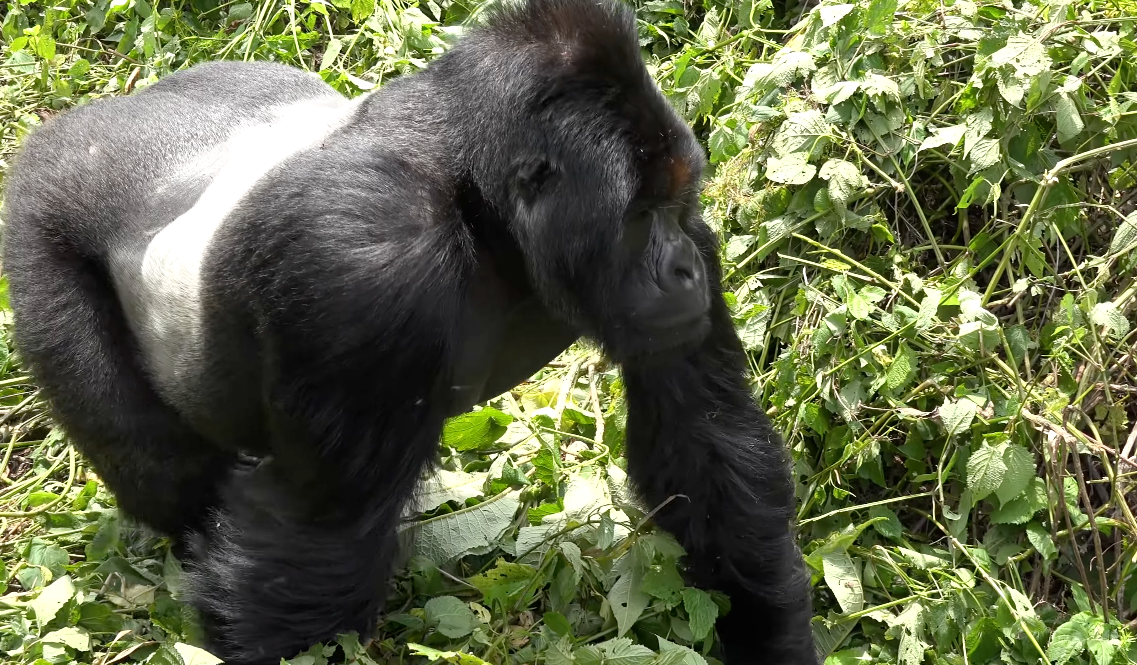
Silverback Personality Types and How This Affects Protection
Not all silverbacks protect in the same way.
Field research categorizes them into personality types:
- The Gentle Protector; prioritizes calm leadership
- The Assertive Guardian; quick to display dominance
- The Strategic Thinker; avoids conflict through planning
- The Aggressive Defender; reacts strongly to intruders
- The Diplomat; relies on posture and vocal signs rather than charge displays
Families adjust their behavior depending on their leader’s style.
How Rangers Use Silverback Behaviour to Guide Trekking Rules
Many trekking rules in Uganda and Rwanda are based on decades of studying silverback responses.
For example:
- The 7-meter distance rule protects silverbacks from perceiving humans as threats.
- Staying in a group reduces the likelihood of triggering defensive instincts.
- Avoiding loud noises respects silverback sensitivity to unexpected stimuli.
- Keeping cameras silent and flash-free prevents mistaken threats.
Understanding these rules helps trekkers appreciate the intelligence behind silverback protection strategies.
Silverbacks & Anti-Poaching Success in Uganda & Rwanda
Conservation organizations have succeeded largely because silverbacks maintain stable, cohesive family groups. When families are stable:
- infant survival increases
- group ranges become predictable
- monitoring becomes easier
- veterinary response is faster
- genetic diversity is protected
The survival of the species depends heavily on the resilience and leadership of silverbacks.
The Emotional Side of Silverback Protection
Perhaps the most extraordinary part of silverback protection is emotional intelligence. Silverbacks show:
- empathy
- patience
- grief
- attachment
- discipline
- calm reassurance
They comfort distressed infants, support anxious females, and show remarkable restraint in situations where violence would be easy.
Silverbacks do not protect out of dominance.
They protect out of loyalty, responsibility and emotional instinct.
Frequently Asked Questions
Do silverbacks fight often?
No. Most disputes end through displays, not physical aggression.
Do silverbacks protect other males?
Yes, blackbacks and juveniles benefit from silverback authority.
How strong is a silverback?
A silverback is estimated to be 7–10 times stronger than an adult human.
Why do silverbacks beat their chest?
To signal strength, intimidate rivals or establish dominance.
Do silverbacks protect non-biological infants?
Yes. Adoption and care for unrelated infants has been recorded.
What happens if a silverback dies?
The family may fragment, join other groups or be taken over by another silverback.
Final Thoughts
Silverbacks are not just leaders, they are guardians, strategists, mediators and emotional anchors. Their protective instincts keep gorilla families alive in the forests of Uganda and Rwanda, shaping the peaceful, stable societies that trekkers experience today.
Observing how a silverback protects his family during a gorilla trek is one of the most powerful wildlife experiences in the world. Every look, gesture, decision and vocalization carries meaning.
To witness a silverback in action is to understand the heart of gorilla society.