
Communication: How Mountain Gorillas Talk (Complete Guide – Uganda & Rwanda)
Mountain gorillas are among the most expressive and emotionally intelligent primates on Earth. Their communication system is complex, multi-layered and deeply intertwined with the social structure of gorilla families in Uganda’s Bwindi Impenetrable National Park, Mgahinga Gorilla National Park, and Rwanda’s Volcanoes National Park.
Mountain gorillas talk using a blend of vocalizations, gestures, posture, touch, facial expressions, eye contact, scent and environmental signals. These communication methods form the language that keeps families bonded, resolves conflicts, expresses emotions, and maintains harmony in the dense mountain forests.
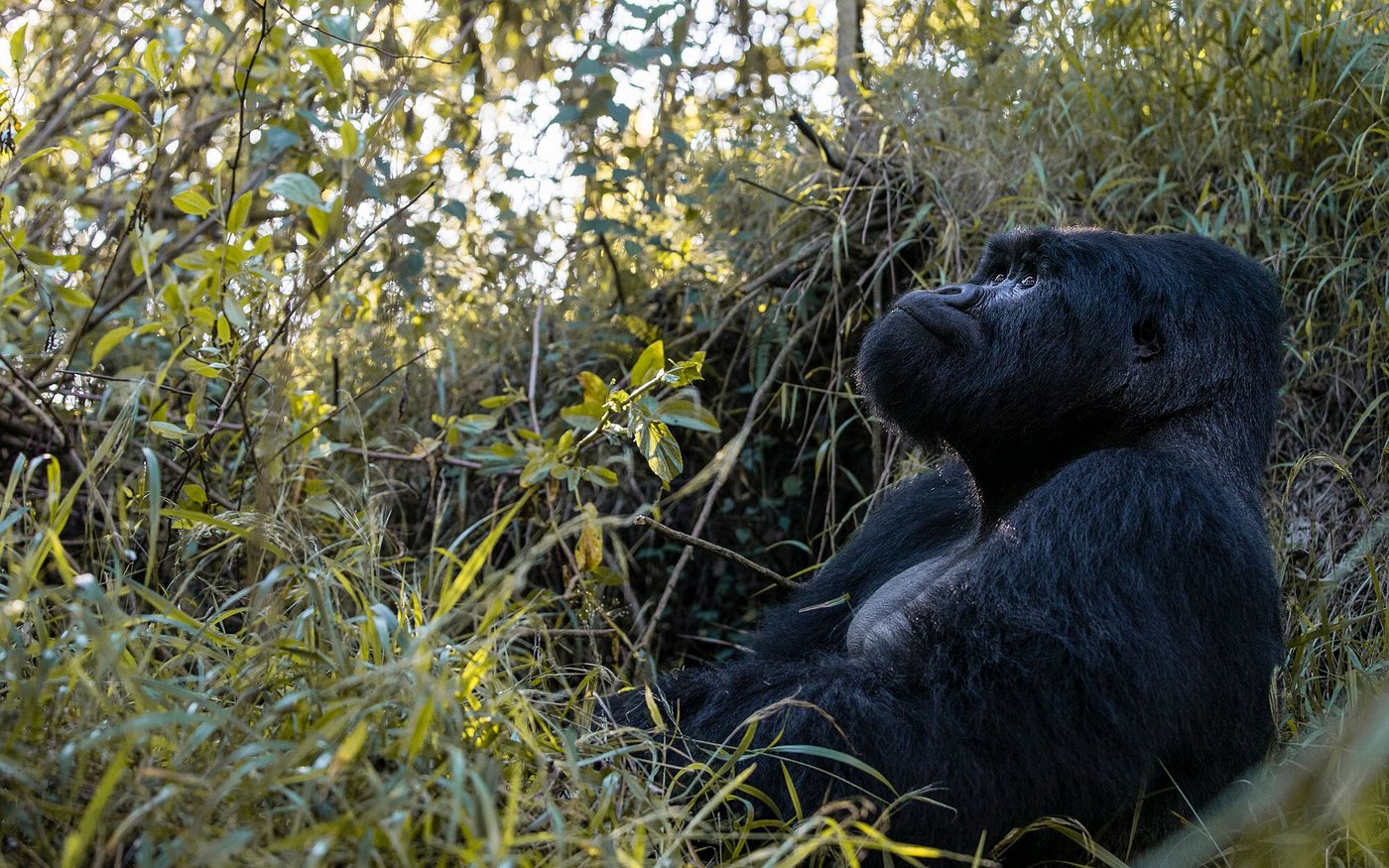
Understanding how gorillas talk to one another is essential for anyone who wants to appreciate the depth of gorilla society. When trekkers observe seemingly simple behaviors; a grunt, a chest beat, a stare, a play gesture, they are witnessing an ancient language spoken for millions of years.
This “How Mountain Gorillas Talk” article explores the full communication system of mountain gorillas, with scientific detail, field observations.
Why Mountain Gorilla Communication Matters
Mountain gorillas live in tight-knit families governed by cooperation, protection and emotional bonds. Their survival depends on clear communication. Every member, from the silverback to the tiniest infant must understand signals related to:
- danger
- food availability
- movement
- discipline
- affection
- conflict
- social hierarchy
Their communication system is therefore not optional, it is the foundation of gorilla life.
Because gorillas rely on subtle visual cues and soft vocal signals, many aspects of their language go unnoticed by casual observers. But with trained trackers or knowledgeable guides, gorilla trekkers begin to see the forest differently.
What appears quiet or peaceful is actually filled with constant dialogue.
The Evolution of Gorilla Language
Mountain gorillas evolved in dense forests where visibility is limited. Communication had to adapt to:
- thick vegetation
- low visibility
- predator presence
- territorial overlaps
- steep topography
This led to a system where sound, vibration, posture and touch became essential.
Gorilla communication needed to be:
- subtle enough not to attract predators
- clear enough for family members to understand
- powerful enough to deter threats when necessary
The result is a highly adaptive language that expresses everything from dominance and fear to love, reassurance, curiosity, and play.
Types of Communication Mountain Gorillas Use
Gorillas talk using a multi-channel communication system involving:
- vocalizations
- gestures
- postures
- facial expressions
- eye contact
- chest beating
- branch breaking
- scent
- tactile behaviour (touch, grooming, nudges)
- environmental cues (moving foliage, stamping)
This article breaks each of these into detailed sections to provide a complete understanding.
Vocal Communication: The Sound Language of Gorillas
Gorillas have one of the richest vocal repertoires among primates, with more than 25 distinct call types documented. These include:
Soft grunts and grumbles
These are the most common signals. They express calmness, contentment and reassurance. Silverbacks use them to keep the family united and relaxed.
Hoarse barks and warning calls
Used when suspicious sounds or possible threats are detected. They alert the family to pay attention.
Roars, screams, and loud barks
These appear during high-tension situations, especially during inter-group conflicts or aggressive encounters.
Purring-like hums
Often emitted during feeding. These vibrations translate to satisfaction and comfort.
Infant sounds and distress calls
Babies use high-pitched squeaks or cries when they feel uncomfortable, hungry or separated from their mothers. Adult females respond instantly.
Play vocalizations
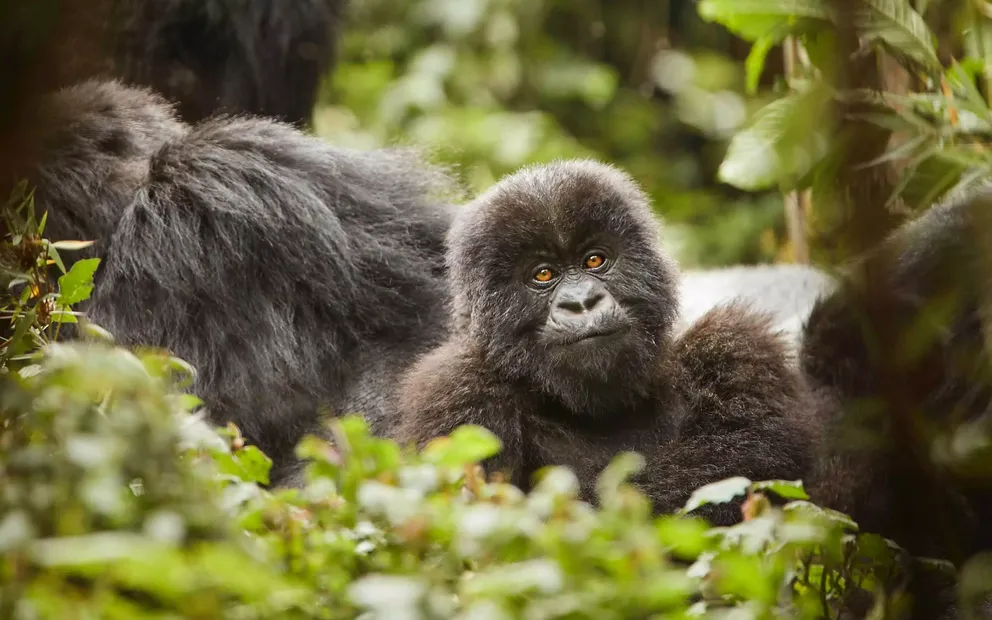
Young gorillas use breathy laughs or panting sounds during play, expressing excitement and social bonding.
The silverback’s “power call”
A low, deep rumble that asserts dominance or responds to disturbances without escalating into aggression.
Vocal communication allows gorillas to maintain cohesion even when spread out in dense vegetation.
Chest Beating – The Most Iconic Gorilla Signal
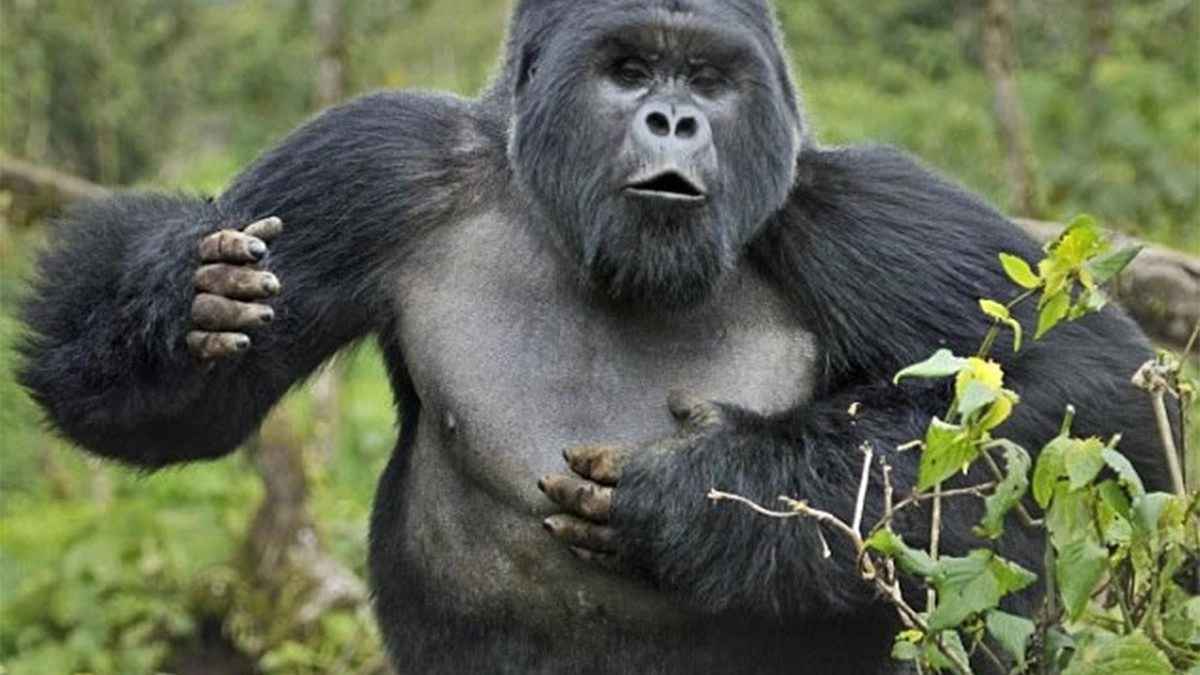
Chest beating is one of the most recognizable forms of gorilla communication. It is not random aggression. It is a coded signal with multiple meanings depending on the context.
A gorilla beats its chest by striking with cupped hands, producing a resonant, drum-like sound that can travel over one kilometre.
Chest beating communicates:
- dominance
- confidence
- strength
- territorial presence
- excitement
- victory after a fight
- playful imitation (juvéniles often beat their chest during games)
In silverbacks, chest beating often replaces the need for physical conflict. A powerful silverback can deter challengers simply by demonstrating strength acoustically.
Gesture Communication – The Language of Movement
Mountain gorillas use a wide variety of gestures that appear almost human.
Common gestures include:
- arm waving
- slapping the ground
- throwing vegetation
- pulling another gorilla gently
- presenting the back for reassurance
- holding out arms to invite play
- pushing with gentle intent
- tapping or nudging for attention
Gestures are essential because vocal communication is often soft and restrained. Gestures convey intent when sound is not enough.
Young gorillas learn gestures through imitation and repetition, often copying their mothers, siblings, and the silverback.
Body Posture & Dominance Signals
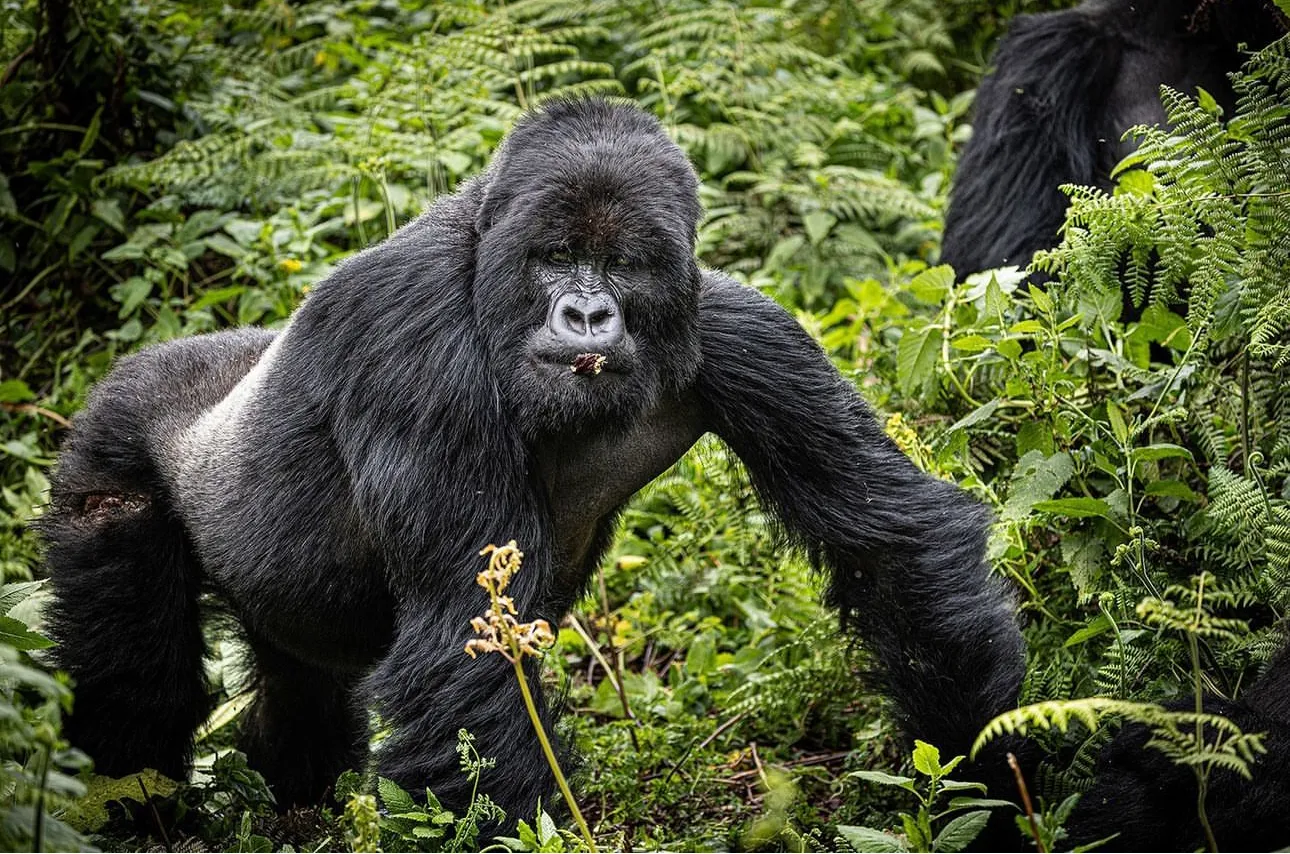
A gorilla’s posture reveals its emotional and social state.
Key postures include:
Upright stance
Used by silverbacks to appear larger when asserting authority.
Looming or leaning forward
Signals displeasure or mild warning.
Slouched or relaxed body
Indicates peace and trust.
Submissive crouching
A lower-ranking gorilla may bow or avoid eye contact to show respect.
Direct frontal posture with intense eye contact
A challenge posture often used by males.
Understanding posture helps trekkers know when to stay calm and when to follow their guide’s instruction.
Facial Expressions – A Window into Gorilla Emotion
Gorillas display a surprising range of expressions that reveal emotional states.
Relaxed lips and soft eyes
Indicate comfort and calm.
Tight-lipped stare or pursed lips
Signals annoyance or mild aggression.
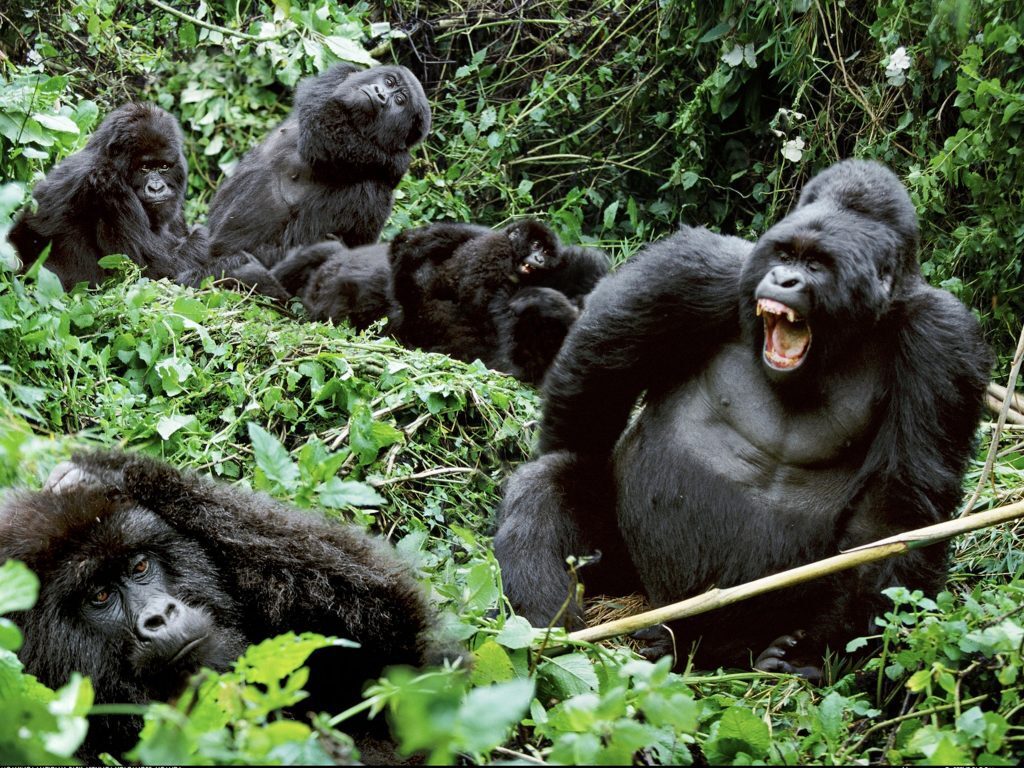
Open-mouth display
Could be playfulness in juveniles or tension in adults.
Play face
Similar to a smile, with open mouth and relaxed eyes, common during juvenile games.
Yawning
Not just tiredness, it can also be a subtle dominance demonstration to show off canine teeth.
Facial expressions are crucial for maintaining harmony within the group.
Eye Contact – Subtle but Powerful Communication
Eye contact in gorillas is nuanced.
A direct stare can mean:
- curiosity
- dominance
- mild challenge
- alertness
Averted eyes signal submission or comfort.
During gorilla treks, guides instruct visitors to avoid prolonged direct eye contact, as it can be misinterpreted by the silverback as a challenge. Understanding this rule reveals how deeply gorilla communication influences trekking protocols.
Touch – The Emotional Language of Bonding
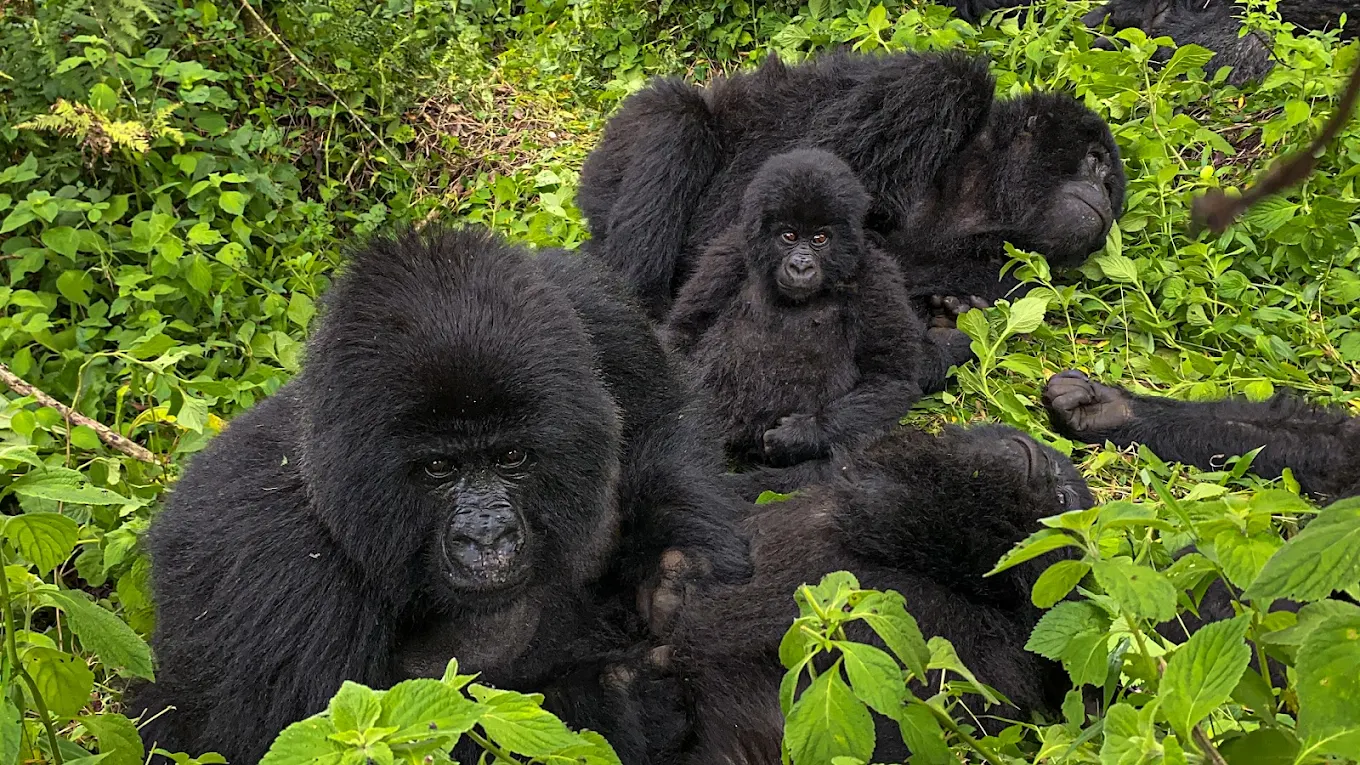
Gorillas constantly use touch to maintain social bonds. Mothers hold infants close, siblings climb on top of each other, juveniles wrestle, and adult females groom their silverback.
Grooming is especially important. It communicates:
- trust
- affection
- reassurance
- social acceptance
Touch is the most emotional part of gorilla communication. Many trackers describe it as the glue that binds gorilla families together.
Scent & Olfactory Communication
Although not as important as in some primates, gorillas do use scent to communicate emotional states.
Silverback scent emission
A silverback emits a strong, musky smell when agitated or threatened. This “fear odor” broadcasts tension to the family and warns intruders.
Social scent cues
Gorillas can identify individuals by their unique scent, especially mothers recognizing infants.
Territorial scent profiling
Though gorillas are not strongly territorial, scent helps coordinate movement patterns.
Environmental Signals – The Forest as an Extension of Language
In dense forests, gorillas often communicate through environmental manipulation:
- shaking bushes
- snapping branches
- stamping the ground
- dragging vegetation
- breaking saplings during displays
These signals travel through the forest visually and acoustically, functioning like amplifiers of the gorilla’s message.
Communication During Feeding
Feeding periods are rich with communication. Gorillas often hum or grunt contentedly while eating. Mothers vocalize to reassure infants while they forage. Silverbacks emit low rumbles that maintain cohesion in the feeding zone.
When a family is feeding peacefully, the forest often fills with rhythmic, soothing vocalizations, a sound trekkers never forget.
Communication During Travel & Migration
During travel, silverbacks use:
- grunt sequences
- body movement cues
- directional posture
- stopping and starting motions
- gestures to signal the family to regroup
The entire group remains attuned to the leader’s signals. Trekkers often witness silverbacks turning back to check if family members, especially juveniles are keeping up.
Communication During Conflict
Conflict communication is urgent and loud. It includes:
- barks
- hoots
- roars
- chest beating
- ground slapping
- charging
These conflict signals warn rivals, coordinate family movement, and protect infants.
Silverbacks rely heavily on communication to resolve disputes without fighting. Fighting is a last resort because injuries can compromise the entire family’s survival.
Communication Between Groups
Neighboring groups sometimes interact at territorial boundaries. Communication in these moments is cautious and layered:
- silverbacks display posture
- families cluster around the leader
- warning calls escalate
- visual signals replace direct confrontation
This communication prevents unnecessary conflict and maintains stable population dynamics.
Communication Between Mothers & Infants
One of the most beautiful aspects of gorilla life is the intimate communication between mothers and their babies. Mothers use gentle sounds, soothing grunts, soft touches and eye contact to:
- comfort
- teach
- reassure
- discipline
Infants respond with squeaks, giggles, and gentle touches a language rooted in love and safety.
Gorilla Communication During Play
Play communication is full of joy:
- playful chest beating
- mock charges
- wrestling
- laughter-like panting
- open-mouth play faces
Juveniles use play to learn social etiquette, motor skills, confidence, and emotional regulation. Their communication is energetic, expressive, and often humorous.
Silverback Communication – Leadership Through Language

The silverback is the communication hub of the family. He controls:
- group movement
- feeding order
- conflict management
- danger signals
- social harmony
- discipline
His deep rumbles calm the family. His stance dictates safety. His chest beats warn rivals. His eye contact maintains order. His presence communicates confidence.
In many ways, the entire gorilla society revolves around how the silverback communicates.
Why Gorilla Communication Is Essential for Trekkers to Understand
During gorilla trekking, understanding basic communication cues helps visitors:
- remain safe
- avoid triggering defensive behavior
- appreciate deeper social meaning
- interpret gorilla emotions
- respect boundaries
Knowledge transforms the trekking experience from simple observation into deep understanding.
Gorilla Communication and Conservation
Communication plays a vital role in conservation:
- stable groups communicate better
- habituation relies on communication trust
- researchers use vocal patterns to monitor health
- anti-poaching teams track group calls
- veterinary teams interpret distress signals
Communication is a powerful tool that keeps gorilla populations stable and thriving in Uganda and Rwanda.
Final Thoughts
Mountain gorillas do not simply make noises, they speak a rich and ancient language. Their communication system reveals a species that is emotionally complex, socially intelligent, and deeply connected. Every grunt, gesture, stare and chest beat carries meaning.
To watch gorillas communicate is to witness a living conversation in the heart of the forest, one that has been spoken long before humans ever arrived, and one that still shapes the survival of one of the world’s most extraordinary species.