
How Gorillas React to Humans During Trekking (Complete Guide | Uganda & Rwanda)
Mountain gorilla trekking is one of the most profound wildlife experiences on Earth. In the mist-covered forests of Bwindi Impenetrable National Park, Mgahinga Gorilla National Park, and Volcanoes National Park in Rwanda, visitors can encounter gorilla families living in their natural habitat, feeding, resting, grooming, playing and interacting with each other just as they have for thousands of years.
But one of the most important and frequently misunderstood aspects of gorilla trekking is how gorillas actually react to humans. Are they afraid? Curious? Aggressive? Indifferent? Do they recognize humans as a threat, or have they learned to ignore us through habituation?
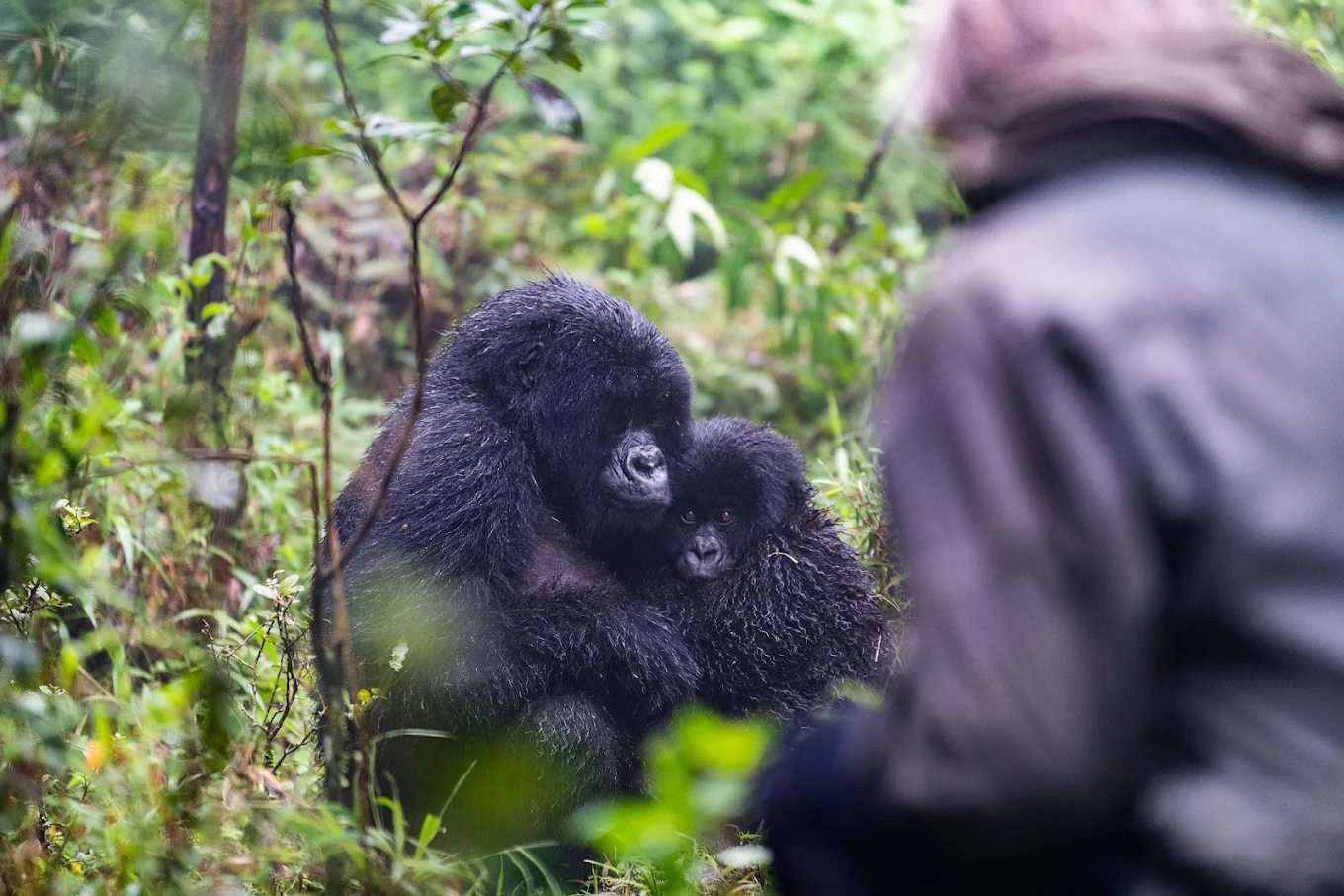
The truth is complex, emotional, rooted in science, and deeply shaped by gorillas’ intelligence and social behavior. This in-depth guide explains exactly how mountain gorillas react when humans approach, what factors influence their behavior, and what trekkers should expect when meeting these gentle giants in Uganda and Rwanda.
The Key Concept: Habituated Gorillas Are Used to Humans
The gorillas visited during trekking are habituated, meaning they have undergone years of careful, ethical conditioning by researchers and rangers to become comfortable in the presence of humans.
Habituation is a slow, respectful process, usually 2 to 3 years during which humans gradually approach a gorilla family until the animals eventually accept their presence without stress or aggression.
Habituated gorillas:
- do not see humans as predators
- do not feel threatened by trekkers
- continue their natural behavior even when people are near
- associate humans with neutral or non-harmful experiences
- understand human distance and movement patterns
This is why trekking is possible at all.
Without habituation, mountain gorillas would avoid humans completely or show defensive behavior.
The General Reaction: Calm, Peaceful, and Mostly Indifferent
Contrary to expectation, the most common reaction habituated gorillas have to humans is calm indifference.
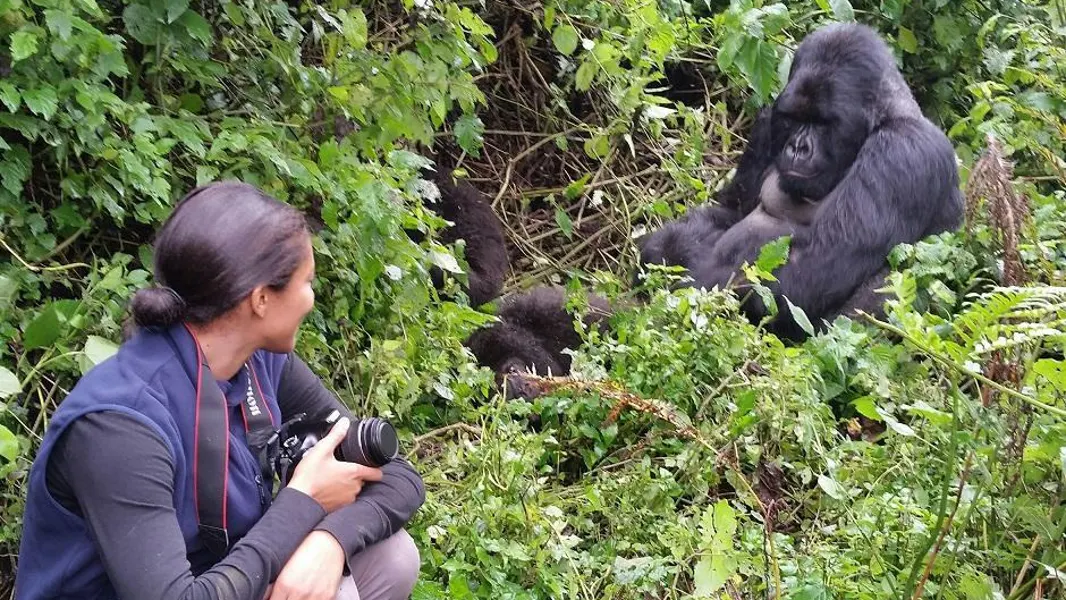
They often:
- keep feeding without interruption
- rest comfortably
- continue grooming each other
- let infants play normally
- glance at trekkers occasionally, then ignore them
They do not see humans as competitors, threats, or targets. Instead, they treat humans as background elements in the forest – strange, but harmless.
This calm acceptance is one of the most inspiring parts of the gorilla trekking experience.
Curiosity: The Gentle Intelligence of Gorillas Toward Humans
While adults are often indifferent, infants and juveniles are extremely curious.
Their reactions may include:
- staring directly at trekkers
- approaching within a short distance
- playfully beating their chests
- imitating humans crouching or whispering
- climbing low branches to see better
Young gorillas are intelligent and playful. They see humans as strange new objects in their world and may attempt to interact, though trekkers must maintain distance and avoid touching or engaging.
This curiosity is always innocent, never aggressive, but guides ensure safe boundaries.
How Silverbacks React: Calm Strength with Protective Awareness
The silverback’s reaction is crucial. As the leader and protector of the family, he controls the emotional environment of the group.
Silverbacks typically respond to humans with:
Measured observation
He watches quietly to assess intentions.
Confidence and calm dominance
If he is comfortable, the entire family remains calm.
Protective positioning
He may shift his body slightly to place himself between humans and vulnerable family members, especially infants.
Occasional rumble vocalizations
These deep, soft sounds reassure the group that everything is safe.
The silverback’s reaction sets the tone. If he remains calm and he usually does all other gorillas follow his lead.
Why Gorillas Allow Humans So Close

Gorillas accept human presence because:
- habituation has built trust
- humans maintain appropriate distance
- guides understand gorilla behavior intimately
- gorillas perceive no threat from trekkers
- gorillas recognize consistent non-aggressive behavior
- family-oriented species tend to avoid unnecessary conflict
The golden rule is respect. Trekking regulations ensure humans behave in a way that keeps gorillas comfortable.
This comfort is why gorillas continue their daily routines even when people are near.
The Emotional Intelligence of Gorillas Shapes Their Reaction
Mountain gorillas possess high emotional intelligence, they understand mood, intention and body language.
When humans approach slowly and calmly, gorillas interpret this as peaceful behavior.
When humans speak softly, gorillas feel less threatened.
When humans follow guide instructions, the entire experience remains harmonious.
Gorillas read human posture the same way they read the posture of other gorillas and they respond instinctively to calmness.
This emotional perception allows close viewing without conflict.
Rare Reactions: When Gorillas Show Discomfort
Though uncommon, gorillas may show mild discomfort when:
- humans make sudden movements
- someone stands too tall or too close
- voices become loud
- flashes are used (strictly prohibited)
- a visitor stumbles or falls loudly
- wind shifts scent rapidly
- an infant tries to play with a human
Discomfort signs include:
- a grunt or cough-like warning
- a silverback shifting position
- a mother moving infants closer
- temporary silence
- subtle distancing
Guides immediately manage the situation with gentle vocal cues like the classic gorilla “haaah” calming sound.
These reactions are not aggressive they are signals of boundaries.
The Bluff Charge: The Most Misunderstood Gorilla Reaction
On rare occasions, typically when a silverback wants to assert authority or remind humans of boundaries, he may perform a bluff charge.
A bluff charge may include:
- short rapid steps
- loud chest beating
- tearing vegetation
- slapping the ground
- stopping abruptly near the group
But this is called a bluff for a reason:
it is not meant to injure.
It is a display of strength designed to communicate:
- “I am in control.”
- “Respect my space.”
- “Stay calm.”
When trekkers remain still and avoid eye contact, the silverback relaxes quickly.
Bluff charges are part of natural gorilla behaviour, not danger.
How Mothers React: Calm but Protective
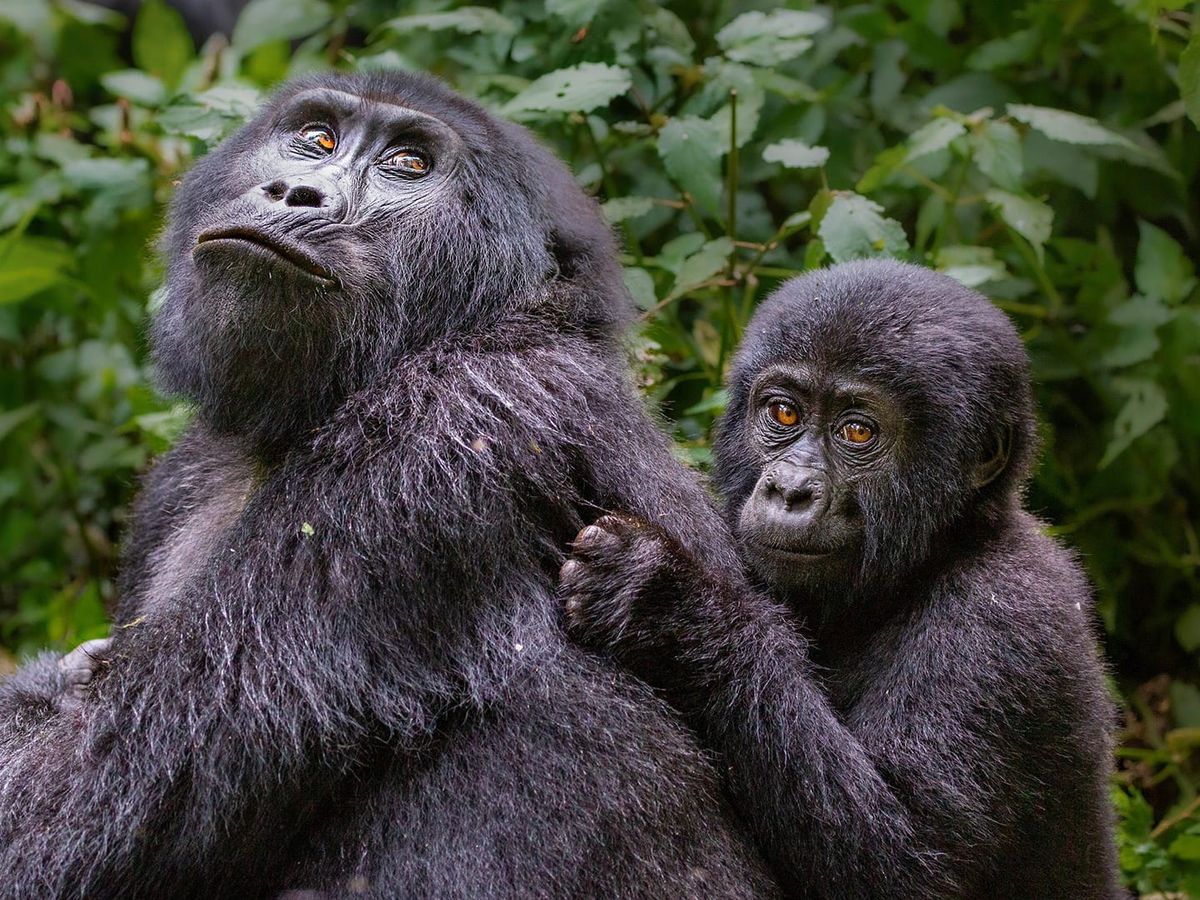
Mother gorillas react differently from silverbacks.
They often:
- keep infants close
- observe trekkers with soft but careful eyes
- tolerate human presence more when the silverback is calm
- continue grooming or feeding normally
If a human moves too close to an infant, the mother may shift position, but she rarely shows aggression.
Maternal behaviour is gentle, measured, and deeply instinctive.
How Juveniles React: Playful, Bold, Sometimes Mischievous
Juvenile gorillas are the most entertaining to watch during trekking.
Their reactions may include:
- mock chest beating
- climbing high to get a better view
- approaching out of curiosity
- showing off with acrobatic play
- making playful vocalizations
Guides maintain distance because juveniles may attempt to touch or inspect humans, behaviour that is cute but risky for disease transmission.
Their energy often brings joy and laughter to trekkers, but guides ensure boundaries for everyone’s safety.
How Infants React: Innocent Curiosity
Infant reaction is shaped by the behavior of their mothers and silverback.
Infants may:
- stare with wide eyes
- cling tightly to their mothers
- peek from behind vegetation
- attempt to crawl closer
- imitate adults’ vocal reactions
Their innocence enhances the emotional depth of treks.
Why Gorillas Rarely Show Aggression Toward Humans
Aggression is extremely rare because:
- habituated gorillas trust humans
- gorillas are naturally peaceful
- silverbacks avoid unnecessary conflict
- guides manage group behavior effectively
- tourism exposure has been calm and stable for decades
- gorillas do not view humans as rivals
Mountain gorillas are non-territorial and non-predatory. Their instinct is to avoid danger, not confront it.
This peaceful nature makes trekking safe and magical.
How Humans Should Behave to Influence Gorilla Reactions
Human behavior directly affects gorilla comfort.
Trekkers must:
- move slowly
- speak softly
- avoid eye contact with silverbacks
- remain low and non-threatening
- avoid sudden gestures
- respect the 7-meter rule
- wear masks to protect gorillas
- follow the ranger’s every instruction
When humans behave respectfully, gorillas remain calm.
This cooperative dance of trust is the essence of gorilla trekking.
Gorilla Behaviour Before Humans Arrive
Trackers find gorilla groups early due to nesting sites, dung trails, feeding paths, and vocal cues.
Before humans arrive, gorillas:
- feed normally
- groom
- play
- rest
- move naturally
When trekkers approach, gorillas simply continue what they were already doing. They do not “prepare” for humans or alter their daily routines.
This highlights the success of habituation.
Gorilla Behaviour After Humans Leave
When trekking ends and humans leave:
- gorillas resume their activities without concern
- infants return to play
- feeding groups disperse or move
- the silverback relaxes again
- grooming sessions continue naturally
Trekking does not disrupt their day, an important requirement for ethical conservation.
Key Differences Between Uganda and Rwanda Gorilla Reactions
Though similar species, subtle differences exist:
Rwanda (Volcanoes National Park)
- More open habitat
- Gorillas often see groups earlier
- Slightly more visual interaction
- Silverbacks perform more visual displays
Bwindi Impenetrable National Park(Uganda)
- Very dense vegetation
- Most encounters occur at close range
- Gorillas rely more on sound to assess humans
- Families may “appear suddenly” when trekkers reach a clearing
Both regions have calm habituated families, but their environmental context influences the style of interaction.
How Gorilla Personality Shapes Their Reaction
Every gorilla has a personality.
Gentle silverbacks
- very calm
- rarely display
- tolerant of humans
Assertive silverbacks
- more likely to make small dominance displays
- protective but predictable
Shy females
- maintain distance
- stay close to infants
Bold juveniles
- approach more
- play near humans
Peaceful elders
- barely acknowledge humans
These personality differences enrich the trekking experience.
Emotional Responses Gorillas Show Toward Humans
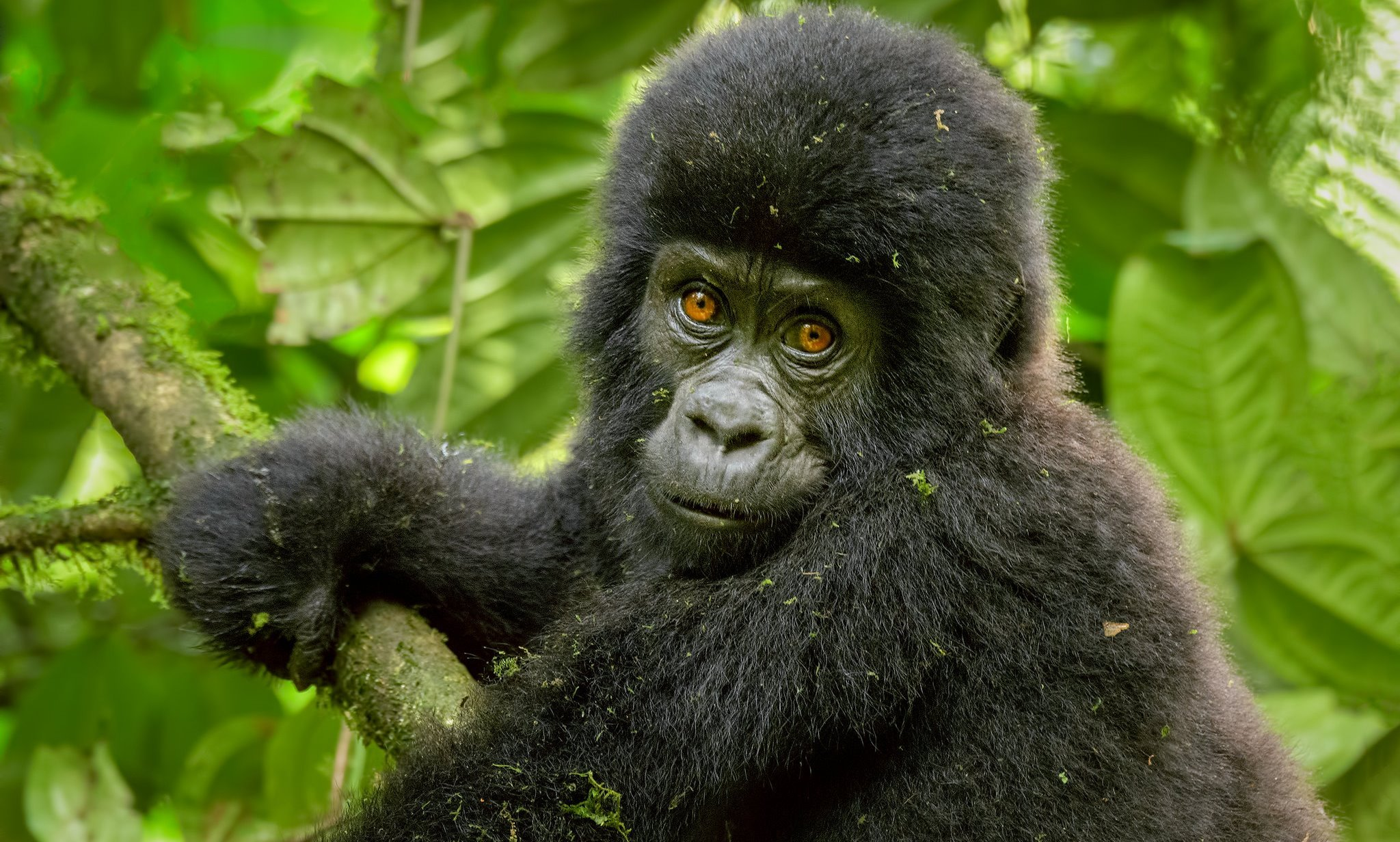
Gorillas may display subtle emotional reactions:
- curiosity (common)
- indifference (most common)
- caution (mothers and juveniles)
- protective vigilance (silverbacks)
- comfort signals (soft grunts)
Gorillas rarely show fear during habituated treks.
Their emotional world is complex, sensitive, and intelligent.
Frequently Asked Questions
Do gorillas ever attack humans?
Very rarely, and almost always due to rule-breaking or startling them.
Do silverbacks dislike people?
No. They tolerate humans well, as long as boundaries are kept.
Do gorillas recognize individual trackers?
Yes. Many tracker’s voices and scents are familiar.
Are gorillas scared of humans?
Habituated gorillas are not scared; wild, unhabituated ones are.
Do gorillas ever touch humans?
Juveniles sometimes try, but tourists must not touch them.
Final Thoughts – The Beauty of Respect and Trust
How gorillas react to humans during trekking reveals their intelligence, emotional sensitivity, and peaceful nature. Their calm acceptance of human presence is not accidental, it is the result of patience, conservation work, ethical habituation, and their inherently gentle personalities.
Gorillas do not see humans as enemies or prey. They treat us as temporary visitors in their world. Their reactions from silverbacks’ quiet confidence to infants’ curious stares, remind us that coexistence is possible through respect, patience, and understanding.
To sit only meters away from a gorilla family and watch them behave naturally is one of the greatest privileges in wildlife tourism, a window into a world guided by peace, family, and quiet strength.