
How Gorilla Twins Survive in the Wild: The Untold Story of Mountain Gorilla Motherhood
Gorilla twins are one of the rarest and most extraordinary events in the wild. Mountain gorillas, especially the populations of Bwindi Impenetrable National Park and Volcanoes National Park, give birth to twins only on very rare occasions. When it happens, researchers, conservationists, and gorilla enthusiasts around the world watch closely because raising twins in the forest is a remarkable challenge. Understanding how gorilla twins survive in the wild provides unique insight into gorilla behavior, maternal instincts, social support, and the delicate balance of life within a gorilla family.

This article explores the science, challenges, survival strategies, and social dynamics that allow gorilla twins to grow, thrive, and contribute to the future of their species. Written with a strong focus mountain gorilla biology, gorilla parenting behavior, and the conservation context of Uganda and Rwanda.
Why Gorilla Twins Are So Rare
To understand how gorilla twins survive in the wild, we must first understand why twin births are uncommon. Mountain gorillas typically give birth to one infant at a time, roughly every four to five years. This long interval is essential because raising a single infant requires tremendous energy, constant carrying, protection, and almost two years of breastfeeding.
A gorilla mother is expected to:
- Carry her baby for the first 6–7 months
- Breastfeed for up to 2–3 years
- Keep the infant warm, safe, and physically supported
- Move with the group daily while holding the infant
When twins are born, the demands double instantly. This is why gorilla twins are historically rare, most gorilla mothers simply do not have the energy or time to successfully rear two infants simultaneously.
The Initial Weeks: The Hardest Stage for Gorilla Twins
The first two weeks after birth are the most critical. Newborn gorillas are fragile, blind, and completely dependent. When twins are born, the mother faces immediate challenges: holding two babies, feeding two babies, and protecting two babies while moving through dense forest.
In the wild, a mother with twins must:
- Keep one infant on her chest while the other clings to her belly
- Rotate their positions frequently so both can nurse
- Prevent the weaker twin from being left behind
- Maintain pace with the gorilla family group
This critical period determines whether the twins will survive. If the weaker infant fails to feed adequately or cannot cling strongly, survival becomes difficult. However, in successful twin cases, like some documented families in Bwindi Impenetrable National Park and Volcanoes National Park, the mother shows exceptional strength, patience, and adaptability.
How Gorilla Mothers Care for Twin Infants
Gorilla motherhood is incredibly demanding even with one baby. With twins, every action becomes more complex. Yet gorilla mothers display remarkable nurturing abilities rooted in centuries of evolved behavior and social intelligence.
Mother gorillas with twins often show:
- Enhanced patience: They tolerate more pulling, climbing, and feeding interruptions.
- Frequent nursing rotations: Mothers switch between infants so each gets adequate milk.
- Extreme body support: They press one infant onto the chest while the other clings to her arm or side.
- Reduced movement: Mothers tend to move slower to avoid dropping an infant.
- Constant grooming: To maintain bonding and keep the infants clean.
The level of maternal care is one reason gorilla twins, even against challenging odds can survive in the wild.
The Silverback’s Role: Protector, Peacekeeper, and Father
One of the most overlooked factors in how gorilla twins survive in the wild is the role of the dominant silverback. In mountain gorilla societies, the silverback is not merely the leader; he is often the most important figure in infant survival.
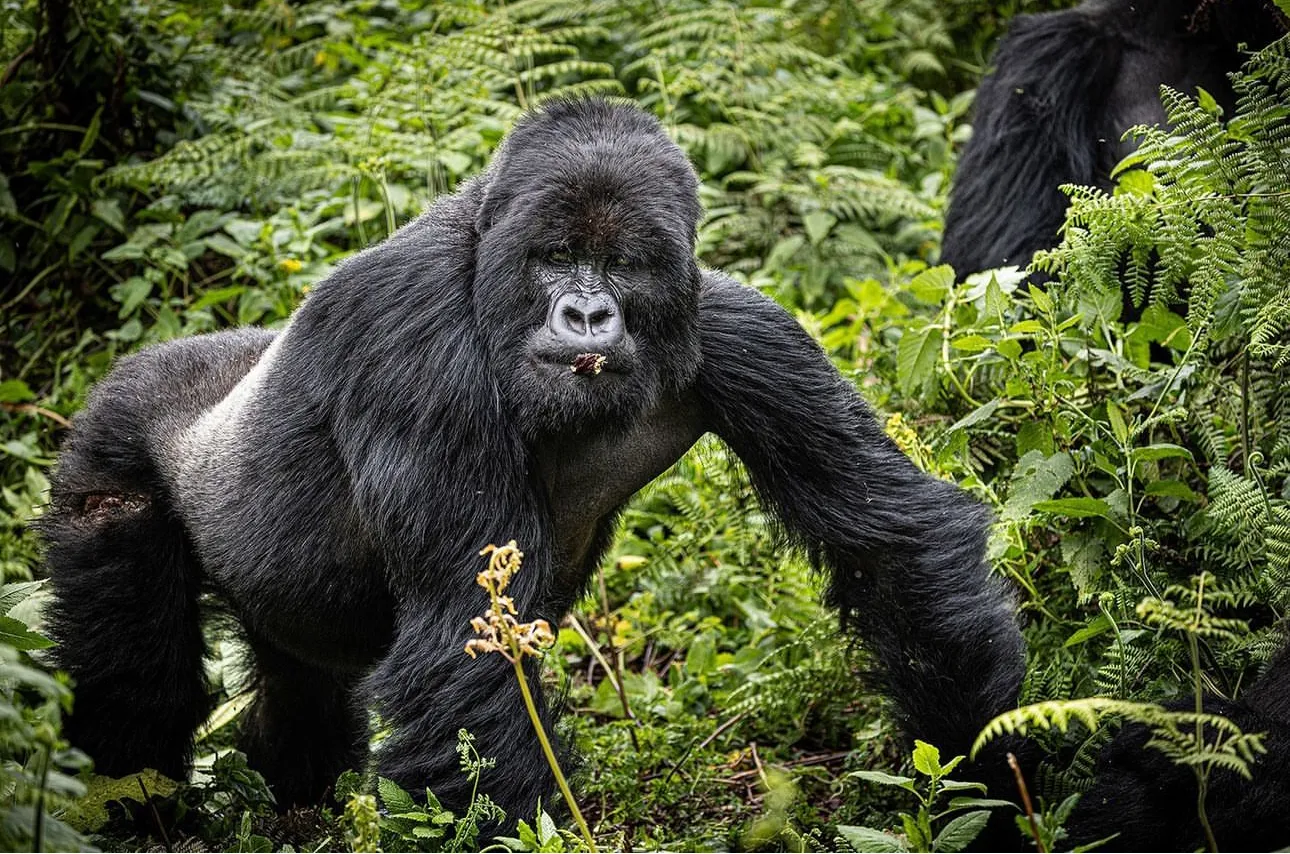
A silverback plays several critical roles:
- Protection: He shields the mother and infants from threats, including other males.
- Social stability: He keeps the family group calm and cohesive.
- Tolerance: Silverbacks are typically gentle with infants and allow them to climb, touch, and play near them.
- Feeding pace: The silverback may adjust the group’s movement to accommodate the mother with twins.
- Intervention: If other group members become aggressive or overly playful, he intervenes to protect the twins.
In Bwindi Impenetrable National Park and Volcanoes NP, trackers have observed silverbacks showing unusual gentleness toward twin infants, often allowing them to rest near him or touch his fur during resting periods.
The Family Group: A Support System for Gorilla Twins
A gorilla family is an essential support structure for a mother with twins. Female gorillas, especially experienced mothers, play an important, though subtle, role. They often stay close to the mother of twins during feeding and nesting breaks, offering comfort and occasionally helping position the infants.
Young gorillas and juveniles also interact with the twins, providing a playful environment that stimulates social and physical development.
Social benefits for twin infants include:
- Increased grooming
- Higher social bonding
- Learning opportunities by watching older siblings
- Physical stimulation during play
- Exposure to safe social interactions
This communal environment improves the chance that both twins grow into strong and socially competent gorillas.
Nutrition: How Gorilla Mothers Produce Enough Milk for Twins
One of the biological questions often asked is: How does a gorilla mother produce enough milk for twin infants? Gorillas rely on dense, fiber-rich vegetation, but lactation requires extra energy. When raising twins, the mother increases her food intake dramatically.
She consumes more:
- Wild celery
- Roots and tubers
- Thistles
- Nettles
- Herbaceous vegetation
- Seasonal fruits
Mountain gorillas have evolved a highly efficient digestive system, allowing them to extract calories from large quantities of vegetation. This adaptation allows mothers to sustain two infants for the first six critical months.
Movement Challenges: How Gorilla Twins Keep Up With the Group
A gorilla group moves daily in search of fresh feeding grounds. Mothers with twins face mobility challenges because infants cling differently and may tire more quickly. To support twin survival, family groups often reduce movement or the silverback sets a slower pace.
Gorilla mothers begin teaching the twins to cling independently by around five months. Before that, she must carry both, shifting their positions to prevent fatigue and maintain feeding balance.
Gorilla twins typically learn to:
- Cling longer
- Crawl between the mother’s arms
- Use their mouths and hands more effectively
- Share feeding time
- Move independently sooner than single infants
Their survival depends on developing strength early and gaining independence quickly.
When One Twin Is Weaker: How Gorilla Mothers Adapt
In many primates, when twins are born, the weaker sibling may not survive. But in mountain gorillas, mothers often adapt to the needs of the weaker infant by prioritizing feeding and physical support.
Adaptations include:
- Allowing the weaker infant more nursing time
- Keeping the weaker infant on the chest rather than the side
- Reducing movement for several days
- Staying closer to the silverback for protection
- Sleeping in positions that support both infants
These behaviors significantly increase the chances of survival.
Natural Threats to Gorilla Twins
Even with exceptional maternal care, twin survival in the wild is challenged by several risks:
- Predators: Though rare, leopards pose a danger to infants.
- Forest Accidents: Dense vegetation, falls, or slips can injure small infants.
- Aggression from rival males: Infanticide can occur during silverback takeovers.
- Weak development: One twin may struggle to grow at the same rate.
- Environmental stress: Heavy rain, cold temperatures, and lack of food can impact survival.
However, with effective protection from the family group, especially the silverback, most threats are minimized.
Documented Cases of Gorilla Twins in Bwindi and Volcanoes NP
Uganda and Rwanda have witnessed several remarkable cases of gorilla twins, many of which survived due to strong maternal instincts and stable family structures. These documented cases confirm that, when conditions are right, mountain gorillas are highly capable of raising two infants successfully.
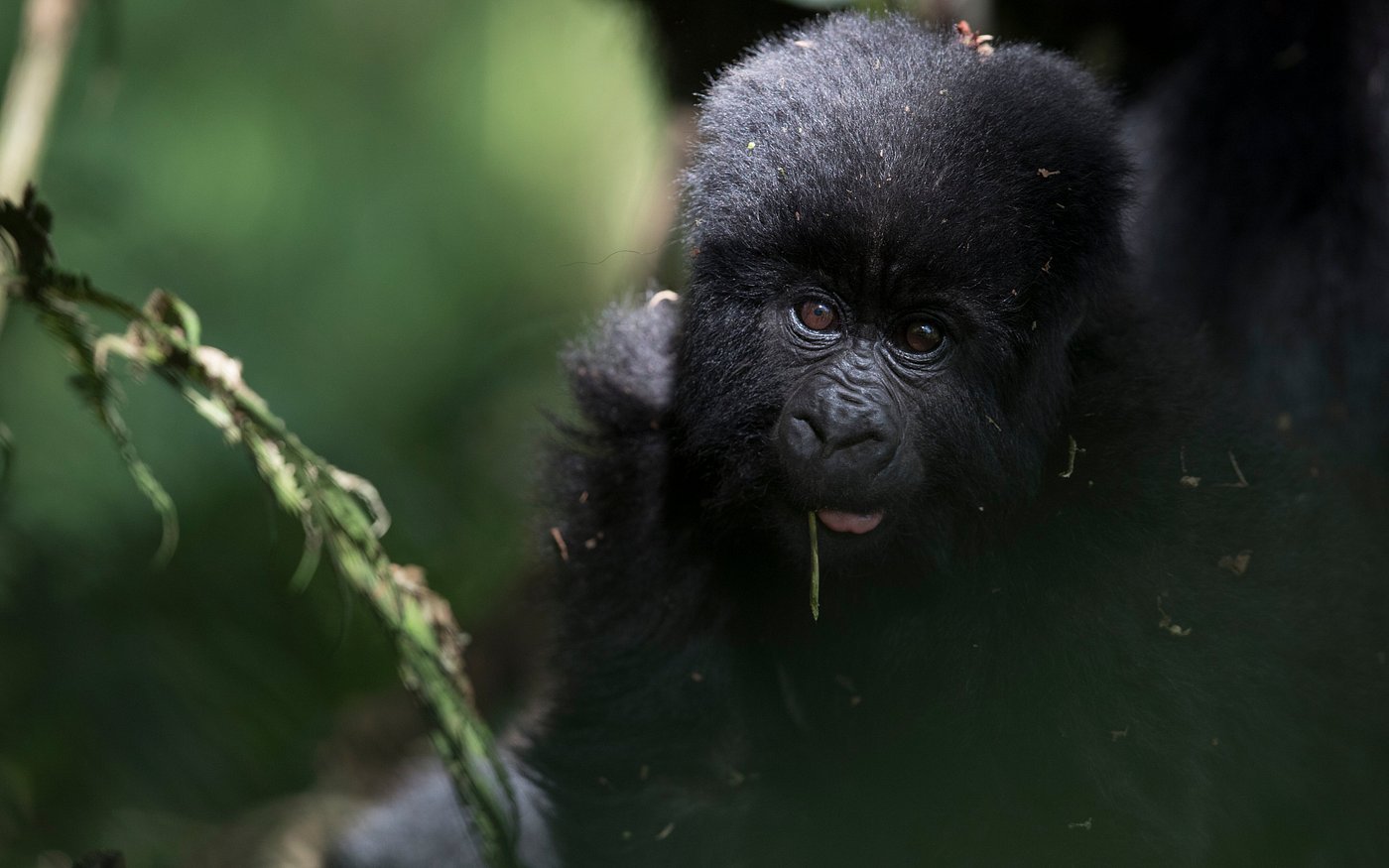
Trackers in both parks often report:
- Silverbacks protecting twin infants
- Mothers showing exceptional strength
- Twins developing strong bonds with siblings
- Higher-than-expected survival rates when groups are stable
These cases give conservationists greater hope for the future of mountain gorilla populations.
Why Gorilla Twins Matter for Conservation
Gorilla twins represent more than a biological rarity, they symbolize hope for the species. Mountain gorillas remain endangered, despite significant population recovery in recent years. Every birth contributes to long-term stability, genetic diversification, and population resilience.
Twin births accelerate population growth in small increments, but their symbolic power is immense. They reflect improved habitat protection, anti-poaching efforts, and successful conservation policies in Uganda, Rwanda, and the DRC.
For tourism, gorilla twins spark global attention and inspire travelers to explore responsible gorilla trekking experiences that support conservation and community livelihoods.
How Tourism Helps Gorilla Twins Survive
Sustainable gorilla trekking, especially in Uganda and Rwanda, provides funding for:
- Ranger salaries
- Anti-poaching patrols
- Community development
- Veterinary intervention in life-threatening cases
- Habitat protection
Tourism revenue ensures that twins born in Bwindi Impenetrable National Park or Volcanoes NP have the safest possible environment to grow into adulthood.
When travelers participate in gorilla trekking, they directly support the survival of gorilla families, including twins by contributing to the financial structure that keeps conservation active.
The Remarkable Survival of Gorilla Twins in the Wild
Understanding how gorilla twins survive in the wild reveals the extraordinary strength, intelligence, and adaptability of mountain gorilla societies. From the mother’s relentless dedication to the silverback’s protection and the family group’s social support, every member plays a role in giving the twins a chance at life.
Although twin births are rare, their survival proves that mountain gorillas possess remarkable emotional depth, cooperative behavior, and evolutionary resilience. In the forests of Bwindi Impenetrable National Park and Volcanoes NP , these rare twins represent both biological wonder and conservation success.
Their story continues to inspire wildlife lovers and reminds us of the importance of protecting the delicate ecosystems where these magnificent animals live.