
Gorilla Emotions: Do Gorillas Feel Empathy, Grief & Love?
Mountain gorillas are often described as gentle giants, but behind their strength lies something far more profound emotion. In the forests of Uganda’s Bwindi Impenetrable National Park, Mgahinga Gorilla National Park, and Rwanda’s Volcanoes National Park, gorillas show a rich emotional world that rivals our own.
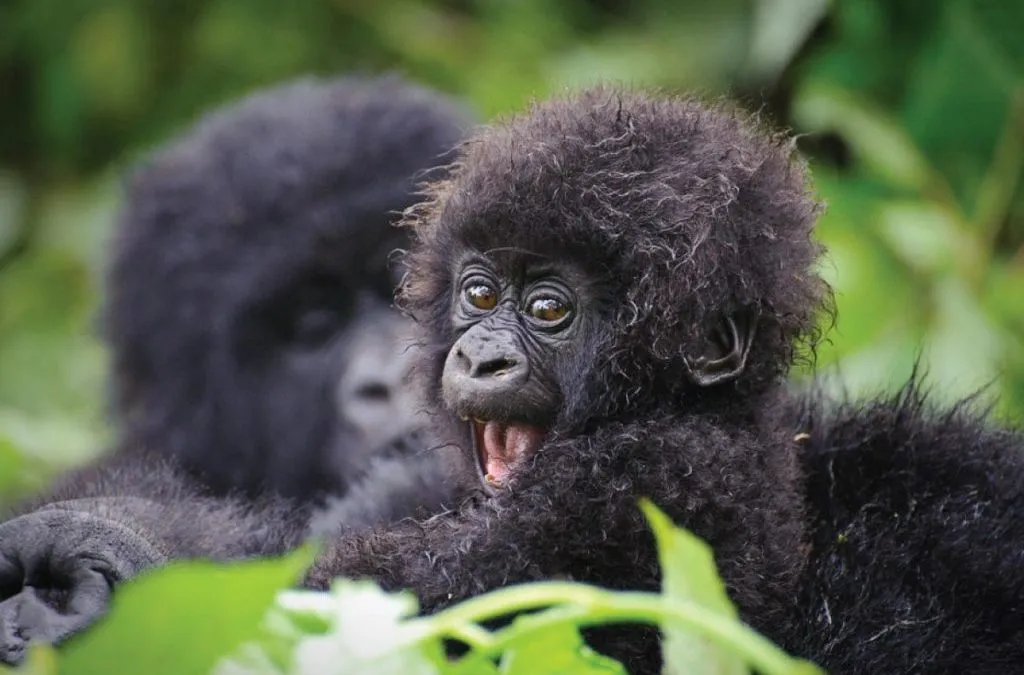
Their expressions of empathy, grief, love, affection, compassion, and even emotional intelligence are not imagination or anthropomorphism. They are scientifically documented behaviours that define gorilla society.
Understanding gorilla emotions changes how we see them. It transforms gorilla trekking from an adventure into a deeply human experience, a reminder that we share more with these great apes than most people realize. In this article, we explore the emotional lives of mountain gorillas, supported by field observations, scientific studies, and the lived experience of trackers in Uganda and Rwanda.
The Emotional Intelligence of Mountain Gorillas
Mountain gorillas have highly developed emotional brains. Their neurological structures, especially the limbic system are remarkably similar to humans. This allows them to process:
- bonding
- empathy
- fear
- comfort
- affection
- loss
- joy
- social anxiety
- patience
- anger
- reconciliation
These emotions are foundational to their survival and social structure. Gorilla families depend on emotional communication for harmony, safety and cooperation. Their feelings are not simple reflexes but deliberate emotional responses shaped by experience.
Trackers who spend decades with these families consistently report emotional complexity deeper than anything they expected.
Empathy in Mountain Gorillas – The Ability to Feel for Others
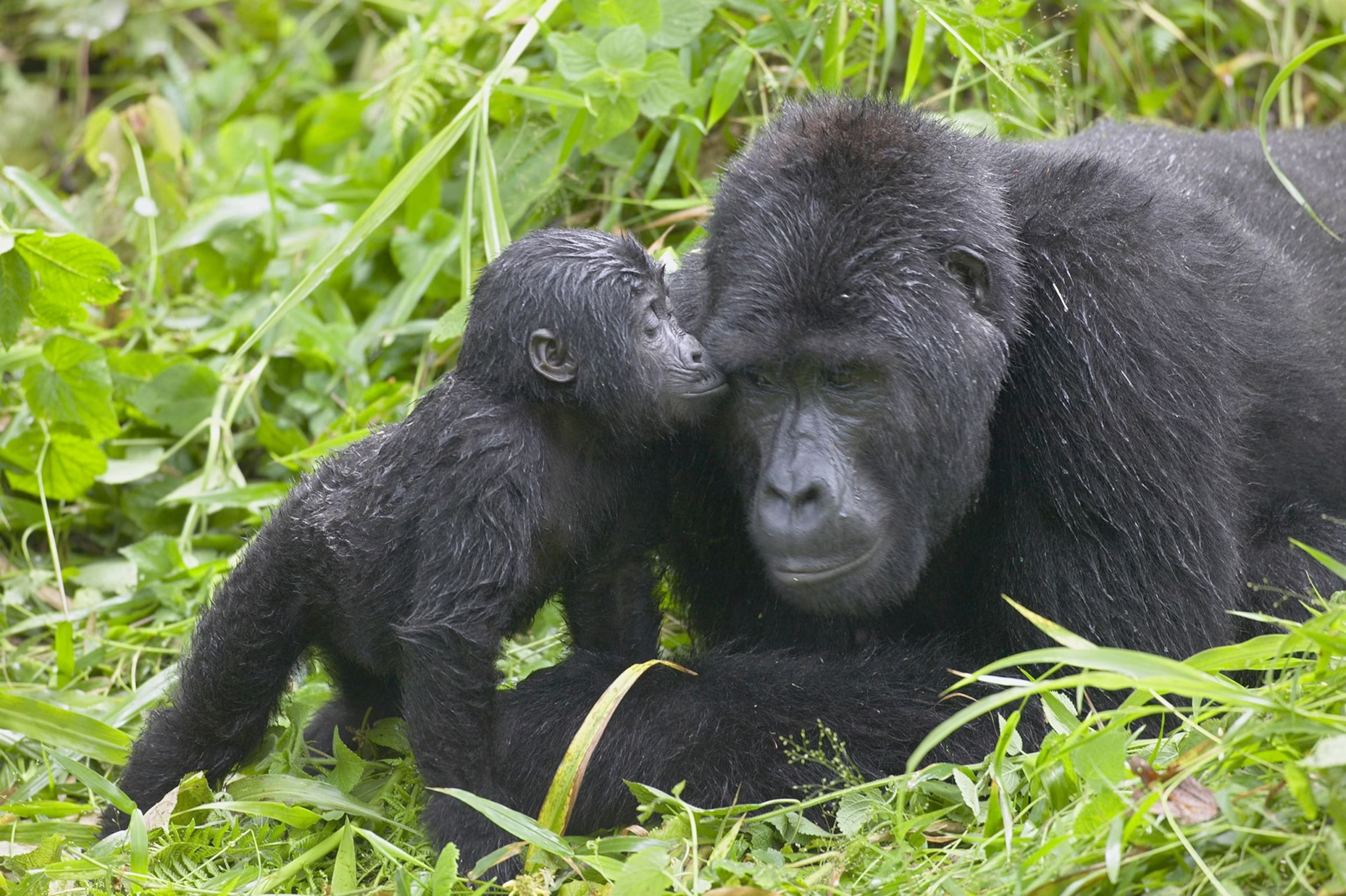
Empathy, the ability to sense and respond to another’s emotional state, is deeply embedded in gorilla society. It appears most clearly in:
Comforting the distressed
When an infant cries, nearby gorillas immediately respond, especially mothers and siblings. A juvenile may stop play and offer gentle touches. Adult females make soft grunts to reassure the mother. Even the silverback often glances back, checking that peace is restored.
Supporting weaker or injured members
Gorillas show remarkable care for injured group members. In both Uganda and Rwanda, trackers have witnessed females adjusting their pace to help limping companions, juveniles waiting for weaker siblings and silverbacks slowing down so an older female doesn’t fall behind.
Emotional sensitivity
Gorillas pick up on group mood instantly. If one member becomes anxious or startled, others respond with heightened awareness and reassurance. They do not ignore emotional shifts, they feel them.
Empathy allows gorillas to maintain strong, cohesive families that function almost like human communities.
Compassion – The Tender Side of Strength
Compassion goes beyond empathy. It is the act of taking steps to relieve another’s distress. In gorilla society, compassion is seen in almost every aspect of daily life.
Mothers soothe infants with soft touch and vocalizations. Older siblings take responsibility for carrying younger ones. Silverbacks intervene gently to prevent rough play from hurting smaller juveniles. Females help newborn mothers adjust to the challenges of caring for infants.
One of the most moving examples comes from the Rushaga region of Bwindi Impenetrable National Park, where trackers saw a silverback adopt an infant whose mother died. The silverback carried the baby on his back, guided it to feeding spots, and even shared his sleeping nest. This behaviour is compassion in its purest form, the willingness to carry another’s emotional and physical burden.
Love & Bonding – The Foundation of Gorilla Families
Gorilla families are held together by emotional bonds. Love is not a poetic idea, it is a biological and behavioural force that shapes gorilla life.
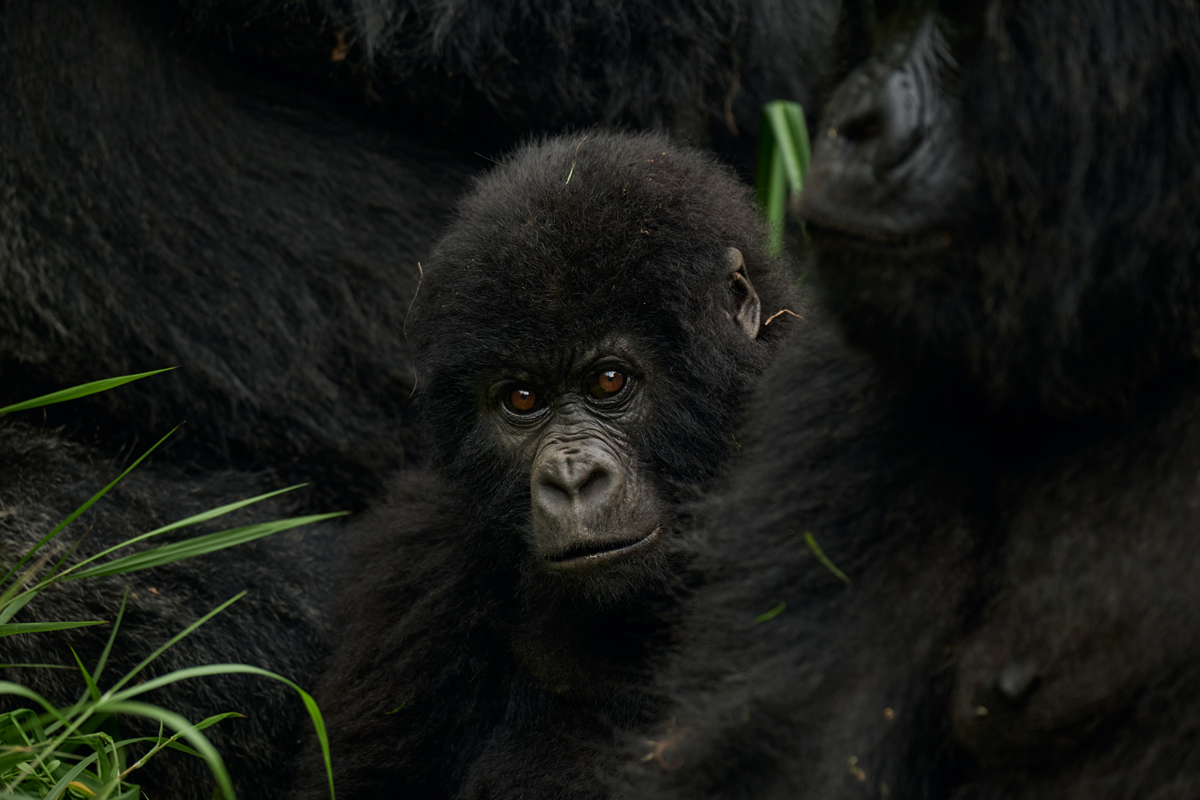
Mother–infant love
The bond between a mother and her infant is the strongest in gorilla society. Infants cling to their mothers for the first three years, learning security, trust and social behaviour. Mothers nurture, groom, comfort and protect their young with an emotional intensity that mirrors human parenting.
Sibling love
Juveniles form deep bonds with their siblings. They play, groom, explore, and even sleep close together. Older siblings often act as babysitters, guiding younger ones through the forest with gentle nudges.
Female–silverback relationships
While silverbacks lead the group, the emotional bond between females and the dominant male is central to family stability. Females groom their silverback, share resting spaces with him and rely on his presence for confidence during danger.
Inter-generational affection
Infants often climb onto tolerant silverbacks, who allow them to play or rest on their backs. This reflects trust and affection that transcends simple dominance hierarchy.
Love in gorillas is not just emotion, but survival, it creates the secure foundation every family member needs.
Grief – Do Gorillas Mourn Their Dead?
One of the most powerful proofs of gorilla emotional depth is their response to death. Mountain gorillas do mourn, and their grief is unmistakable.
Reactions to the death of an infant
When an infant dies, mothers may carry the body for days, grooming it gently and trying to wake it. This mourning behaviour has been documented repeatedly in Bwindi Forest and Rwanda’s Volcanoes National Park.
Siblings sit close, touching the mother softly, trying to understand the loss. The family stays unusually quiet. Play stops. Feeding slows down. The group’s emotional tone shifts completely.
Family responses to the death of a silverback
When a silverback dies, especially a long-term leader the entire family can enter a mourning period. Females stay close together. Juveniles cling to their mothers. The forest remains unusually still.
Trackers in Bwindi Impenetrable National Park once witnessed a family remaining at the site of their silverback’s death for nearly two days, with individuals returning repeatedly to touch his body.
Emotional silence
Gorillas typically express grief through silence. Vocal communication becomes minimal. Group movement is slow. This silence is shared, not enforced revealing communal emotional understanding.
These responses are not instinctive reactions. They are emotional experiences.
Joy & Playfulness – The Happiest Side of Gorilla Emotion
Gorillas experience joy, excitement and pleasure, especially in juveniles and infants. Play is essential for physical and social development, but it is also an expression of happiness.

Juveniles chase each other, tumble through vines, beat their chests playfully, and laugh with breathy panting sounds. Mothers smile with relaxed faces as they watch their infants jump on their backs. Silverbacks sometimes join play with surprising gentleness, showing a softer side rarely seen in documentaries.
This joy is genuine. Happiness strengthens bonds, reduces tension, and builds social skills vital for adult life.
Fear & Anxiety – Emotional Survival Instincts
Fear is an essential emotional response in gorilla life.
Fear responses include:
- freezing
- sudden stillness
- alert posture
- quick glances toward the silverback
- clustering around mothers
- increased vocalization
Infants squeal when scared; juveniles run to their mothers; females look to the silverback for reassurance. Silverbacks respond with deep rumbles or protective positioning.
Fear helps gorillas avoid predators, rival males, and environmental dangers. It is both emotional and survival-based.
Anger & Conflict – Controlled, Intelligent Emotion
Gorilla anger is highly controlled. Unlike chimpanzees, gorillas prefer peace. Anger typically appears in:
- competition between males
- juvenile rough play
- females disputing feeding spots
- threats from rival groups
The silverback often mediates conflicts. He doesn’t respond with blind aggression but with calculated discipline. Anger is rarely uncontrolled, it is channeled into displays that prevent dangerous fights.
This emotional restraint demonstrates remarkable intelligence and social awareness.
Emotional Memory – Gorillas Remember
Mountain gorillas remember social interactions, friendships, conflicts and individuals from past years. Emotional memory helps them:
- avoid individuals who caused harm
- maintain long-term bonds
- recognize former group members
- develop loyalty
- adjust to new leaders
Some trackers note that gorillas respond positively to familiar researchers and rangers even after long absences, a sign of emotional memory and recognition.
The Silverback’s Emotional Role in the Family
The silverback is not only a physical protector but also an emotional stabilizer. His presence brings calm to the group. His vocal rumbles reassure anxious infants. His posture influences group confidence.

Silverbacks show:
- patience with infants
- tolerance for young males
- compassion during group tensions
- sadness during loss
- protectiveness during fear
- affection toward bonded females
Their emotional intelligence is what holds gorilla families together.
How Emotions Shape Gorilla Trekking Experiences
Visitors often report feeling an unexpected emotional connection during gorilla trekking. When a mother looks into her infant’s eyes, when juveniles laugh and chase each other, when the silverback sits calmly observing his family, trekkers sense a shared emotional world.
Understanding gorilla emotions enhances trekking by:
- deepening appreciation
- improving interpretation
- creating empathy
- encouraging conservation
- elevating the experience from observation to connection
This emotional connection inspires trekkers to become advocates of gorilla conservation.
Do Gorillas Love? What Science Says
Scientific studies confirm that gorillas show:
- attachment
- bonding
- pair preferences
- maternal devotion
- playful affection
- mourning and emotional pain
Love in gorillas manifests in behaviours such as embracing, grooming, resting together, caring for infants and comforting the distressed. Love is the emotional glue of gorilla society.
While they do not love in the romanticized human sense, gorillas experience affection, loyalty, trust and emotional attachment, the core components of love.
Emotional Differences Between Uganda & Rwanda Gorilla Populations
Although emotionally similar, environmental factors influence communication and expression.
Bwindi gorillas
Living in dense forest cover, Bwindi gorillas rely more on touch, close-range communication, and subtle emotional cues. Enhanced reliance on proximity strengthens emotional bonding, especially between mothers and infants.
Volcanoes National Park gorillas
In Rwanda’s more open bamboo forests, emotions are expressed more visibly through posture and gesture. It is easier for trekkers to observe facial expressions, playful behaviour and bonding interactions.
Despite regional differences, the emotional depth is universal.
How Gorilla Emotions Support Conservation
Understanding gorilla emotions strengthens conservation by showing that:
- gorillas experience suffering
- disruption affects emotional well-being
- families require stability
- infants depend on emotional security
- silverbacks experience stress during human disturbance
This insight reinforces the importance of:
- controlled tourism
- minimal disturbance
- veterinary intervention
- monitoring
- community education
When humans recognize gorillas as emotional beings, conservation becomes a moral responsibility, not just a biological one.
Frequently Asked Questions About Gorilla Emotions
Do gorillas cry?
Not with tears like humans, but they show distress through vocalizations and posture.
Can gorillas feel love?
Yes, they show affection, bonding, loyalty, and care.
Do gorillas mourn their dead?
Absolutely. They display clear mourning behaviours.
Do gorillas get jealous?
Yes, especially females within the same group competing for the silverback’s attention.
Do silverbacks love their young?
Silverbacks show strong emotional bonds, especially with infants and juveniles.
Are gorillas capable of empathy?
Yes, their empathy is well-documented and frequently observed.
Final Thoughts – The Emotional Lives of Mountain Gorillas
Mountain gorillas are not just strong, intelligent animals, they are emotional beings with deep inner lives. They love, comfort, protect, mourn, reconcile and communicate with tenderness and wisdom.
Their emotional world is real, complex, and essential to their survival. When trekkers witness a silverback gently guiding his family or a mother nursing her infant with complete devotion or juveniles laughing with breathy panting sounds as they play, they are witnessing one of the purest expressions of emotion in the natural world.
Gorilla emotions remind us of our shared humanity.
And they remind us why protecting these magnificent creatures is one of conservation’s greatest responsibilities.