
Best Time of Year for Gorilla Trekking (Uganda & Rwanda)
Gorilla trekking is one of Africa’s most extraordinary wildlife experiences, and choosing the best time of year for gorilla trekking can significantly influence the ease, comfort, cost, and overall enjoyment of your safari. While mountain gorilla trekking in East Africa is possible throughout the year, weather patterns, trekking conditions, visitor numbers, and permit availability vary by season. Check Gorilla Permit Availability for Free
Uganda and Rwanda are home to the world’s remaining mountain gorillas, protected within high-altitude rainforest ecosystems. Understanding how seasons affect these environments allows travelers to plan their trip strategically whether prioritizing dry trails, fewer crowds, or better value.
This guide is written from the perspective of local gorilla trekking specialists, offering practical insight rather than generic travel advice.
Gorilla Trekking Year-Round: The Short Answer
Gorilla trekking is available 12 months a year in both Uganda and Rwanda.
There is no “bad” time to see gorillas only different experiences depending on the season.
Mountain gorillas do not migrate. They remain within their protected forest ranges year-round, meaning sightings are consistently excellent regardless of the month. However, rainfall, trail conditions, and tourism demand change across the year, influencing what many travelers consider the “best” time.
Gorilla Trekking Seasons Explained | The Best Gorilla Trekking Seasons Update
| Month | Weather Conditions | Crowd Levels | Permit Demand | Best For |
|---|---|---|---|---|
| January | Dry, warm days with cool forest mornings | Moderate | Moderate | First-time trekkers, photography |
| February | Dry and stable, excellent trail conditions | Moderate | Moderate–High | Comfortable trekking, short trips |
| March | Start of rains, trails begin to soften | Low | Low | Value-focused travelers, fewer crowds |
| April | Wettest month, muddy forest trails | Very Low | Very Low | Budget travelers, adventurous trekkers |
| May | Rain easing, lush green forest scenery | Low | Low–Moderate | Photographers, quieter experiences |
| June | Dry season begins, improved trekking conditions | High | High | First-timers, seniors, easy hikes |
| July | Dry, cool, and very comfortable | Very High | Very High | Peak season travelers, families |
| August | Dry and stable, busy trekking routes | Very High | Very High | School holidays, multi-country safaris |
| September | Mostly dry with occasional light rain | Moderate | Moderate–High | Balanced weather and crowds |
| October | Short rains begin, fresh green forests | Low | Low | Quiet trekking, better value |
| November | Short rainy season, manageable conditions | Low | Low | Repeat visitors, budget travelers |
| December | Early rains easing into dry holiday period | High (late month) | High | Festive travel, end-year safaris |
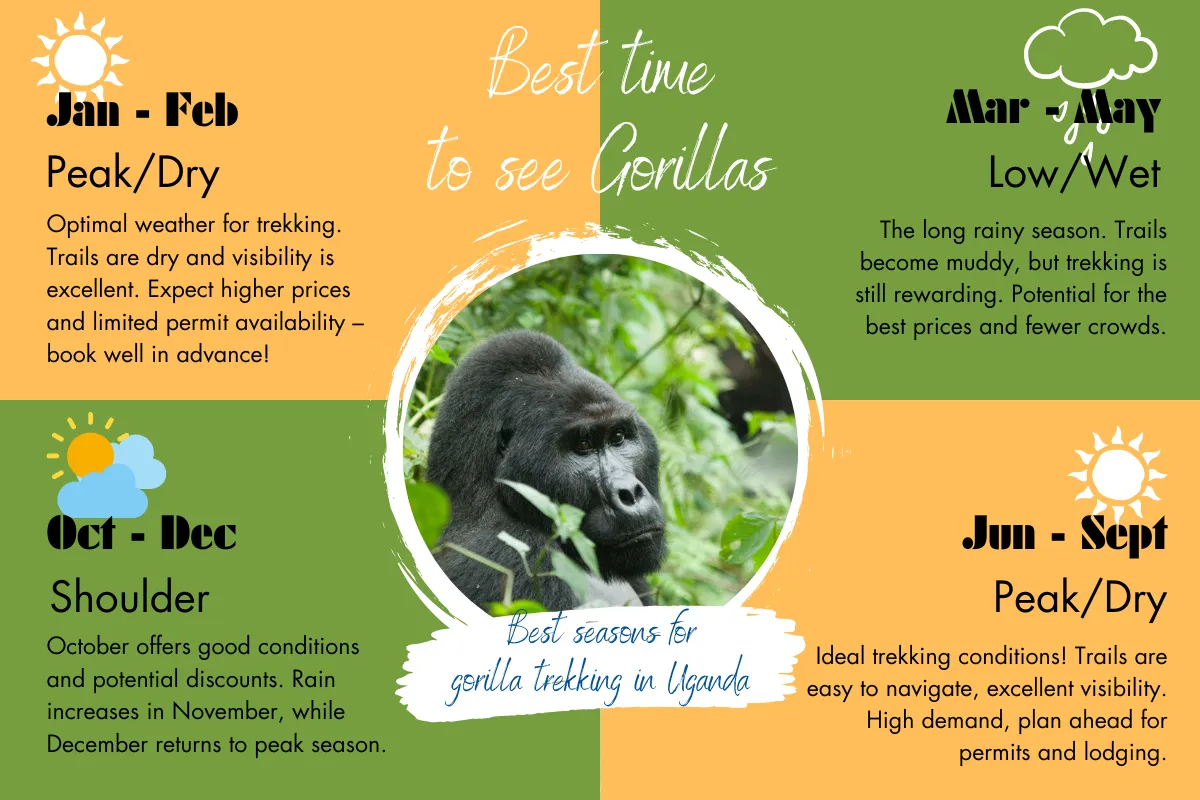
Gorilla trekking seasons are best understood by dividing the year into dry seasons and rainy (green) seasons.
Dry Season Gorilla Trekking (Peak Season)
Main dry months:
- June to September
- December to February
These months are widely considered the best time of year for gorilla trekking for first-time visitors.
Why the dry season is popular:
- Forest trails are less muddy and less slippery
- Trekking conditions are physically easier
- Weather is more predictable
- Clearer light for photography
- Higher demand for permits and lodges
During the dry season, gorilla trekking success rates remain extremely high, and the experience tends to be more comfortable, especially for travelers who are less confident with challenging terrain.
However, this popularity comes with trade-offs:
- Gorilla permits often sell out early
- Lodges charge peak-season rates
- Popular sectors can feel busier
Rainy Season Gorilla Trekking (Low & Shoulder Season)
Main rainy months:
- March to May (long rains)
- October to November (short rains)
Often misunderstood, the rainy season offers a different but equally rewarding gorilla trekking experience.
Advantages of trekking during the rainy season:
- Forests are lush, green, and vibrant
- Fewer tourists on trekking routes
- Easier access to permits at short notice
- Potentially shorter treks, as gorillas feed closer to lower slopes
- Better value on accommodation
Rain usually falls in short bursts, not all day, and trekking continues regardless of light rain.
For experienced travelers, photographers who enjoy dramatic forest scenery, or budget-focused visitors, the rainy season can be an excellent choice.
Climate, Altitude & Why Weather Is Unpredictable
One of the most important factors to understand when planning gorilla trekking is altitude.
Gorilla parks are located in montane rainforest zones, meaning:
- Weather can change quickly
- Rain can fall even during “dry” months
- Temperatures are cooler than expected for equatorial Africa
Key gorilla trekking destinations include:
- Bwindi Impenetrable National Park – Uganda
- Mgahinga Gorilla National Park – Uganda
- Volcanoes National Park – Rwanda
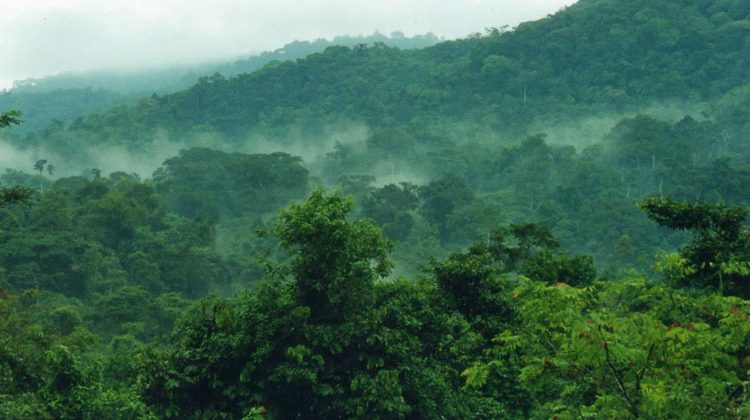
These parks sit at elevations between 2,300 and 4,500 meters, creating misty mornings, cooler temperatures, and regular rainfall throughout the year.
This is why experienced operators say:
There is no completely dry month for gorilla trekking, only drier ones.
Month-by-Month Gorilla Trekking Guide (January–December)
Understanding how each month affects gorilla trekking conditions allows travelers to choose not just a good time, but the right time based on weather tolerance, budget, permit access, and trekking comfort. Gorilla trekking takes place primarily in Bwindi Impenetrable National Park, Mgahinga Gorilla National Park, and Volcanoes National Park, all of which sit in high-altitude rainforest zones with unique seasonal rhythms.
Gorilla Trekking in January
January is widely regarded as one of the most balanced months for gorilla trekking in both Uganda and Rwanda. Weather conditions are generally dry, with warm daytime temperatures and cooler mornings in the forest. Trails are in good condition, making hikes more manageable for most fitness levels. Crowd levels are moderate rather than extreme, as January sits just after the peak holiday rush.
Permit demand is steady but not overly competitive, especially in Uganda where availability is broader. This month is particularly well suited to first-time gorilla trekkers, photographers seeking clear forest light, and travelers combining gorilla trekking with other safari activities.
Gorilla Trekking in February
February continues the favorable conditions of January, often with even drier trails and excellent visibility inside the forest. It is one of the best months for photography, as sunlight penetrates the vegetation more easily and gorillas are often encountered in clearer terrain.
Crowds remain manageable, though permit demand begins to increase toward the end of the month. February is ideal for travelers who want high trekking comfort without the intensity of peak season crowds. It is also a strong month for travelers planning short gorilla trekking trips from Kigali into Rwanda or southwestern Uganda.
Gorilla Trekking in March
March marks the transition into the long rainy season. Rainfall begins to increase gradually, particularly toward the end of the month. Trails become softer underfoot, and trekking can be more physically demanding, especially after overnight rain.
Crowd levels drop noticeably compared to the previous two months, and permit demand becomes lighter. This makes March attractive to travelers who value quieter trekking experiences and flexibility. Gorilla sightings remain excellent, as gorillas tend to stay closer to lower slopes where food is abundant. March suits experienced trekkers and travelers prioritizing value over perfectly dry conditions.
Gorilla Trekking in April
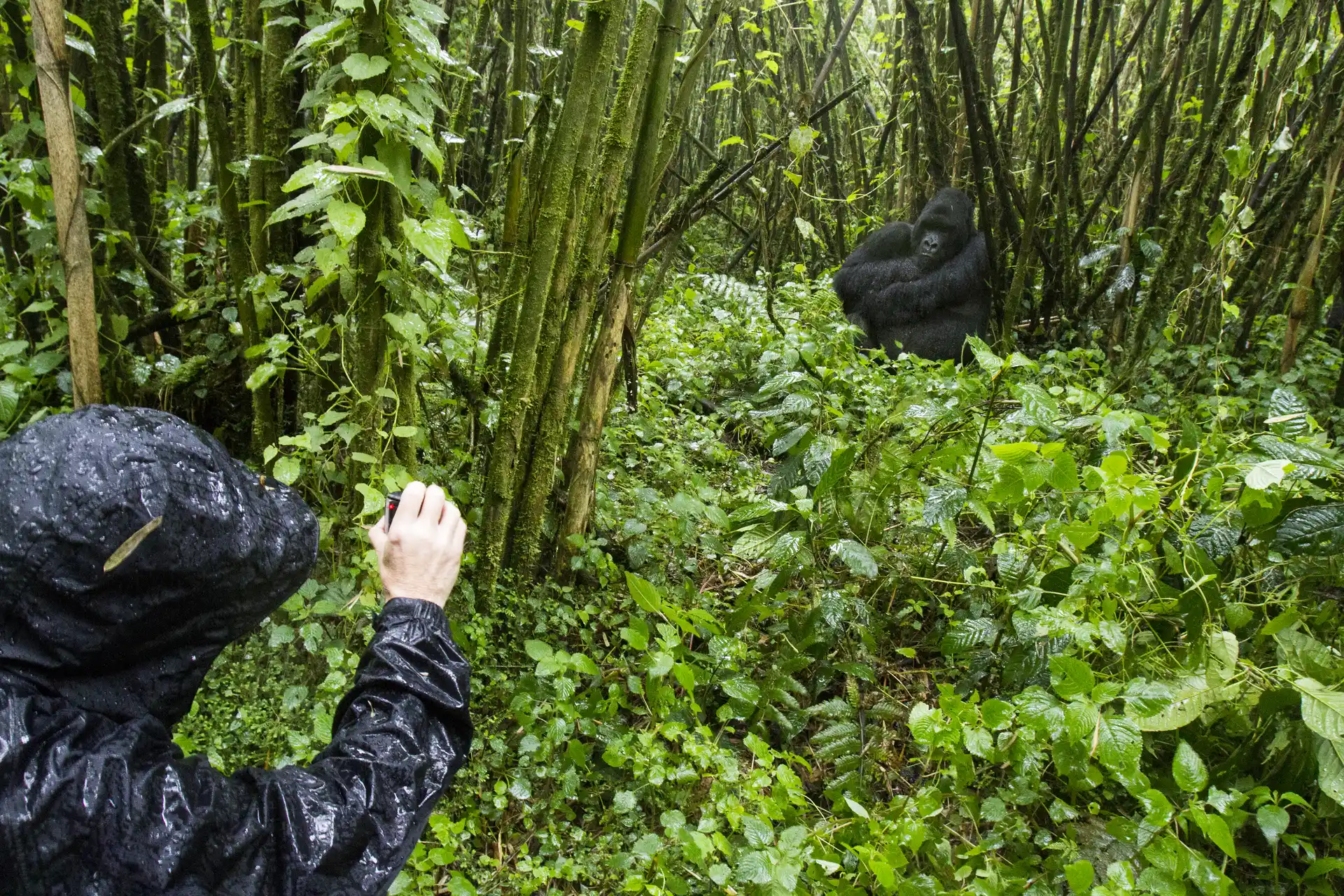
April is the wettest month of the year and represents the heart of the long rainy season. Rainfall is heavier and more frequent, and forest trails can be muddy and slippery. Treks during this period can be challenging, requiring patience and a reasonable level of fitness.
Despite these conditions, gorilla trekking continues daily, and sightings remain highly reliable. Crowd levels are at their lowest of the year, and permit availability is rarely an issue. April is best suited to adventurous travelers, budget-conscious visitors, and those who prefer solitude over comfort. Lodges often offer reduced rates, making this month appealing for longer stays.
Gorilla Trekking in May
May sees a gradual easing of rainfall as the long rainy season begins to taper off. Forests are at their most lush and green, creating beautiful scenery and dramatic photographic opportunities. While trails can still be muddy, conditions are generally improving compared to April.
Crowds remain low, and permit demand is moderate. May is particularly attractive to travelers who want to take advantage of shoulder-season pricing while avoiding the heaviest rains. It is a strong option for photographers, nature lovers, and travelers who do not mind variable weather in exchange for quieter treks.
Gorilla Trekking in June
June marks the start of the long dry season and the beginning of peak gorilla trekking months. Rainfall decreases significantly, and trail conditions improve rapidly. Treks become more predictable and physically easier, making June one of the most popular months for gorilla trekking.
Crowd levels increase, especially in Rwanda where permits are limited. Permit demand rises sharply, and advance booking becomes essential. June is ideal for first-time trekkers, older travelers seeking easier hikes, and those with fixed travel dates who want reliable conditions.
Gorilla Trekking in July
July is often considered one of the best months of the year for gorilla trekking. Weather conditions are dry and cool, trails are firm, and trekking comfort is at its highest. Gorilla movements are predictable, and encounters are consistently rewarding.
This popularity comes at a cost. July experiences some of the highest crowd levels of the year, and permits often sell out months in advance, particularly in Rwanda. July is best suited to travelers who prioritize comfort and certainty and are willing to plan well ahead.
Gorilla Trekking in August
August mirrors July in terms of weather and trekking quality. Dry conditions continue, and forest access remains excellent. It is a peak travel month due to international school holidays, which increases visitor numbers.
Permit demand is very high, and accommodation availability can be limited in popular sectors. August is ideal for families traveling during school breaks, photographers seeking clear conditions, and travelers combining gorilla trekking with other East African safaris.
Gorilla Trekking in September
September represents a gentle transition from peak season toward the shoulder months. Dry conditions generally persist, though light rain may return toward the end of the month. Trails remain in good condition, and trekking comfort is still high.
Crowd levels begin to thin slightly compared to July and August, and permit availability improves marginally. September is well suited to travelers looking for a balance between favorable weather and fewer tourists, making it one of the most underrated months for gorilla trekking.
Gorilla Trekking in October
October introduces the short rainy season, though rainfall is typically lighter and less disruptive than during the long rains. Forests regain a fresh, green appearance, and gorillas often remain closer to lower elevations.
Crowds drop significantly, and permit demand becomes more flexible. October is ideal for travelers seeking quieter experiences, better value, and a more intimate connection with the forest environment. It suits experienced travelers and those with flexible schedules.
Gorilla Trekking in November
November is generally wetter than October but still manageable for gorilla trekking. Rainfall tends to come in short bursts rather than prolonged downpours, and trekking continues without interruption.
Visitor numbers remain low, and permits are readily available. November is best for budget-focused travelers, repeat visitors, and photographers who appreciate misty forest atmospheres. While trekking can be more demanding, the sense of exclusivity is unmatched.
Gorilla Trekking in December
December is divided into two distinct phases. Early December often sees residual rainfall from November, while the latter half of the month transitions into the short dry season. As the holidays approach, crowd levels rise sharply.
Permit demand increases significantly from mid-December onward, especially in Rwanda. December is ideal for travelers combining gorilla trekking with festive holidays or end-of-year travel. Those visiting earlier in the month benefit from quieter conditions, while late December travelers enjoy drier weather at the cost of higher demand.
Month-by-Month Summary Insight
Each month offers a legitimate opportunity for gorilla trekking, with trade-offs rather than absolutes. Dry months prioritize comfort and predictability, while rainy months reward patience with solitude, value, and lush scenery. Understanding these nuances allows travelers to align expectations with experience rather than chasing a single “perfect” month.
Best Time of Year for Gorilla Trekking in Uganda
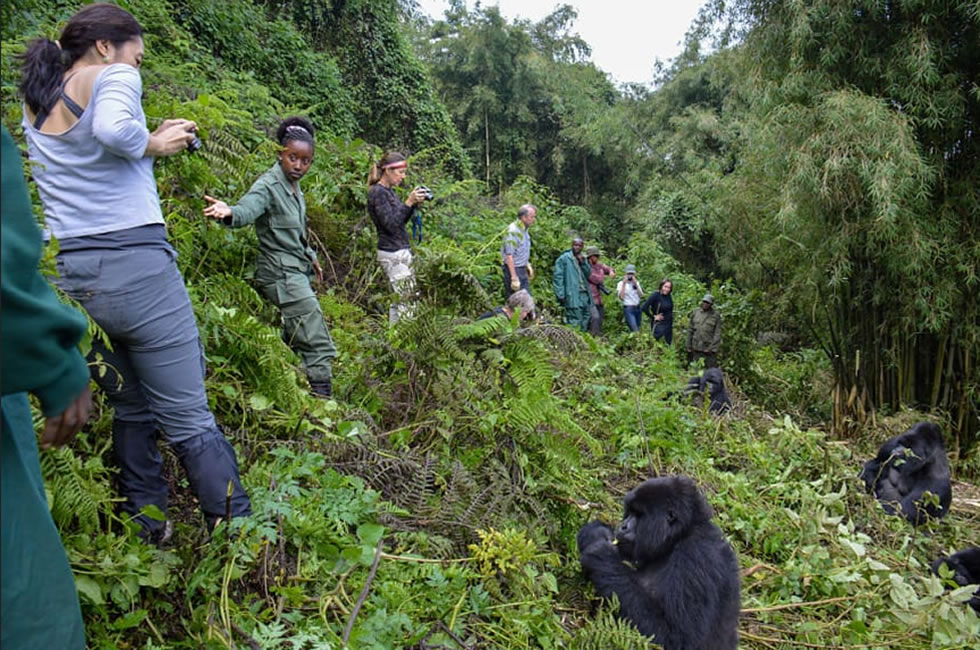
Uganda offers the largest population of habituated gorilla families, particularly in Bwindi Impenetrable National Park, making it more flexible year-round.
Best overall months in Uganda:
- June – August
- December – February
Why Uganda performs well year-round:
- More trekking sectors
- Higher permit availability
- Greater price variation across seasons
Rainy months in Uganda often mean:
- Slightly more challenging hikes
- Fewer visitors
- Excellent value for money
This makes Uganda ideal for travelers seeking budget-friendly gorilla trekking or last-minute permits.
Best Time of Year for Gorilla Trekking in Rwanda
Rwanda’s gorilla trekking experience is more premium and highly controlled.
Best months in Rwanda:
- June – September
- January – February
Rwanda’s Volcanoes National Park has:
- Shorter travel time from Kigali
- More open bamboo forests
- Generally shorter trekking durations
However:
- Permits are expensive and limited
- Demand is high year-round
- Rainy seasons still see consistent trekking activity
Travelers prioritizing ease, comfort, and shorter treks often prefer Rwanda during the dry season.
Is There a “Best” Month for Gorilla Trekking?
There is no single best month for everyone.
Instead, the best time depends on:
- Physical fitness
- Budget
- Flexibility
- Photography goals
- Permit availability
For example:
- July & August → Best for dry conditions, busiest
- April & May → Best for fewer tourists and lower costs
- January & February → Excellent balance of weather and availability
- October & November → Quiet, green, and underrated
Key Takeaway from PART 1
- Gorilla trekking is a year-round experience
- Dry seasons offer easier trekking and higher demand
- Rainy seasons offer value, solitude, and lush scenery
- Uganda is more flexible across seasons
- Rwanda is best planned well in advance, especially in peak months
Decision-Based Timing: Choosing the Best Time for Your Gorilla Trekking Safari
After understanding seasons and monthly conditions, the most important question becomes personal: when is the best time for you to go gorilla trekking? The answer depends less on the calendar and more on travel style, physical comfort, budget, and expectations. This section breaks down the decision-making process in a practical, experience-driven way, based on years of on-the-ground gorilla trekking operations in Uganda and Rwanda.
Best Time for Gorilla Trekking in Uganda vs Rwanda
Uganda and Rwanda offer distinctly different gorilla trekking experiences, even during the same months. Uganda’s gorilla trekking takes place primarily in Bwindi Impenetrable National Park and Mgahinga Gorilla National Park, while Rwanda’s experience is centered in Volcanoes National Park.
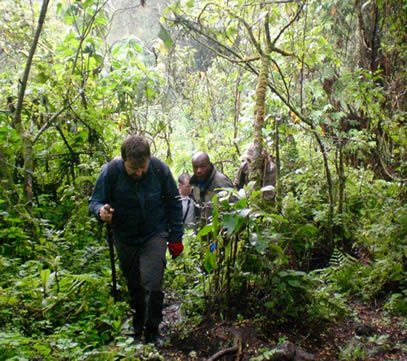
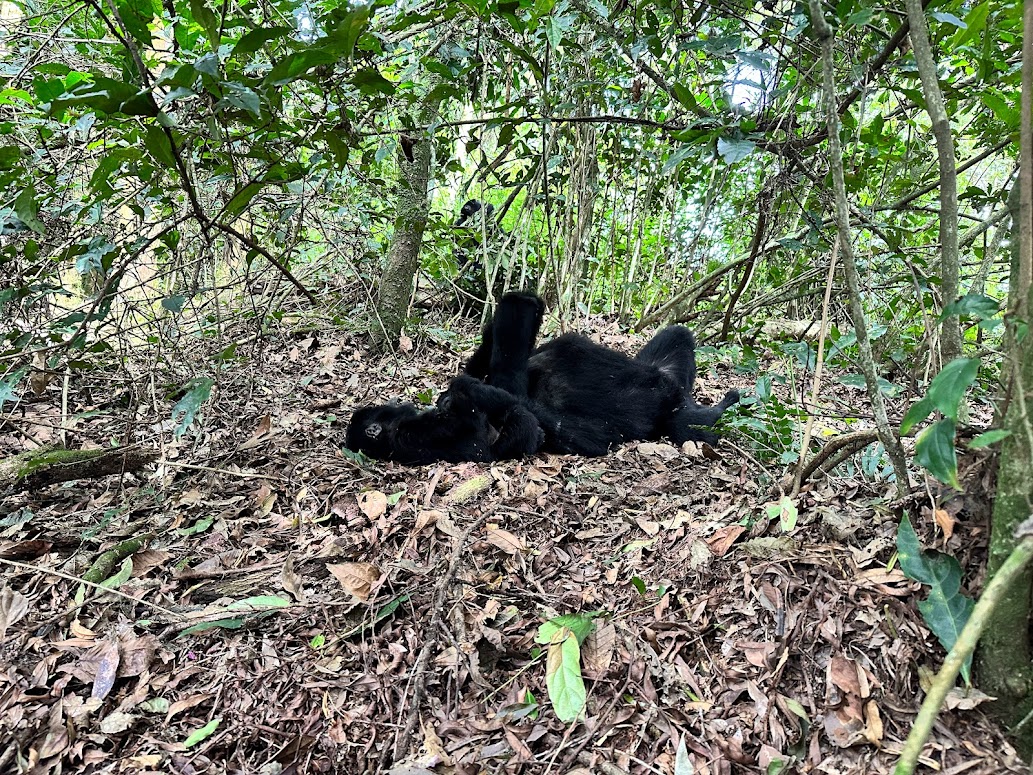
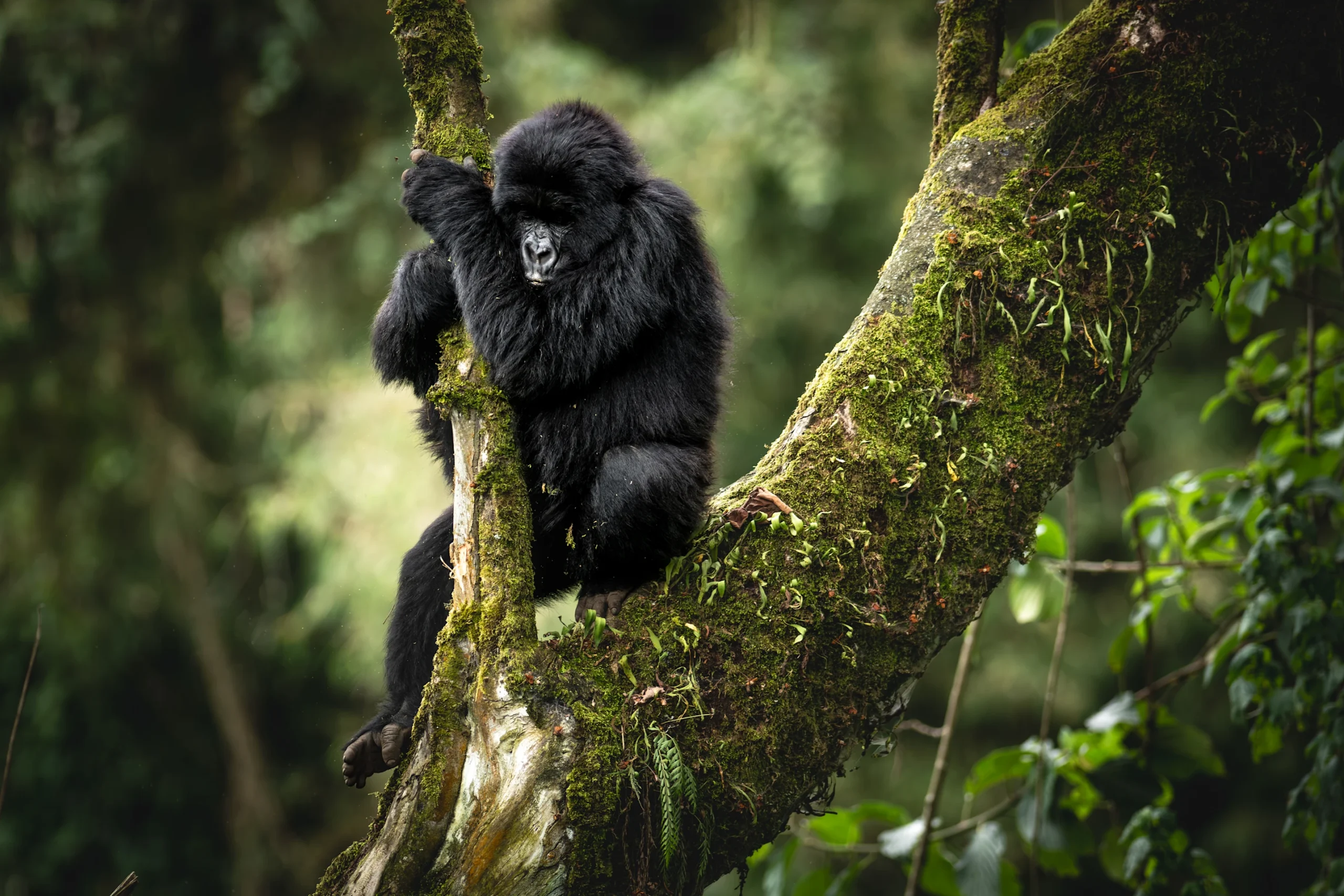
Uganda performs exceptionally well across all seasons due to its larger number of habituated gorilla families and trekking sectors. Even during rainy months, permits remain available and trekking routes are spread across different areas, reducing pressure on any single sector. This makes Uganda the more flexible option for travelers with limited planning time or tighter budgets.
Rwanda, by contrast, is most enjoyable during the drier months from June to September and January to February. Treks are generally shorter and less physically demanding, but permits are limited and demand remains high year-round. Travelers seeking maximum comfort and predictability benefit most from visiting Rwanda during dry seasons, while Uganda remains forgiving even outside peak months.
In practical terms, Uganda is the better choice for year-round gorilla trekking, while Rwanda delivers its strongest experience during drier, well-planned travel windows.
Best Time for Budget-Focused Gorilla Trekking Travelers
For travelers prioritizing value, the rainy and shoulder seasons often represent the best time of year for gorilla trekking. Months such as March, April, May, October, and November typically see lower lodge rates and greater flexibility with permit availability, particularly in Uganda.
Although trekking conditions can be more challenging during these periods, gorilla sightings remain consistently excellent. In fact, increased vegetation growth often keeps gorilla families closer to lower elevations, occasionally resulting in shorter trekking times despite muddy trails. Budget travelers who are mentally prepared for rain are often rewarded with quieter forests, more personal encounters, and significant cost savings.
Uganda is especially well suited to budget-conscious travelers during these months, as permit availability is broader and accommodation options span a wide price range. Rwanda, while still operational in rainy seasons, offers fewer cost reductions due to fixed permit pricing.
Best Time for Gorilla Habituation Experience
The gorilla habituation experience, available exclusively in Bwindi, allows visitors to spend up to four hours with a semi-habituated gorilla family. This experience is more physically demanding and sensitive to weather conditions than standard gorilla trekking.

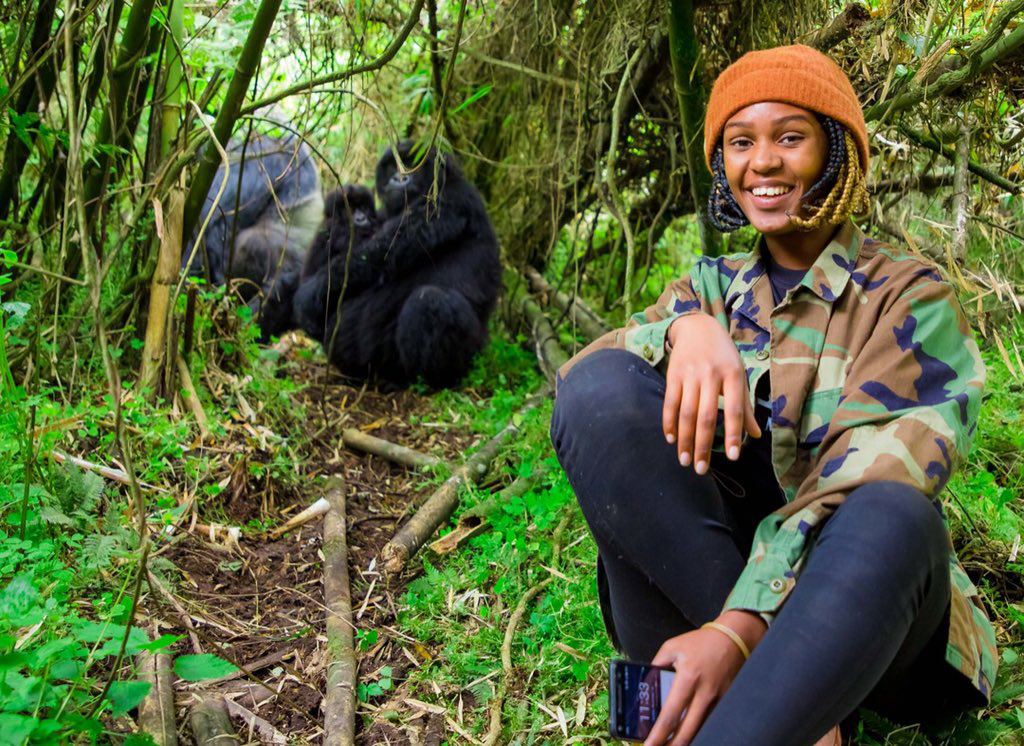
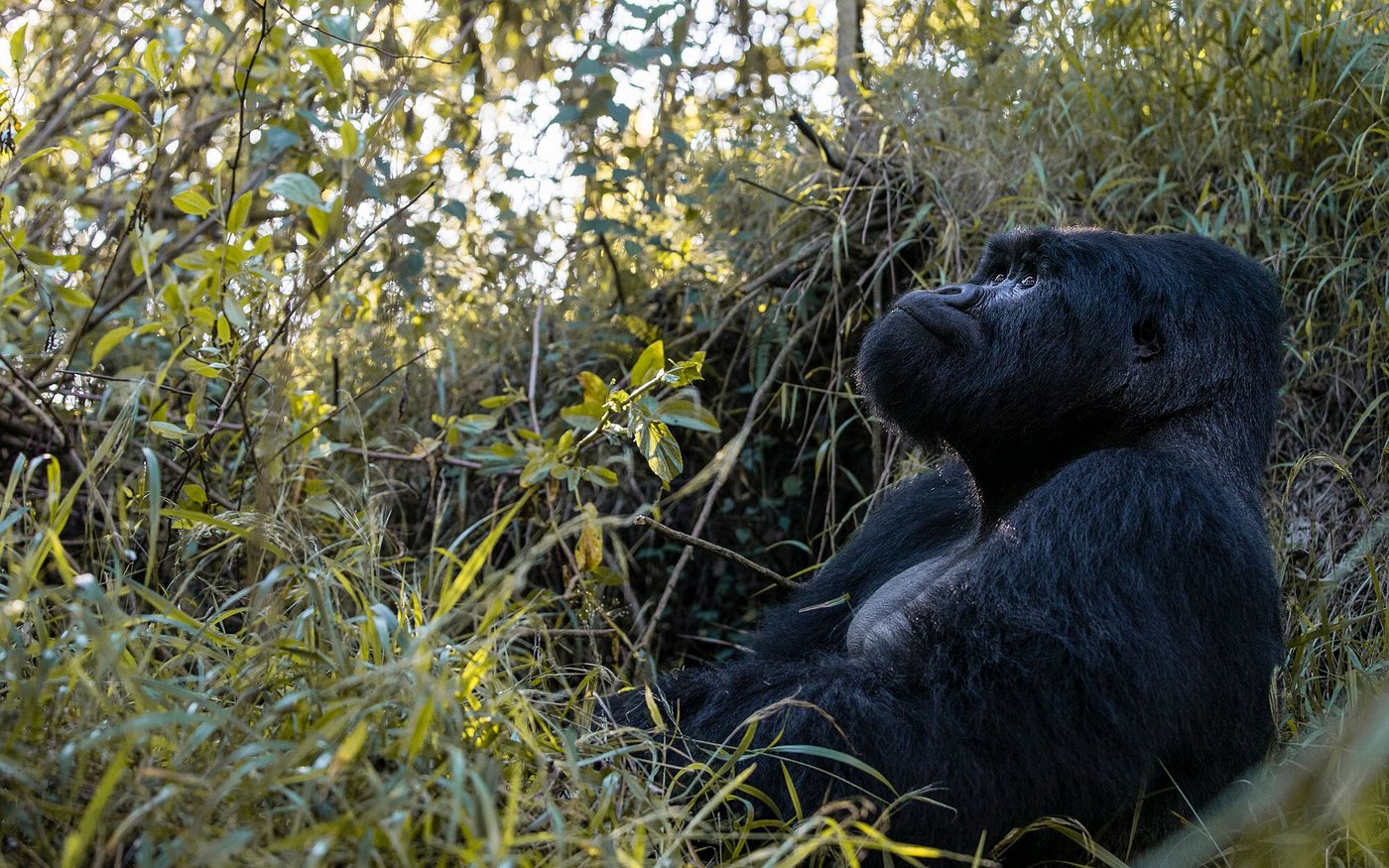
The best time for gorilla habituation is during the drier months, particularly June through September and December through February. Drier trails reduce fatigue during longer tracking periods, and stable weather allows visitors to fully enjoy extended time with the gorillas without interruption.
Rainy months can still accommodate habituation experiences, but they require stronger fitness levels and realistic expectations. Travelers choosing habituation should prioritize trail conditions over crowd levels, making dry seasons the most suitable choice for this activity.
Best Time for First-Time Gorilla Trekkers
First-time gorilla trekkers benefit most from months that offer predictable weather, easier terrain, and smoother logistics. January, February, June, July, August, and September provide the most comfortable introduction to gorilla trekking.
During these months, trails are more manageable, briefing schedules run smoothly, and the overall experience feels less physically demanding. Rwanda is particularly attractive for first-time trekkers during dry months due to shorter trek durations and proximity to Kigali, while Uganda offers a wider range of trekking difficulty levels depending on sector selection.
For travelers who may feel uncertain about fitness or trail conditions, these months provide confidence and comfort without sacrificing the quality of the encounter.
Best Time for Seniors and Families
For older travelers and families with older children, the best time for gorilla trekking closely mirrors the recommendations for first-time visitors. Dry months reduce the risk of slips and fatigue, and they allow guides to select trekking routes that are more manageable based on group ability.
June through September and January through February are generally the safest and most comfortable periods. During these months, porter availability is high, trail access is easier, and overall trekking pace can be better adjusted to individual needs. Uganda’s flexibility in allocating gorilla families makes it particularly suitable for seniors, as trekking difficulty can be matched more precisely.
Rainy seasons are not impossible for seniors, but they require careful planning and realistic expectations regarding trail conditions.
The Most Challenging Months for Gorilla Trekking (Honest Insight)
April and, to a lesser extent, early May are the most challenging months for gorilla trekking due to heavier and more persistent rainfall. Trails can be muddy and slippery, trekking times may increase, and overall physical effort is higher.
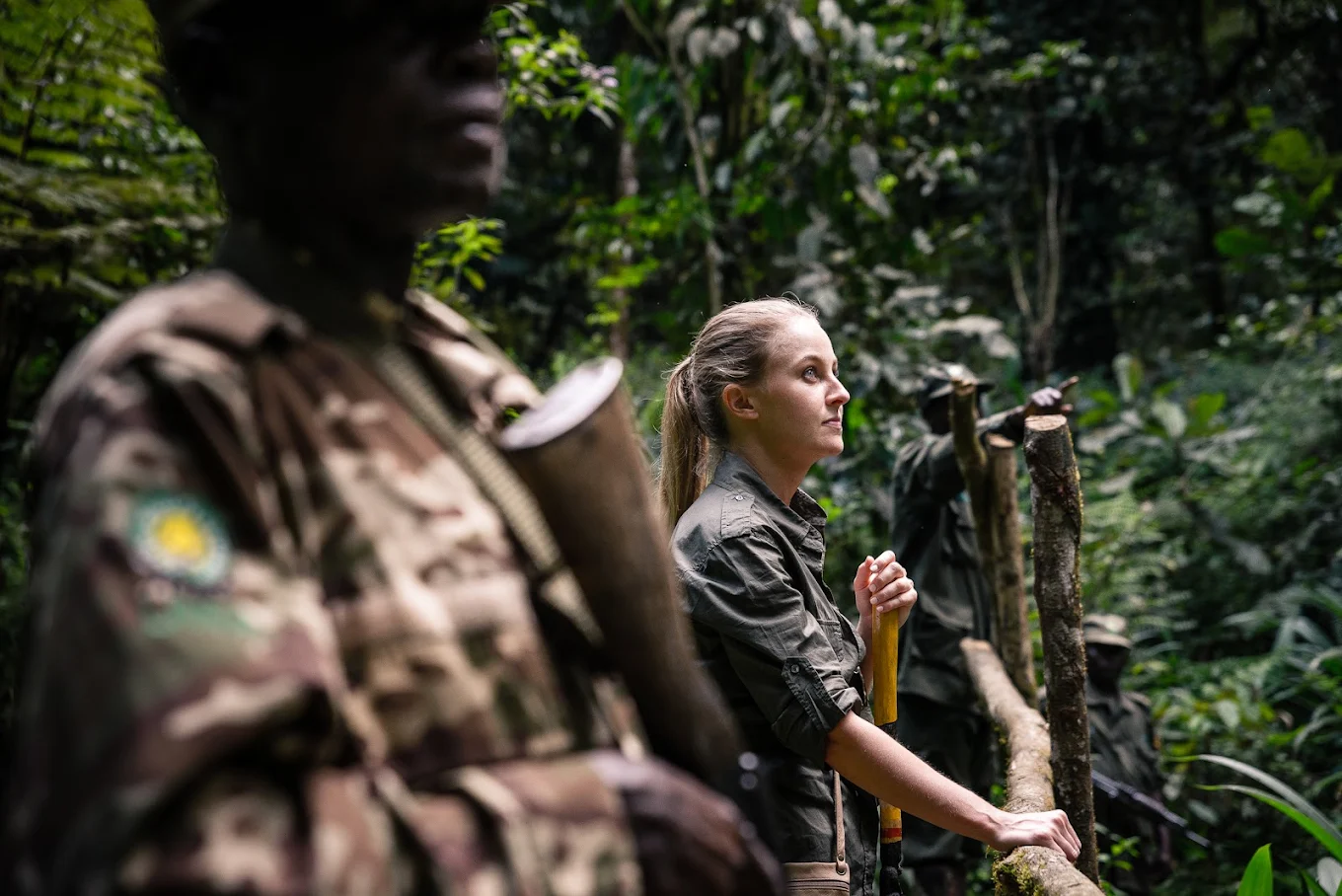
That said, these months are not unsafe, nor do they reduce the likelihood of seeing gorillas. The challenge lies in comfort rather than success. Travelers who are physically fit, mentally prepared, and motivated by solitude and value often find these months deeply rewarding.
Being transparent about these conditions builds trust and allows travelers to choose based on realism rather than marketing promises.
What Is the Best Time of Year for Gorilla Trekking?
The best time of year for gorilla trekking is not defined by a single month, but by alignment between traveler expectations and seasonal conditions. Dry seasons offer comfort, predictability, and ease. Rainy seasons offer value, privacy, and a deeper connection to the forest environment.
Uganda delivers consistent gorilla trekking opportunities throughout the year, while Rwanda performs best during drier months when trekking comfort is highest. Every season has advantages when planned correctly, and with expert guidance, even traditionally “low” seasons can deliver extraordinary experiences.
Plan Your Gorilla Trekking Safari at the Right Time
Choosing the right time to go gorilla trekking can make the difference between a good trip and a truly unforgettable one. At Jovana Gorilla Safaris, we plan each safari around seasonal conditions, permit availability, and individual travel goals, not generic calendars.
Whether you are traveling for the first time, seeking the best value, planning a gorilla habituation experience, or balancing comfort with flexibility, our local specialists will guide you toward the most suitable timing for your journey.
Now is the best time to plan, simply because the right season is the one chosen with expert insight. Book a Gorilla Habituation Tour
Speak with a Gorilla Trekking Specialist
Request a Tailor-Made Gorilla Trekking Itinerary